


Here’s a Q & A with Anastasios Pitasso
Why do you make Art?
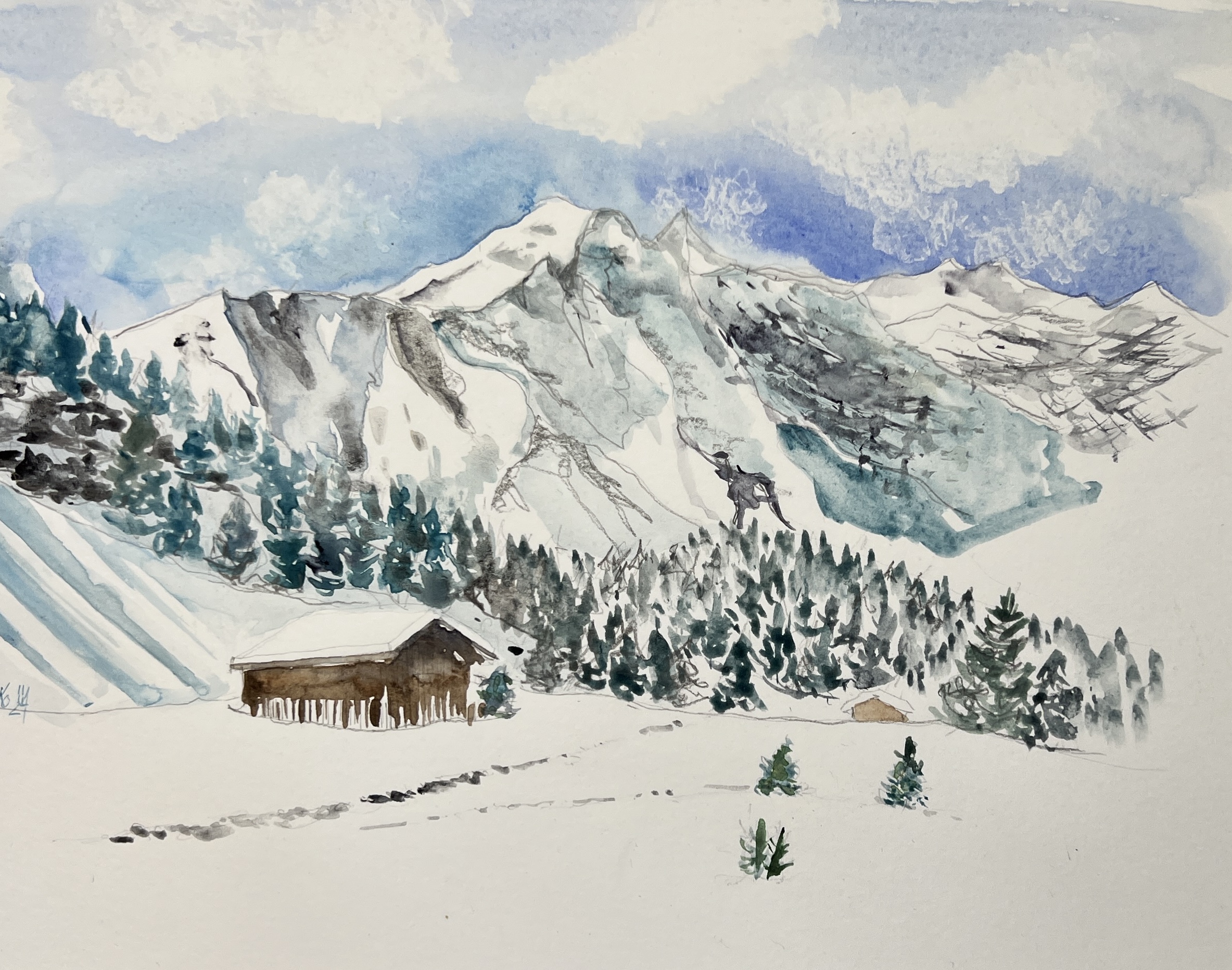
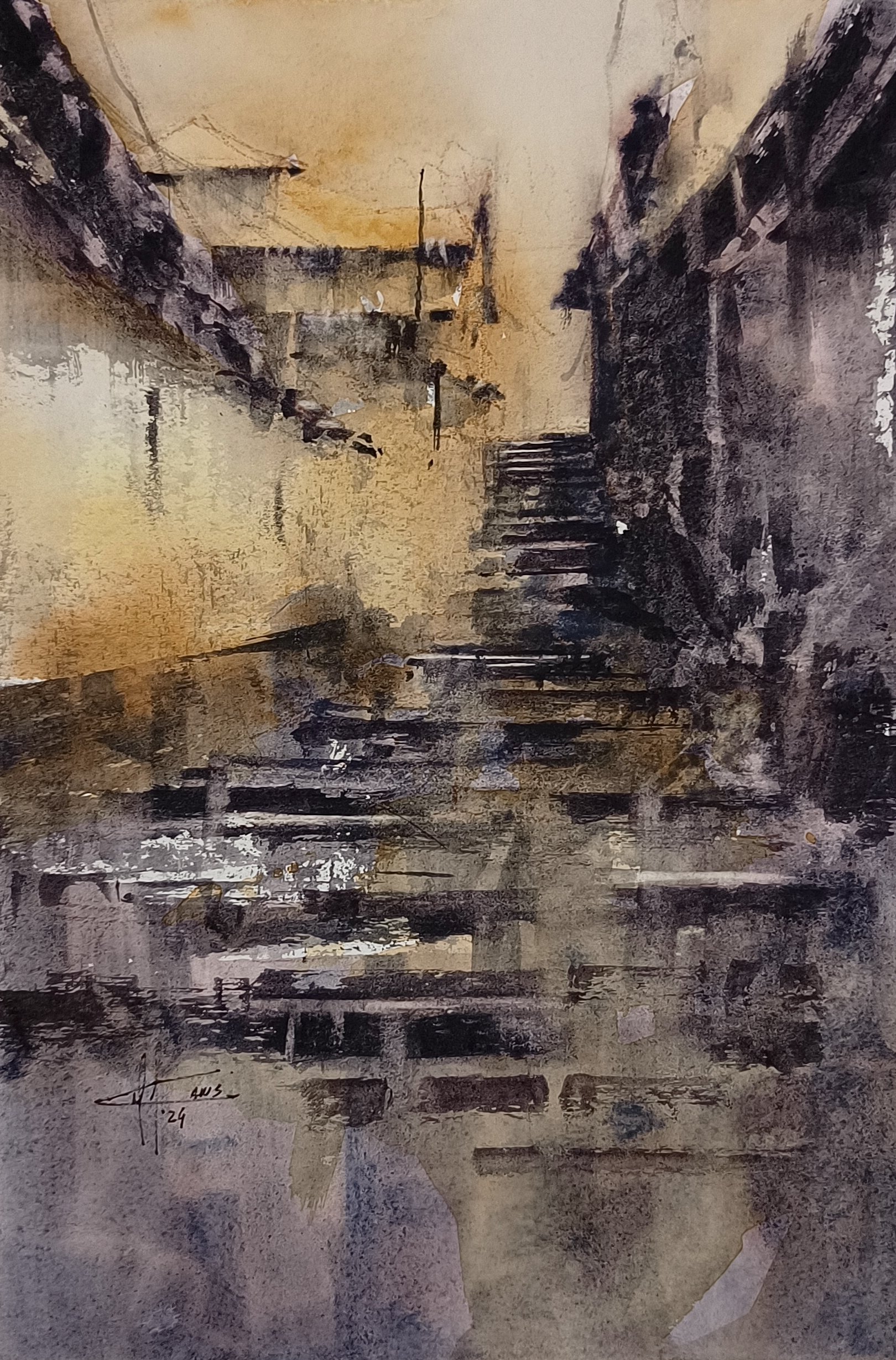
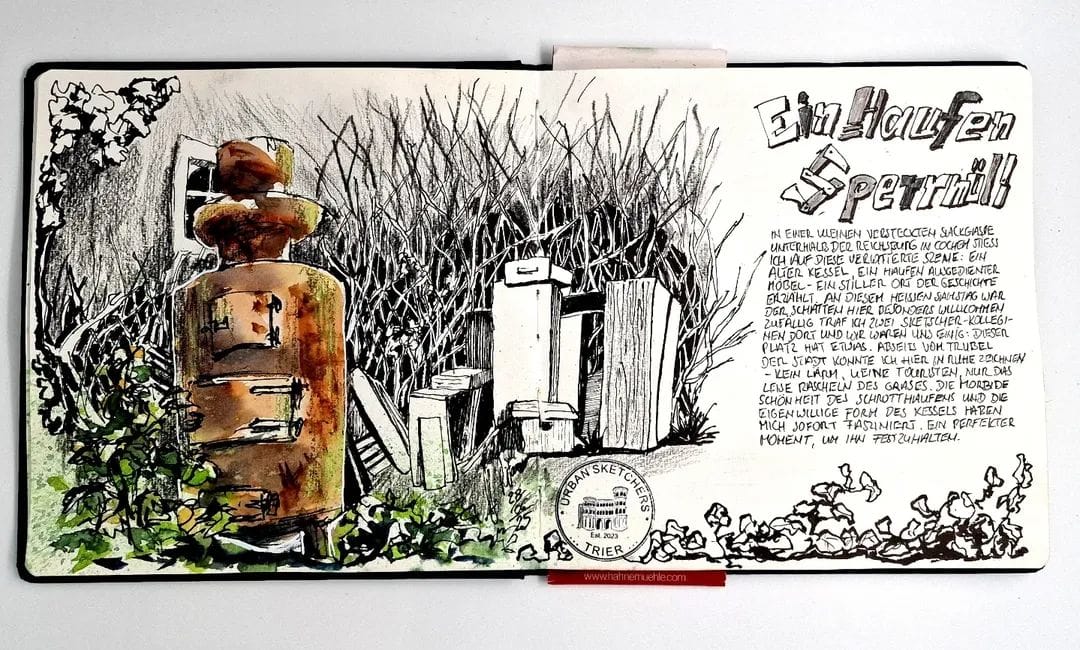
Art has been with me for as long as I can remember, but the real turning point was discovering urban sketching. Through quick sketching on location, I found the magic of watercolor—and the incredible possibilities of expressing emotion, atmosphere, and movement with nothing more than water, pigment, and gravity.
The interplay between controlled brushstrokes and unpredictable washes fascinated me instantly. Watercolor is alive—it flows, reacts, surprises. The medium forces you to let go, work with the moment, and embrace the natural behavior of water. That is exactly where its beauty lies for me.
Over the years, my creative practice evolved: I no longer only sketch, but I also create standalone watercolor artworks in which I consciously play with transparency, depth, and the beautiful unpredictability of the medium.
你畫畫多久了?
I’ve loved drawing, crafting, and building things ever since I was a child. Over time, with school, part-time work, and my academic path, I had less and less time to focus on this passion. However, in 2017 I rediscovered it through urban sketching, where I fell in love with capturing scenes quickly on location and working with watercolor.
你接受過正規的藝術訓練嗎?
Yes, I do have some formal art training. I took advanced art classes in school, which gave me a strong foundation. Beyond that, I’ve completed many online courses with renowned artists as well as in-person seminars. Through these experiences, I’ve worked on developing and refining my own artistic style.
At the same time, I consider myself largely self-taught—I enjoy experimenting with different materials and continuously learning through practice. I paint not because I was trained to, but because I am driven to.
你是職業藝術家還是業餘愛好者?
I would describe myself as a hobbyist. I truly value the freedom that comes with not being financially dependent on selling my art or my knowledge. I believe this independence has a very positive influence on my creative process.
It allows me to create purely based on what I enjoy and what inspires me in the moment, without any pressure or obligation. My approach is driven by curiosity and passion rather than expectations, which helps me stay authentic and open to experimentation.
你從誰或什麼事物中汲取靈感?
I find inspiration in the things I see and experience in my everyday life, as well as during my travels. I enjoy observing my surroundings closely and trying to understand how I can translate those impressions into my art.
I’m also inspired by other artists—their techniques, styles, and ways of seeing the world. I like to take elements from different sources and combine them in my own way. For me, inspiration is a continuous process of observing, learning, and transforming what I encounter into something personal and meaningful.
你畫畫的時候喜歡聽什麼類型的音樂?
It really depends on the situation and the mood I’m in. I enjoy a wide range of music—from classical to hip hop to rock—and I choose what feels right in the moment.
That said, music isn’t essential to my creative process. Sometimes I paint with music, and other times I prefer silence. Both can be equally inspiring in different ways.
你有沒有過導師?
I haven’t really had a single mentor. Most of what I know, I’ve learned through self-training and continuous practice.
That said, I’ve been influenced by many artists along the way—through courses, workshops, and their work—which has guided me in different ways. I see my journey as largely self-directed, shaped by curiosity, experimentation, and a willingness to keep learning.
你每天都畫畫嗎?
I try to paint every day, as it’s great practice and helps me stay in a creative flow and become more efficient. I find inspiration in my everyday life, so there’s always something that can spark an idea.
That said, it doesn’t always work out—sometimes I’m too tired or busy with other things. For me, making art is also a way to relax and recharge, a kind of calm space within my daily life, so I try to keep it something that feels natural rather than forced.
你是一次只畫一幅畫,還是同時畫好幾幅?
It really depends. When working with watercolor, you often have to wait for layers to dry before continuing, so it can be helpful to switch between pieces during that time. Sometimes, stepping away from a painting for a while also gives me a fresh perspective.
That said, I often like to complete one piece before starting the next. It helps me stay focused and fully immersed in the process, but I stay flexible and adapt depending on what the situation and the artwork require.
你會先創作概念作品嗎?
It depends on the piece. Sometimes I like to plan ahead and even write down the steps I want to take, especially when I’m aiming to achieve specific effects or use certain techniques. Having that kind of roadmap can be really helpful.
At the same time, many of my artworks develop spontaneously. I enjoy allowing space for intuition and even a bit of chance, letting the piece evolve naturally without a fixed plan.
你喜歡在畫室畫畫還是在戶外寫生?
I enjoy both. Painting outdoors brings me a lot of joy—I love being able to capture inspiration in the moment directly in my sketchbook while also enjoying the atmosphere and the weather.
At the same time, working in my studio at home has its own advantages. Sometimes the weather simply doesn’t allow for outdoor painting, and in the studio I have everything I need around me. I can prepare more easily, take breaks when I want, and work without having to carry all my materials with me.
How many cores colors do you use?
I enjoy a wide range of colors, and I especially appreciate the variety and quality of the pigments from Daniel Smith. In my artworks, I often try to work with a reduced palette—usually around three to five colors—to create harmony and focus.
I also enjoy working monochromatically at times, which allows me to really concentrate on the color values and explore the subtle variations within a single hue.
管狀、盤狀還是棒狀?
It depends on the situation. For certain techniques, tubes of paint in a pasty form are important and advantageous. Generally, when I’m working in my home studio, I tend to use tubes.
When I’m out sketching with Urban Sketching, I prefer pans or sticks because I want to keep my equipment light and portable. I especially like using sticks because I’ve designed a custom holder for them, which I’ve 3D-printed to suit my needs. This makes it very practical to hold multiple sticks without getting messy, even if they’re different sizes. The lid can also double as a water container, and it provides a secure way to transport and store the sticks safely.
你使用遮蔽液嗎?
Yes, I use masking fluid sometimes, especially when I want to ensure that certain areas of my painting remain untouched or stay white. It’s a very useful tool in watercolor painting for preserving highlights and details.
你如何判斷你的作品是否完成?
That’s a good—but also a difficult—question. I usually know a piece is finished when I feel satisfied with the result. Sometimes it helps to step away from the artwork or look at it again later to gain perspective. Often, this makes it clear if anything is missing or needs adjustment.
In general, I’ve learned that less is more. It’s important to leave space for the viewer’s imagination, and once a piece is overworked, there’s no going back.
每週透過 Zoom 或 Facebook 線上加入我們。 與約翰·科格利的近距離私人對話 (丹尼爾史密斯,所有者兼首席執行官)以及來自世界各地的客座藝術家。每週四(太平洋時間下午 2:00),約翰和我們的一些成員 品牌大使 重點介紹一組顏色並回答您的問題。每週五(太平洋時間上午 10:30),一位特邀藝術家將分享他們最喜歡的技巧和方法。. 點擊此處查看下週的 Zoom 會議鏈接.
如果您願意,可以造訪我們的網站 Facebook 在 Showtime 頁面觀看直播。重播可以在 Facebook 上觀看。 Youtube.