











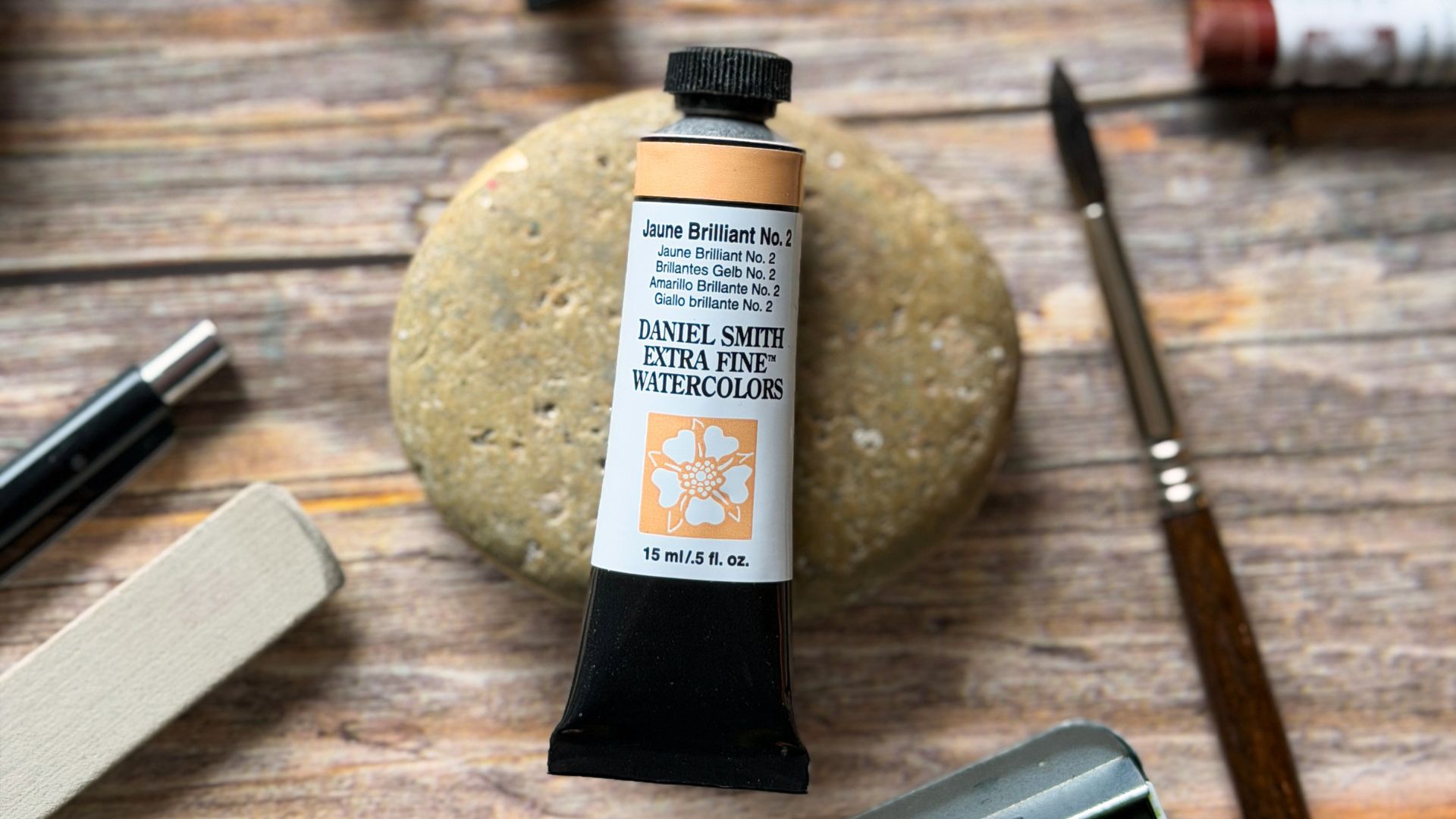

At first glance, a watercolor tube might seem simple, just a color name and a pretty label. But if you take a closer look, you will discover that every tube is packed with valuable information that can completely change the way you choose, mix, and understand your paints.
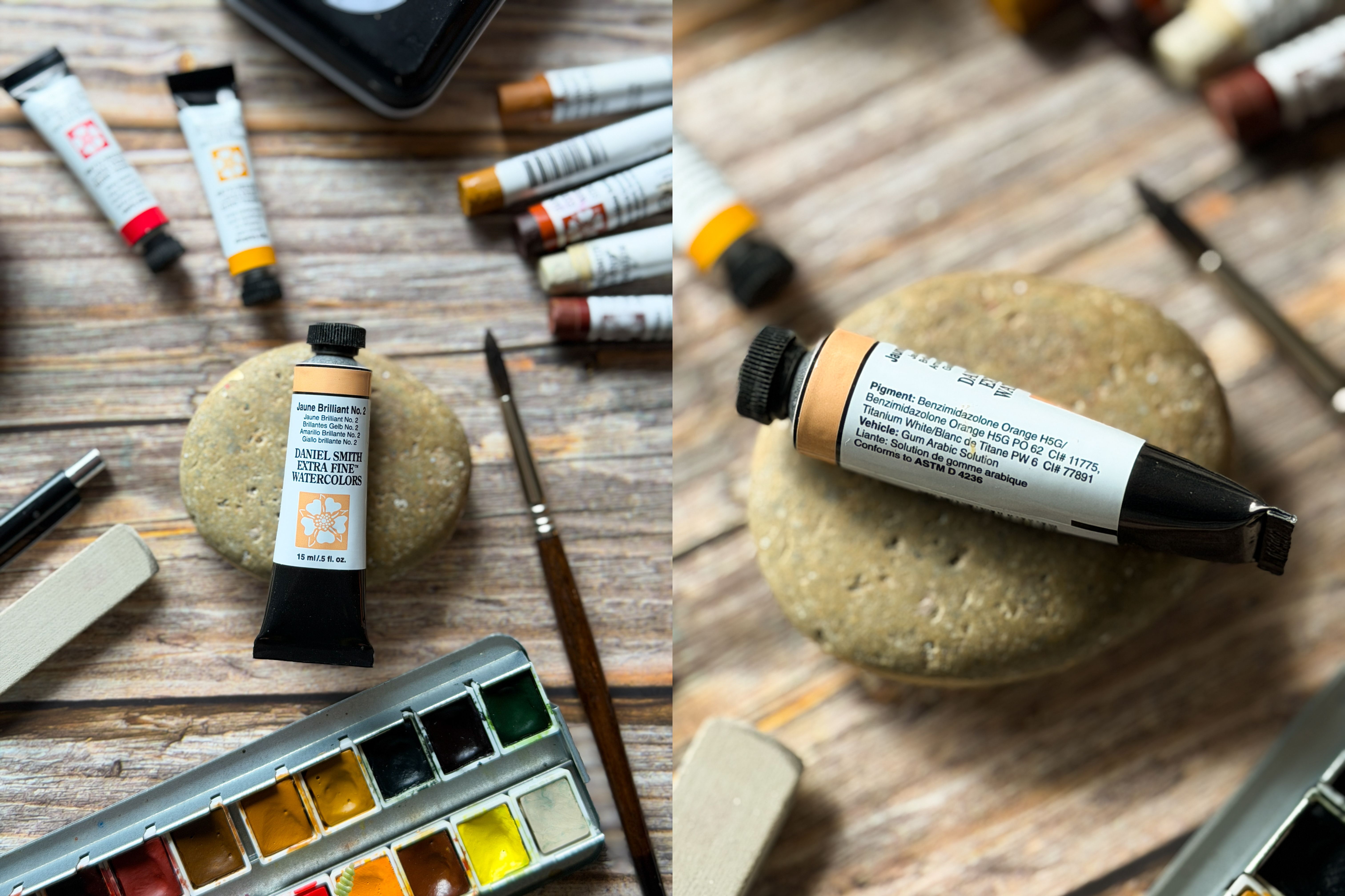
Learning to read a paint tube is one of the most empowering steps you can take as an artist. It gives you control over your palette, improves your color mixing, and helps you make informed decisions. Plus, it’s just really fun to learn!
Let’s break it down.
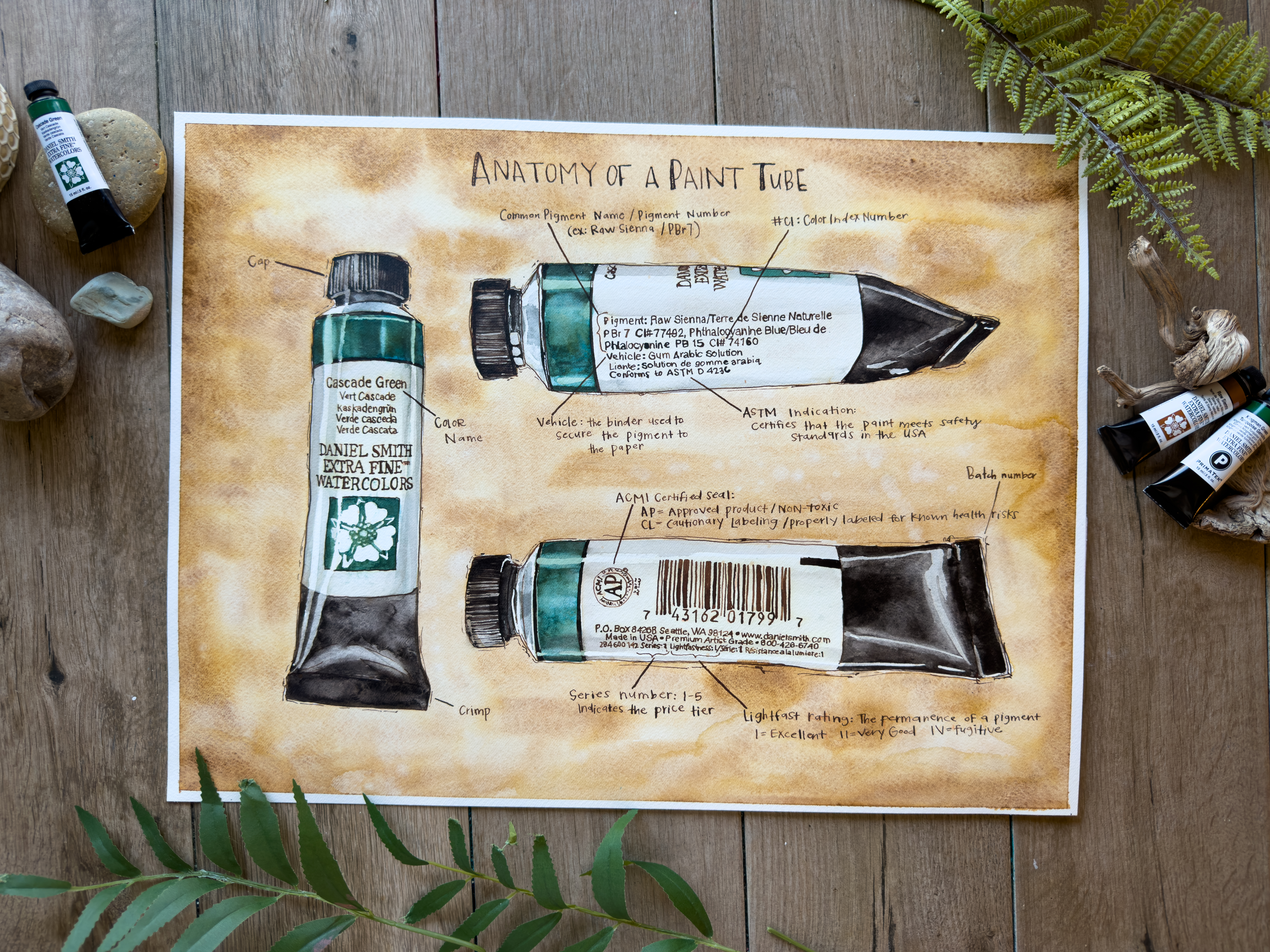
Color Name
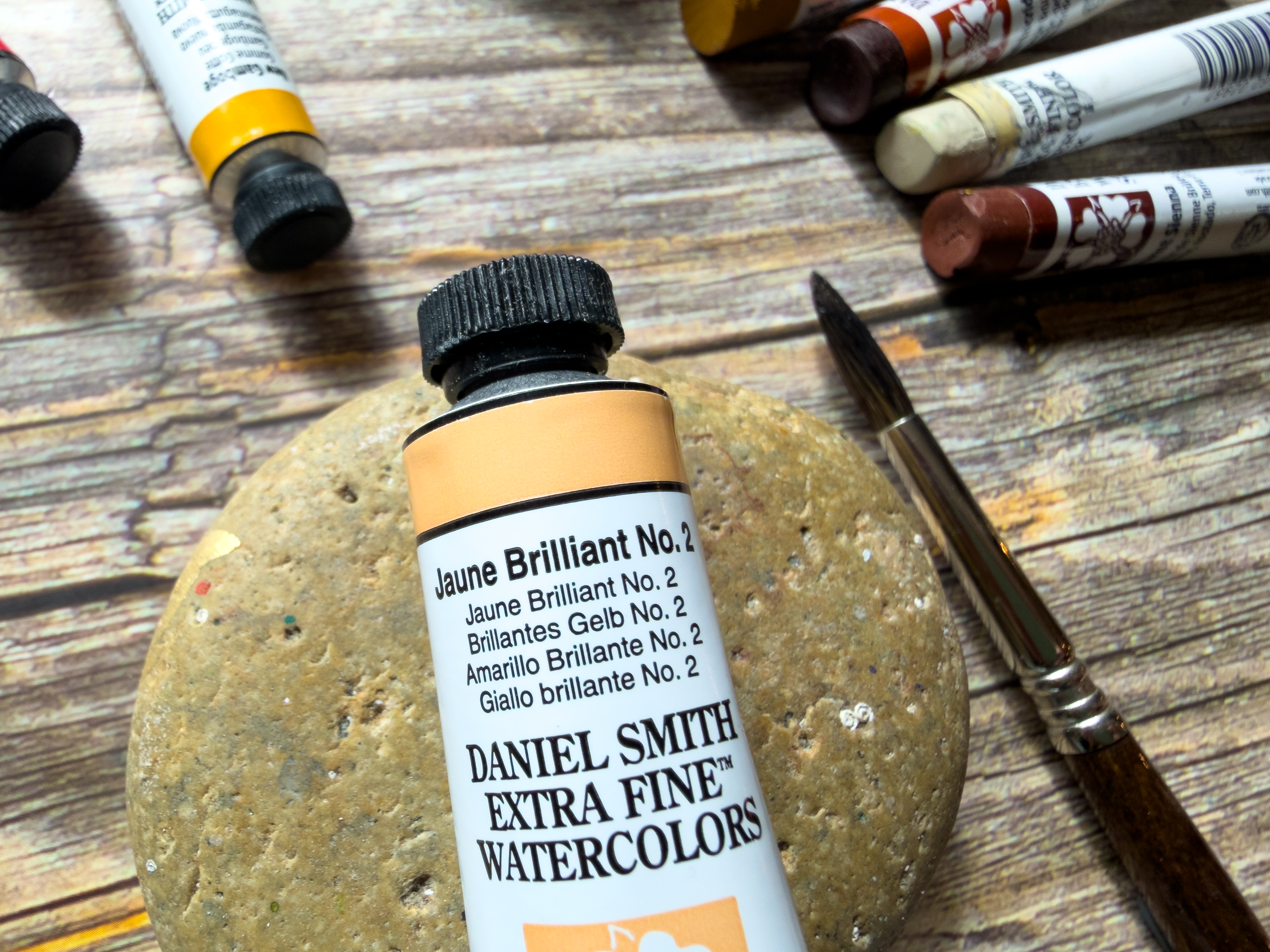
The color name is the most prominent feature on the tube, and often the most eye-catching. Names like “Quinacridone Gold” or “Ultramarine Blue” can hint at the pigment inside, but they are not always the full story.
Some names are traditional, while others are more descriptive. That is why it is important to look beyond the name and dig into the pigment information.
Pigment Information
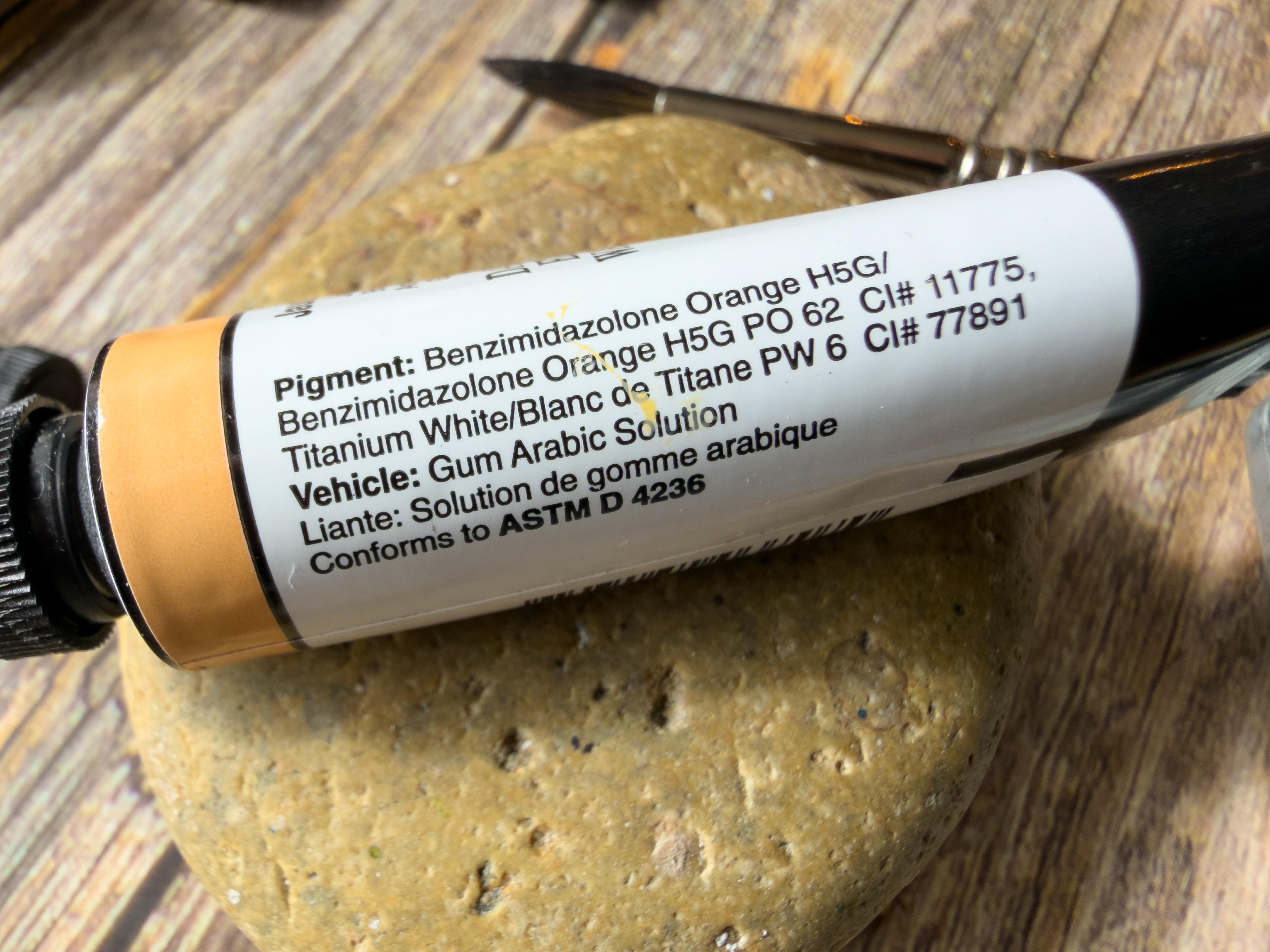
You will typically see the pigment code (Color Index name), and often the common pigment name as well.
Look for the Pigment Number, which begins with a “P” for pigment, followed by a letter and number:
- PY = Yellow
- PR = Red
- PB = Blue
- PG = Green
- PBr = Brown
- PO = Orange
- PV = Violet
For example, PB29 refers to Ultramarine Blue.
Some paints are single-pigment paints, meaning they contain only one pigment number, while multi-pigment paints, sometimes called convenience mixtures, can be a combination of several pigments.
Understanding pigment codes allows you to truly know what is in your paint, regardless of the name on the front.
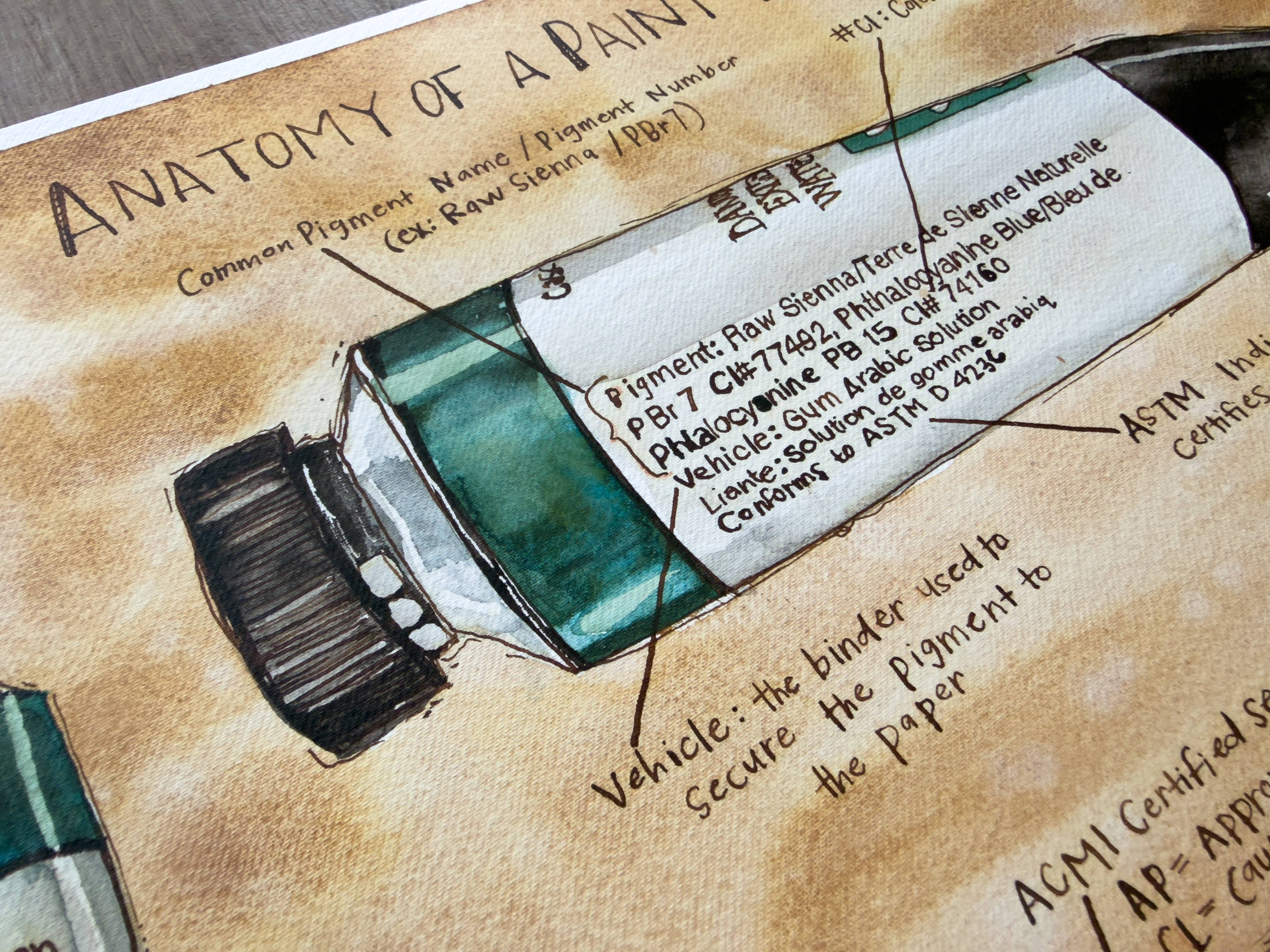
Vehicle: The Binder

Watercolor paint is made of pigment and a binder, and in most professional watercolors, that binder is gum arabic.
Gum arabic holds the pigment together and allows it to adhere to the paper. It also plays a role in how the paint flows, lifts, and reactivates with water.
It is an essential part of the paint’s performance and handling.
Series Number
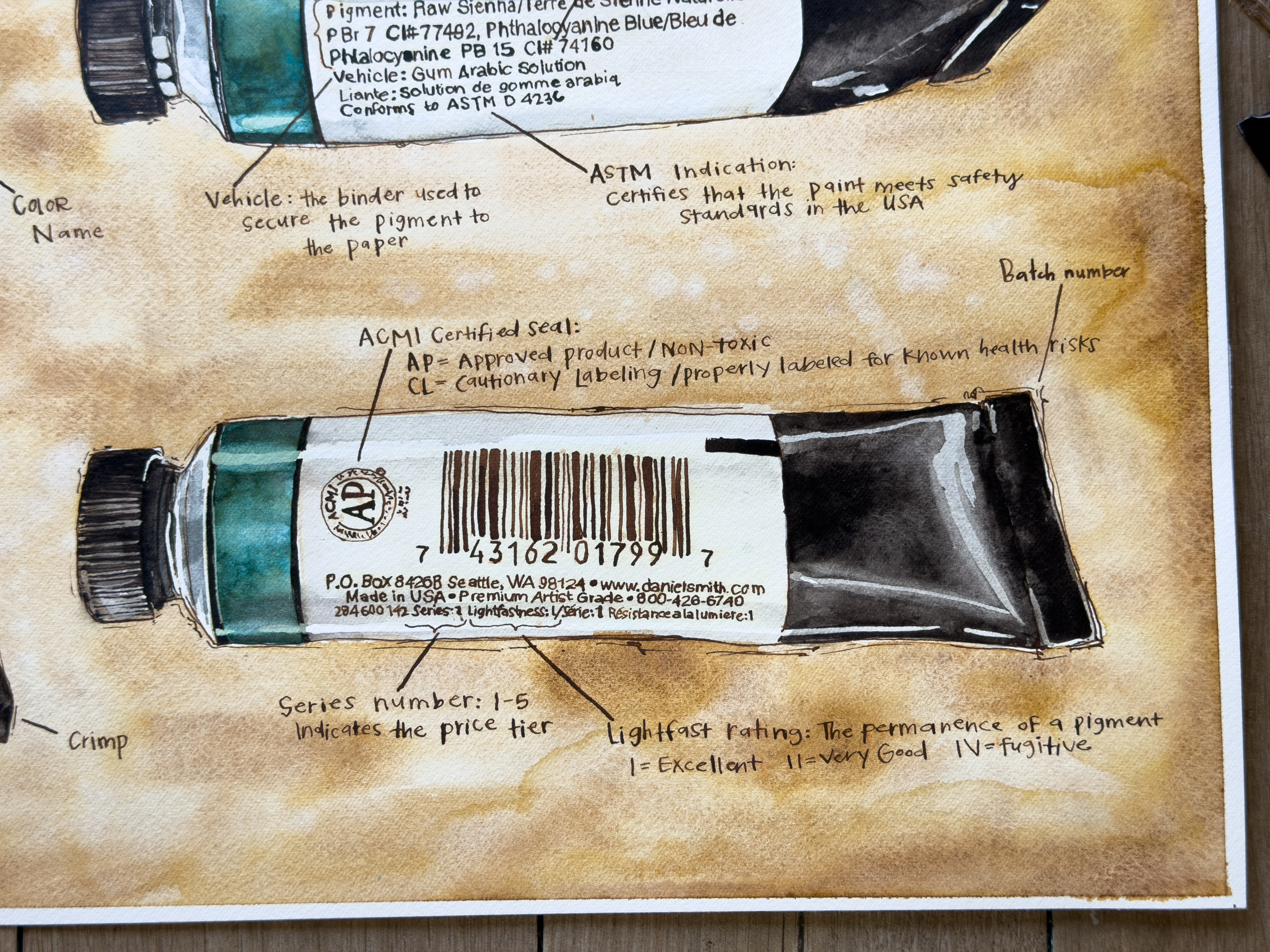
The series number, 1-5, tells you about the price category of the paint.
- Series 1 is typically the most affordable
- Higher series numbers indicate more expensive pigments
The difference in price is usually due to the rarity or cost of the pigment. For example, certain mineral pigments or complex synthetic pigments are more expensive to produce.
Lightfastness
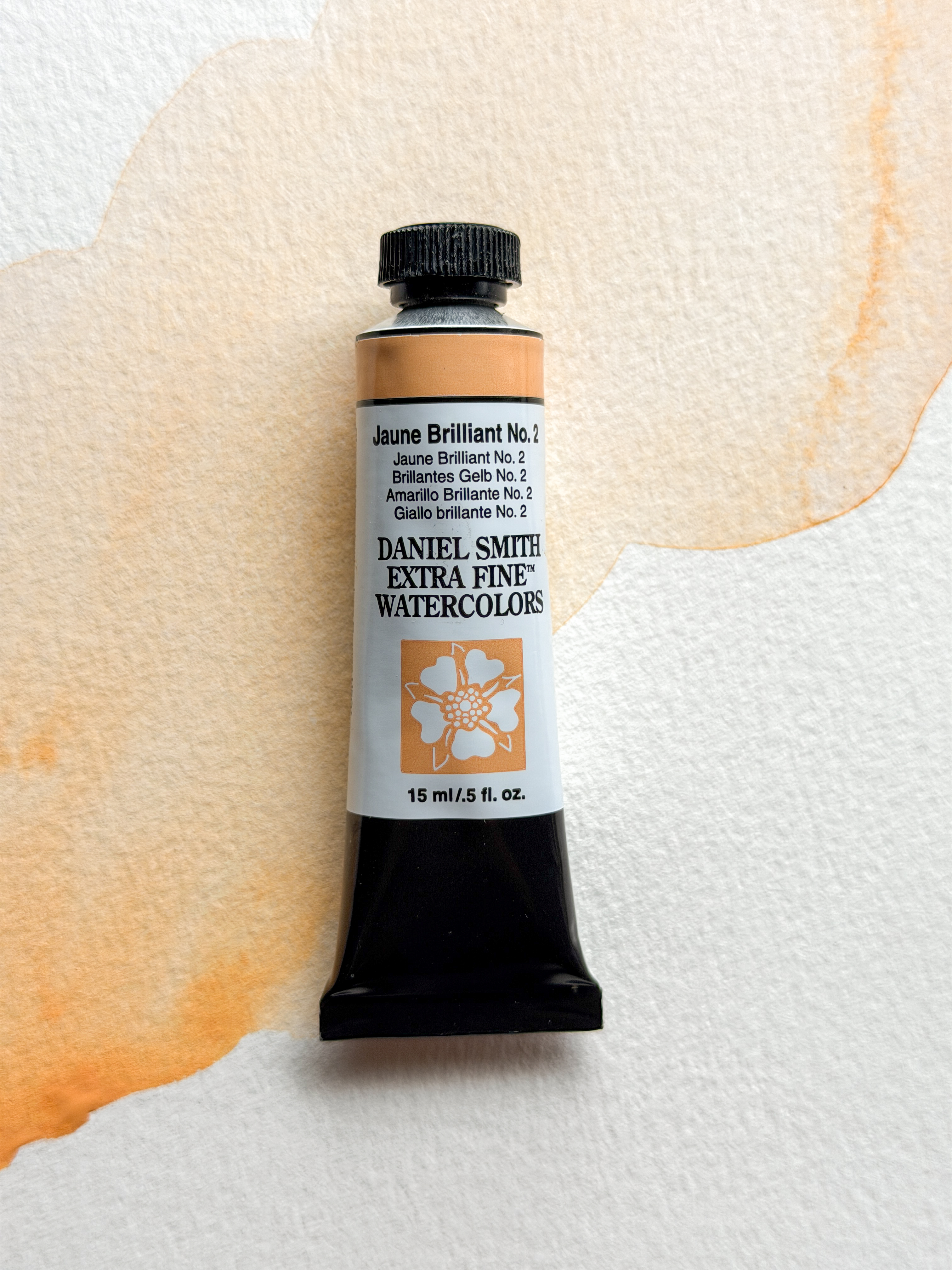
Lightfastness refers to how resistant a color is to fading over time when exposed to light.
This will be shown using numerical scales:
- I: Excellent (100+ years)
- II: Very Good (100 years)
- III: Fair (50-70 years)
- IV: Fugitive (15-20 years)
- NR: Not rated by ASTM
ASTM Rating and Safety
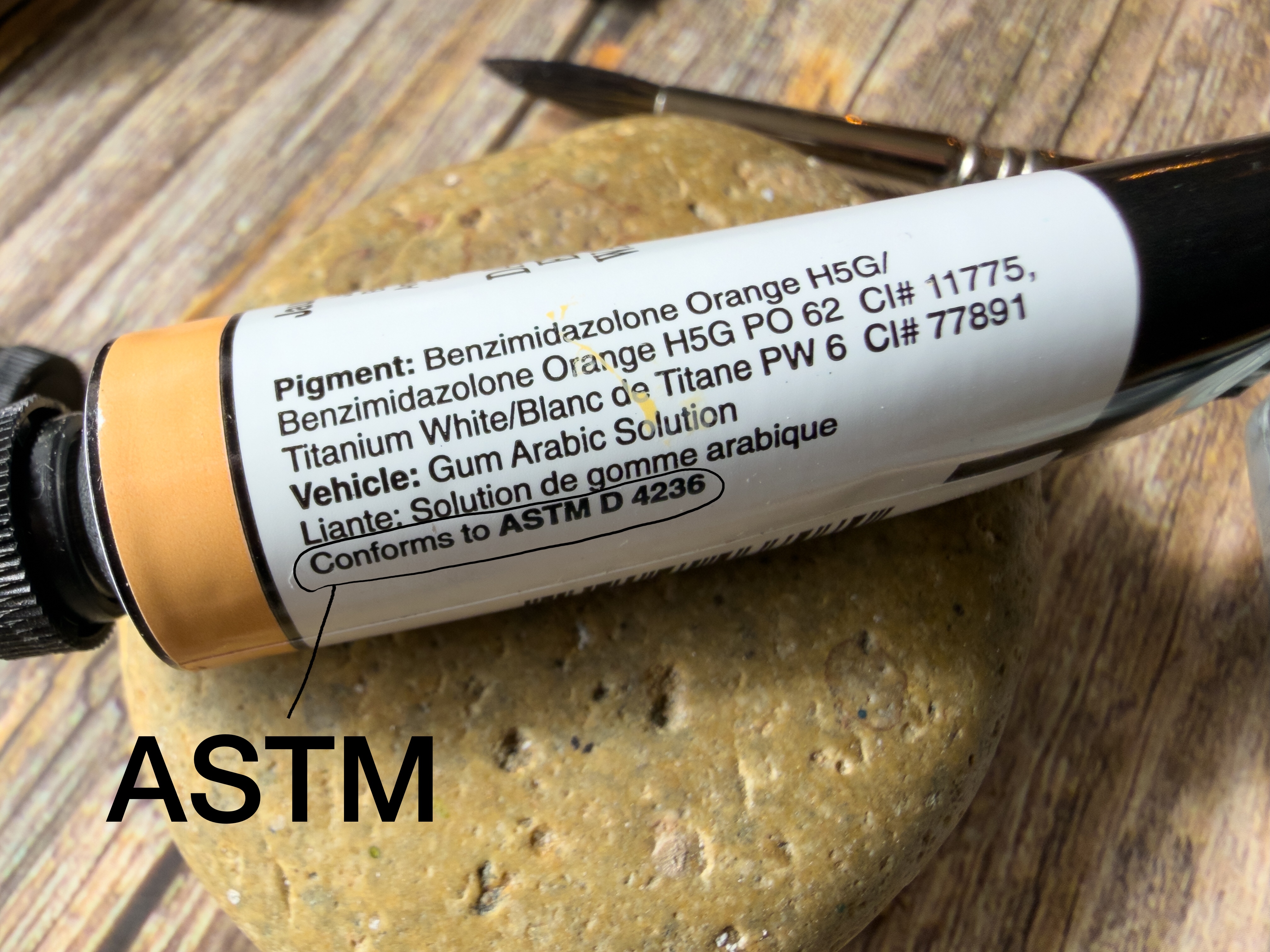
You will often see a reference to ASTM D-4236 on professional paint tubes.
This standard ensures that any potential chronic health hazards are properly evaluated and clearly labeled. It is an important assurance that the materials you are using meet established safety guidelines.
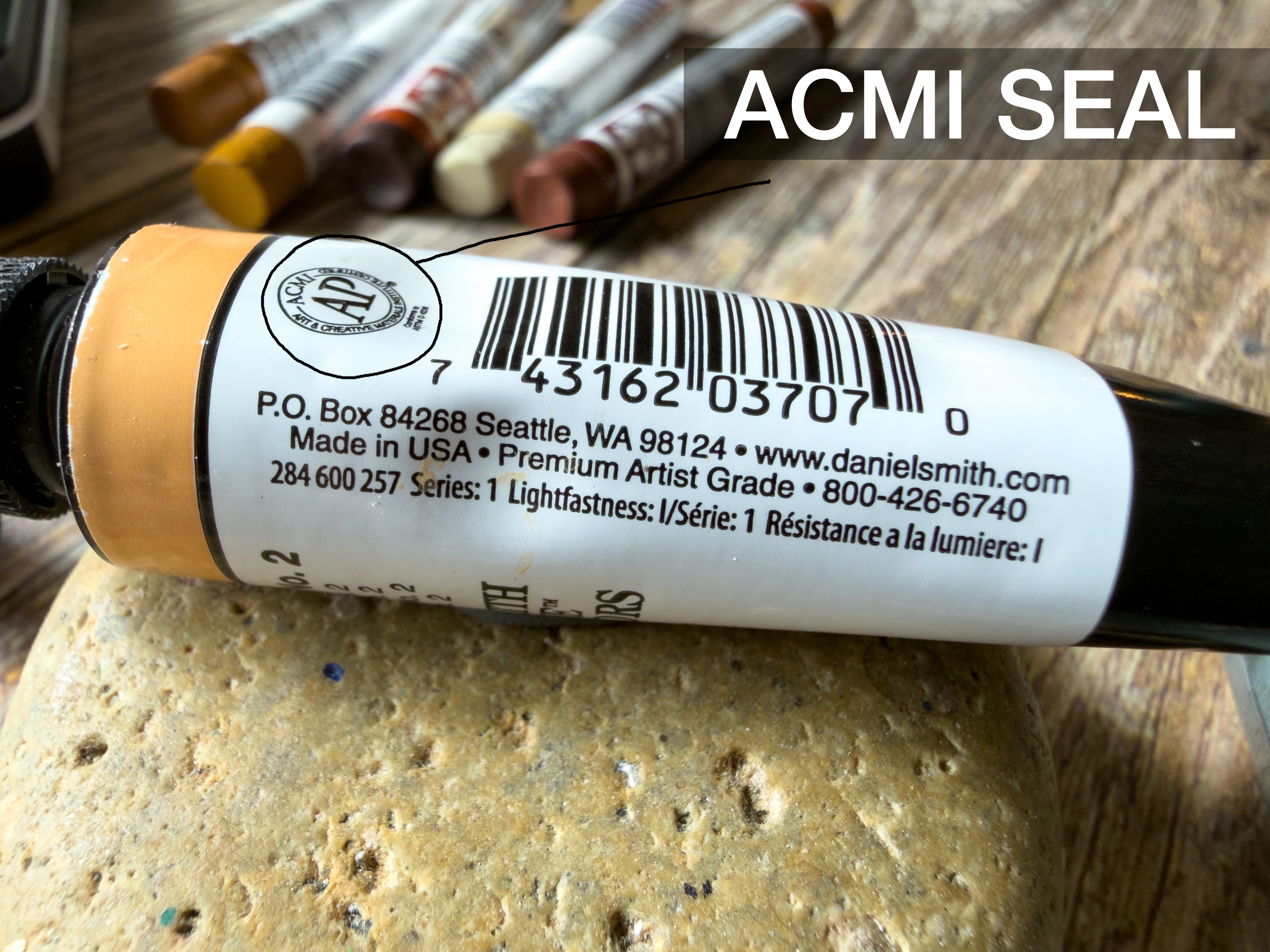
You may also see the ACMI (Art & Creative Materials Institute) seal on the tube. ACMI certification further ensures that art materials have been independently evaluated for safety. Products marked with the AP (Approved Product) seal are certified non-toxic, while CL (Cautionary Labeling) identifies materials that require safe handling practices.
Together, ASTM compliance and ACMI certification provide confidence that your materials meet rigorous safety standards.
Why This Matters
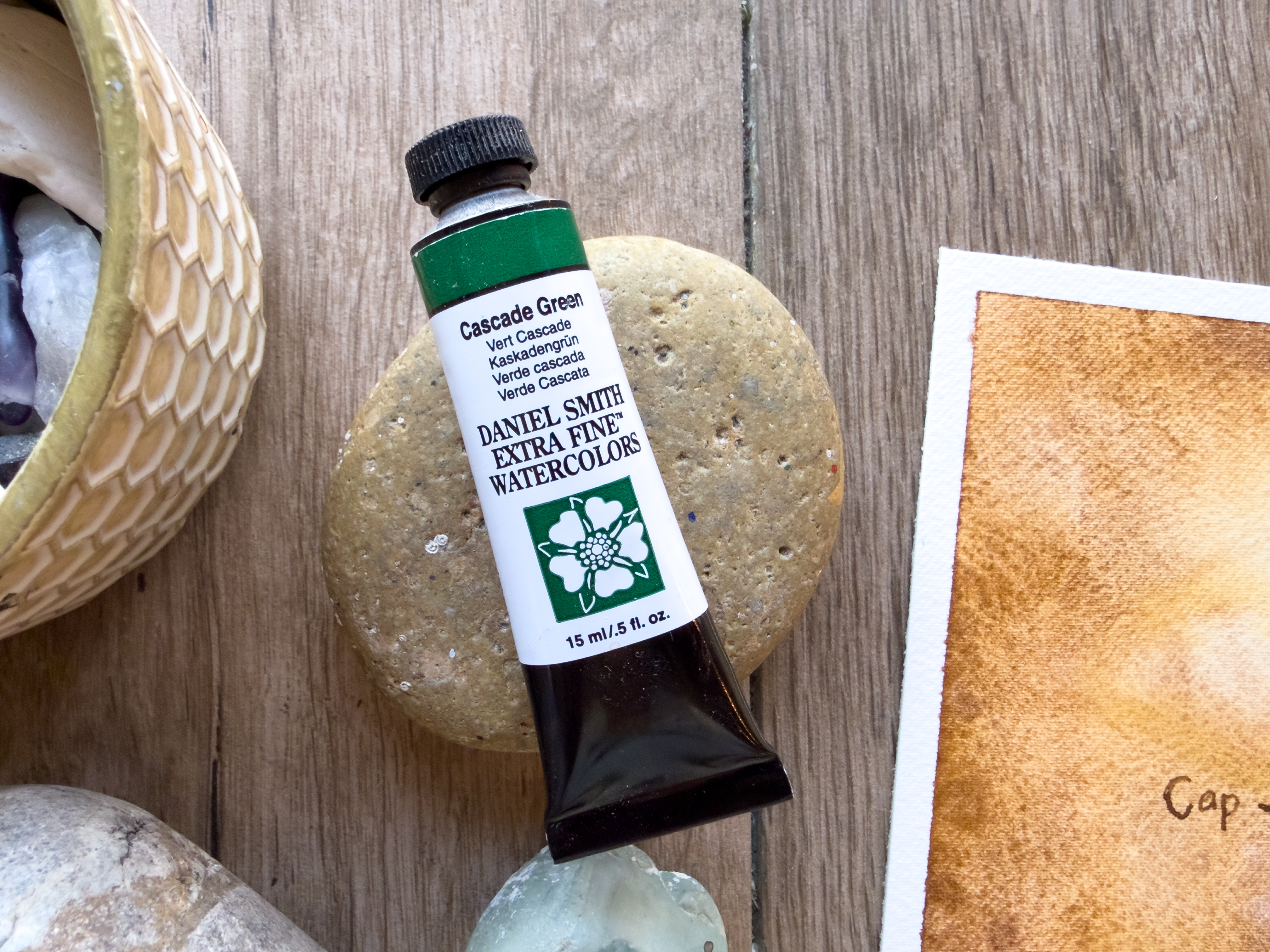
Understanding the anatomy of a paint tube goes far beyond reading a label. It gives you insight into how your paint will behave and how it will mix.
Instead of choosing colors based only on their names, you can build a palette based on knowledge, intention, and confidence.
The next time you pick up a tube, take a moment to read it. You might be surprised at how much it has to say.
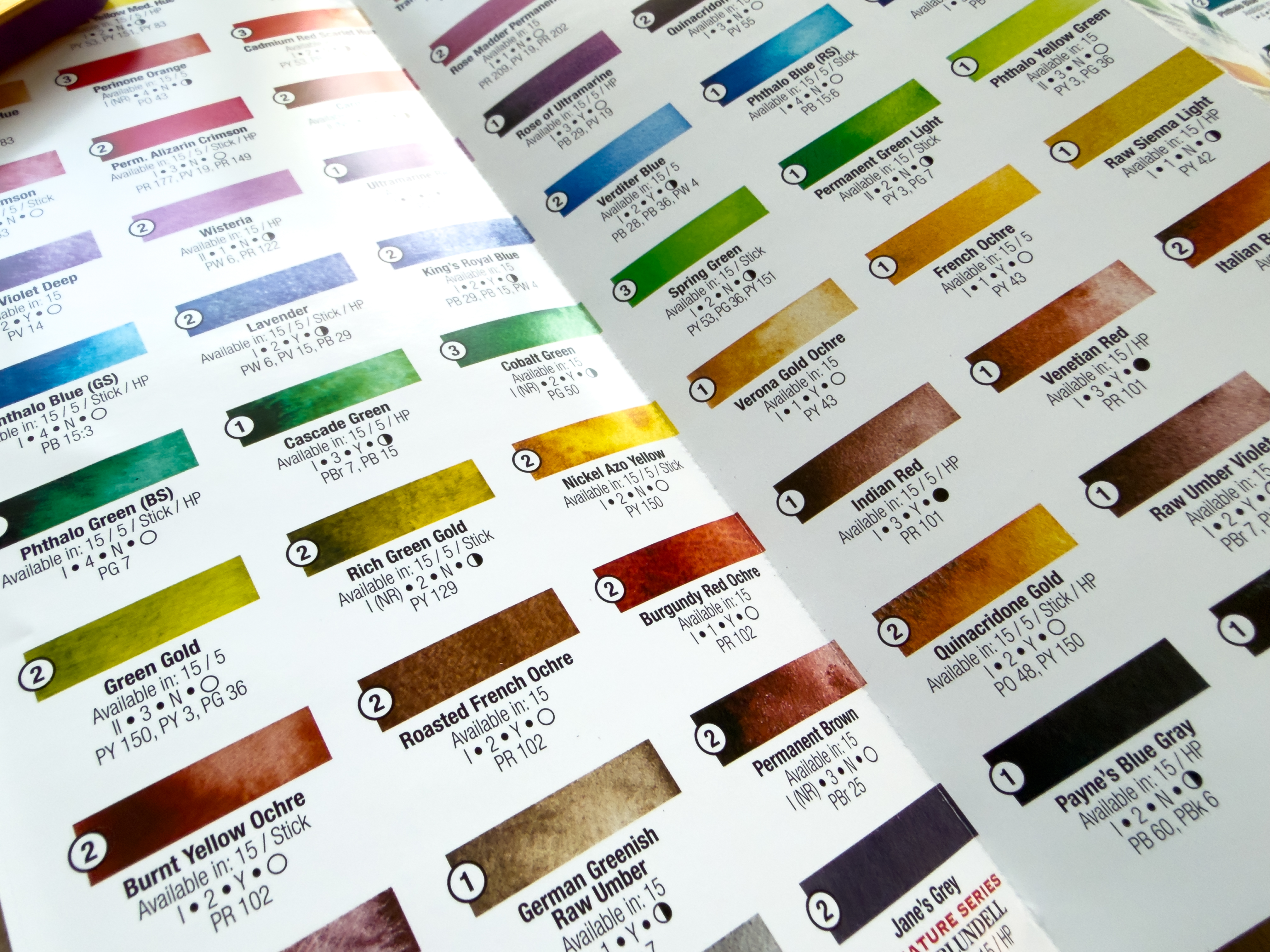
If you are ready to dig even deeper into learning and understanding more pigment information, such as transparency and granulation, you can learn a lot from our Extra Fine Watercolor brochure!
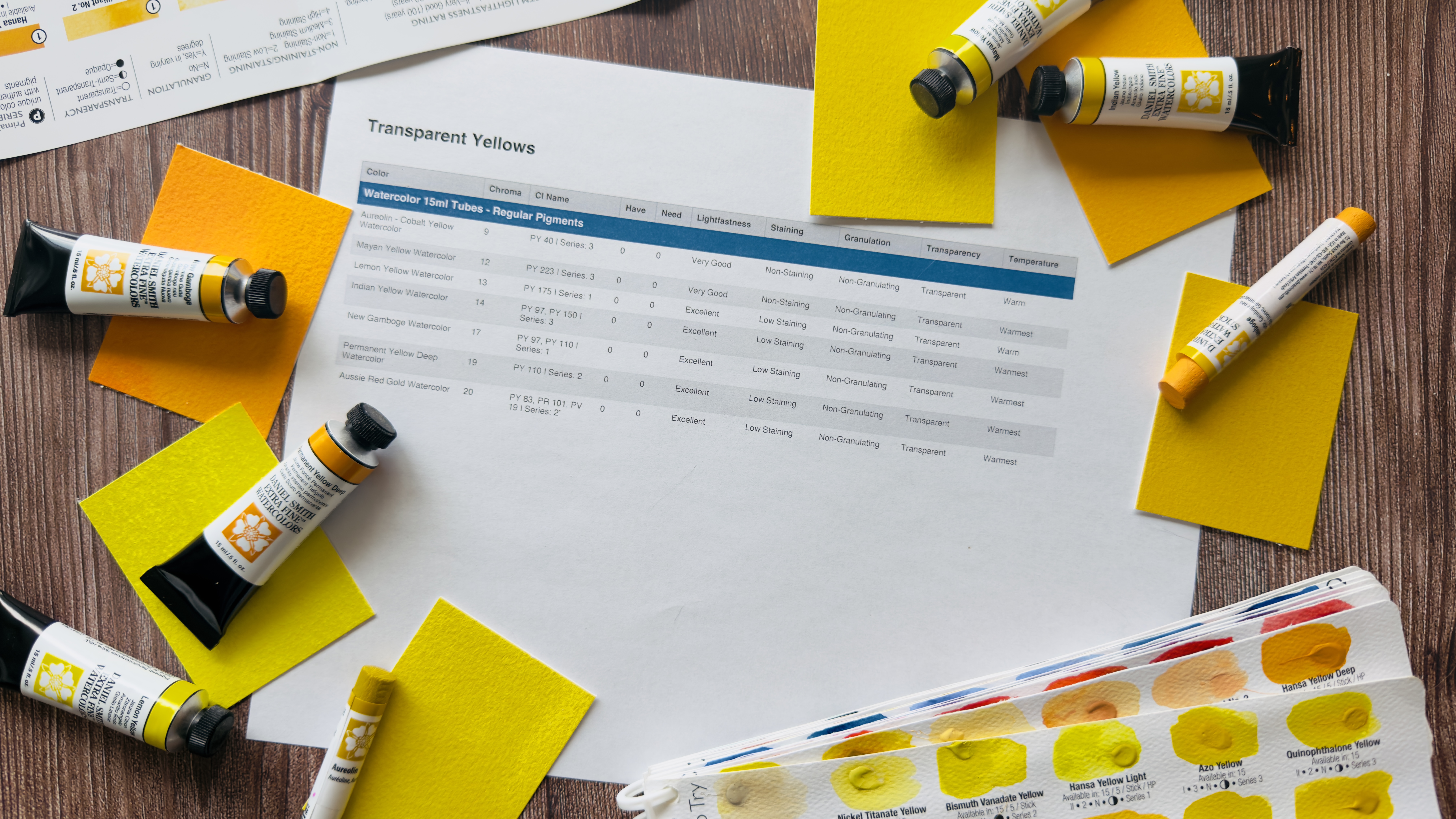
Ready to organize your collection of DANIEL SMITH watercolors and gouache? Check out our Inventory Registry tool! Create a personalized inventory list, print it for your next shopping trip, use it to prepare for a class, or plan your next painting project!
Related Posts
Nothing Found