Watercolor painting has traditionally been associated with paper, but what if you could bring your favorite watercolor colors to surfaces beyond the usual sheet?
With DANIEL SMITH Watercolor Ground, artists can explore new creative possibilities by preparing a variety of surfaces to accept watercolor. Whether you’re working on canvas, wood, or other suitable materials, Watercolor Ground creates an absorbent surface that allows you to enjoy the beauty and versatility of watercolor in a whole new way.
But before the first wash of color, it all begins with proper application.
What Is DANIEL SMITH Watercolor Ground?
DANIEL SMITH Watercolor Ground is an acrylic-based primer formulated to create an absorbent surface suitable for watercolor painting.
It allows artists to work on surfaces that would not ordinarily accept watercolor in the same way as traditional watercolor paper.
Available in several finishes, including
Titanium White, Transparent, Pearlescent White, Black, Gold, and Iridescent Gold, Watercolor Ground offers opportunities to experiment with different backgrounds, textures, and painting effects.

Titanium White

Buff Titanium

Mars Black

Transparent

Iridescent Gold

Pearlescent
Each finish brings its own creative possibilities, from a classic white painting surface to shimmering, transparent, or dramatically dark backgrounds.
Watercolor Ground is available in six distinct colors, each offering its own creative advantage:
- Mars Black – Creates a deep, dramatic surface that makes light colors glow and adds instant contrast
- Titanium White – A bright, opaque white, perfect for traditional watercolor techniques on any surface
- Transparent – Allows the natural surface to show through while adding a workable watercolor ground
- Buff Titanium – A warm, neutral base ideal for landscapes, portraits, and soft, earthy palettes
- Iridescent Gold – Adds a luminous, reflective quality that shines through transparent washes
- Pearlescent White – Offers a subtle shimmer for soft highlights and atmospheric effects

Step 1: Prepare Your Surface
Before applying Watercolor Ground, make sure your chosen surface is clean, dry, and free from dust, grease, or loose particles.

Depending on the material, additional preparation may be needed to ensure proper adhesion. Smooth or nonporous surfaces may require light sanding.
Taking time to prepare your surface helps create a more consistent foundation for painting.
Step 2: Prepare Your Watercolor Ground
DANIEL SMITH Watercolor Ground is ready to use straight from the container.
Stir gently if necessary to ensure an even consistency. For applications requiring a thinner consistency, you may add approximately 10–15% water by volume to help restore its original viscosity.
Avoid excessive dilution, as this may affect the performance of the ground.
Step 3: Apply the Watercolor Ground
Apply with spatula
Apply with roller brush
Apply with foam brush
Apply with synthetic soft hair brush
For a smoother finish, work with consistent brushstrokes and avoid overworking the same area as the ground begins to dry.
If you prefer a more textured painting surface, experiment with the direction of your brushstrokes or use different application tools to create subtle variations.
The application itself can become part of your creative process, influencing how your watercolor washes interact with the finished surface.
Step 4: Build Up Thin, Even Layers

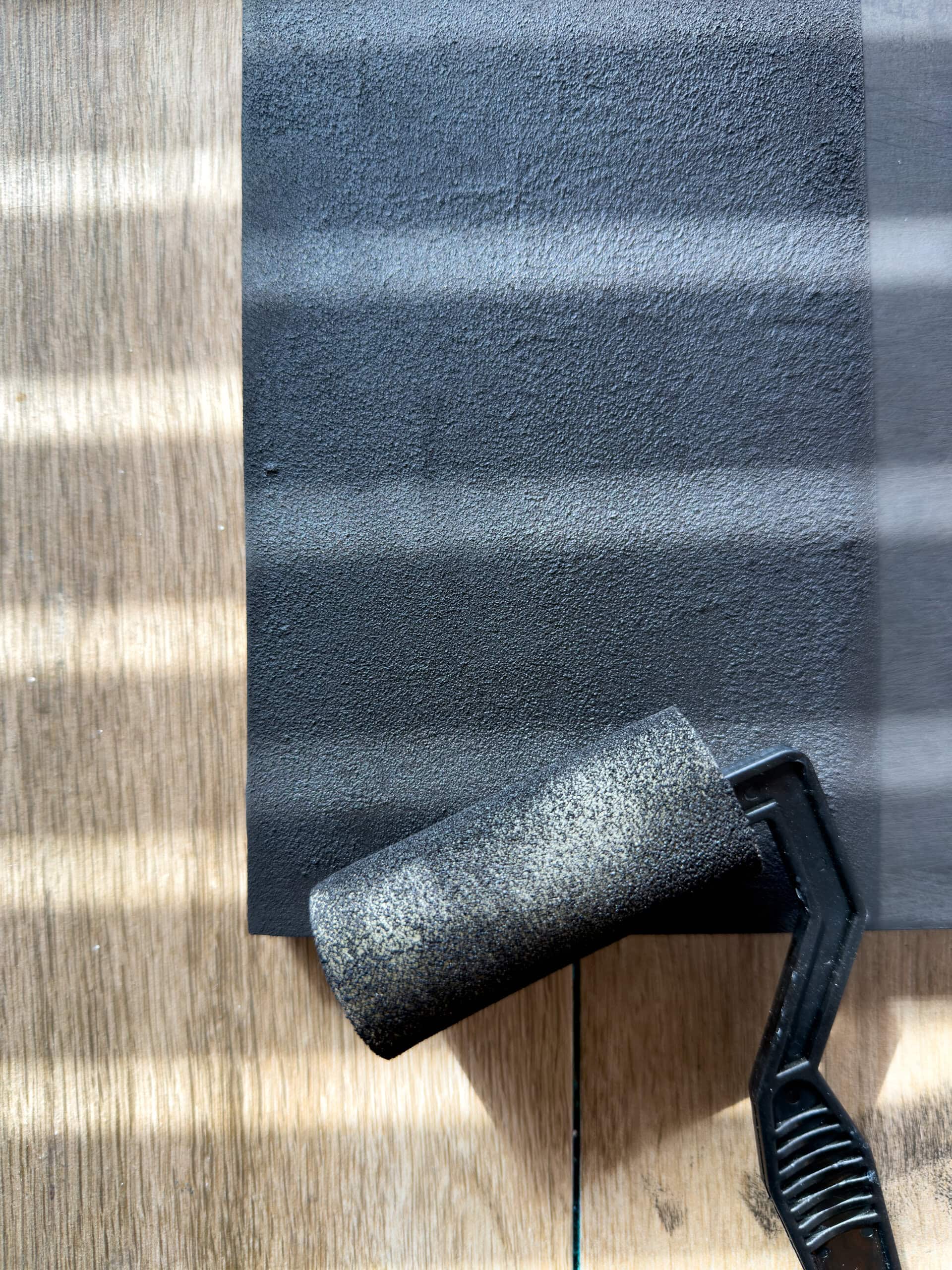
For best results, apply thin, even coats rather than one excessively thick layer.
Allow each coat to dry thoroughly before applying another. Additional layers can help create more uniform coverage, especially when working with surfaces that have different levels of absorbency.
The number of coats needed may vary depending on the surface, the chosen Watercolor Ground finish, and the painting effect you wish to achieve.
Step 5: Allow the Ground to Cure
Once you’ve finished applying Watercolor Ground, patience becomes an important part of the process.
Allow the prepared surface to cure for at least 24 hours before painting with watercolor.
This curing period helps the ground develop its intended absorbent characteristics and provides a more stable surface for your watercolor application.
For thicker applications or certain environmental conditions, additional curing time may be beneficial.
Step 6: Start Exploring with Watercolor
Now comes the exciting part: painting!
Once the ground has fully cured, begin experimenting with your favorite DANIEL SMITH Extra Fine Watercolors.
Try a light wash to observe how the surface absorbs water and pigment. Explore glazing, layering, lifting, and granulating colors to discover how they behave on the prepared surface.


Keep in mind that watercolor behaves differently on Watercolor Ground than on traditional watercolor paper. Absorption, drying time, pigment movement, and lifting characteristics may vary.
These differences are part of what makes working with Watercolor Ground such an interesting creative experience.
A Few Helpful Tips Before You Begin
- Test first. Try a small sample on your chosen surface to understand how the ground adheres and how watercolor behaves.
- Keep your application consistent. Thin, even coats help create a more uniform painting surface.
- Allow sufficient curing time. Give your Watercolor Ground at least 24 hours before introducing watercolor.
- Explore different finishes. Each Watercolor Ground finish offers distinct visual possibilities.
- Experiment with your colors. Observe how transparent, staining, and granulating pigments respond to your prepared surface.
Your Next Watercolor Adventure Begins with the Surface

Watercolor ground on a Christmas Ball by Giovanni Balzarani
At DANIEL SMITH, we believe that exploring watercolor is as much about discovering new possibilities as it is about mastering familiar techniques.
Watercolor Ground encourages artists to move beyond traditional watercolor paper and experiment with new surfaces, textures, and creative approaches.
Whether you’re preparing a surface for your next artwork or simply curious about how watercolor behaves on something different, the possibilities begin with a single layer of Watercolor Ground.
Have you tried DANIEL SMITH Watercolor Ground? We’d love to hear about the surfaces you’ve explored and the discoveries you’ve made along the way.
Keep exploring, keep experimenting, and let your colors take you somewhere new!