






What if we told you that three seemingly different watercolor colors share exactly the same pigment?
Meet DANIEL SMITH Quinacridone Red, Quinacridone Rose, and Quinacridone Violet. At first glance, each has its own distinctive personality, from lively red to rich rose and deep violet. Yet look closely at their pigment information, and you’ll discover something fascinating: all three are made with PV19.
So how can one pigment produce three different colors? Let’s explore the fascinating world of pigments and discover what makes each of these quinacridones unique.
Understanding PV19: One Pigment, Different Expressions
Same pigment PV19, different colors—what does this mean?

Swatch comparison generated from the Color Map
- PV 19 is a Quinacridone pigment that can have various shades of color from the pigment manufacturer.
- PV 19 can be an alpha, beta, or gamma polymorph. They are all chemically identical, but have a different arrangement of the molecules in their crystal lattice. This different arrangement gives different shades of color.
- Quinacridone Red, Quinacridone Rose, and Quinacridone Violet use one pigment. All three colors are PV 19.
Meet the Three Personalities of PV19 in Three Colors
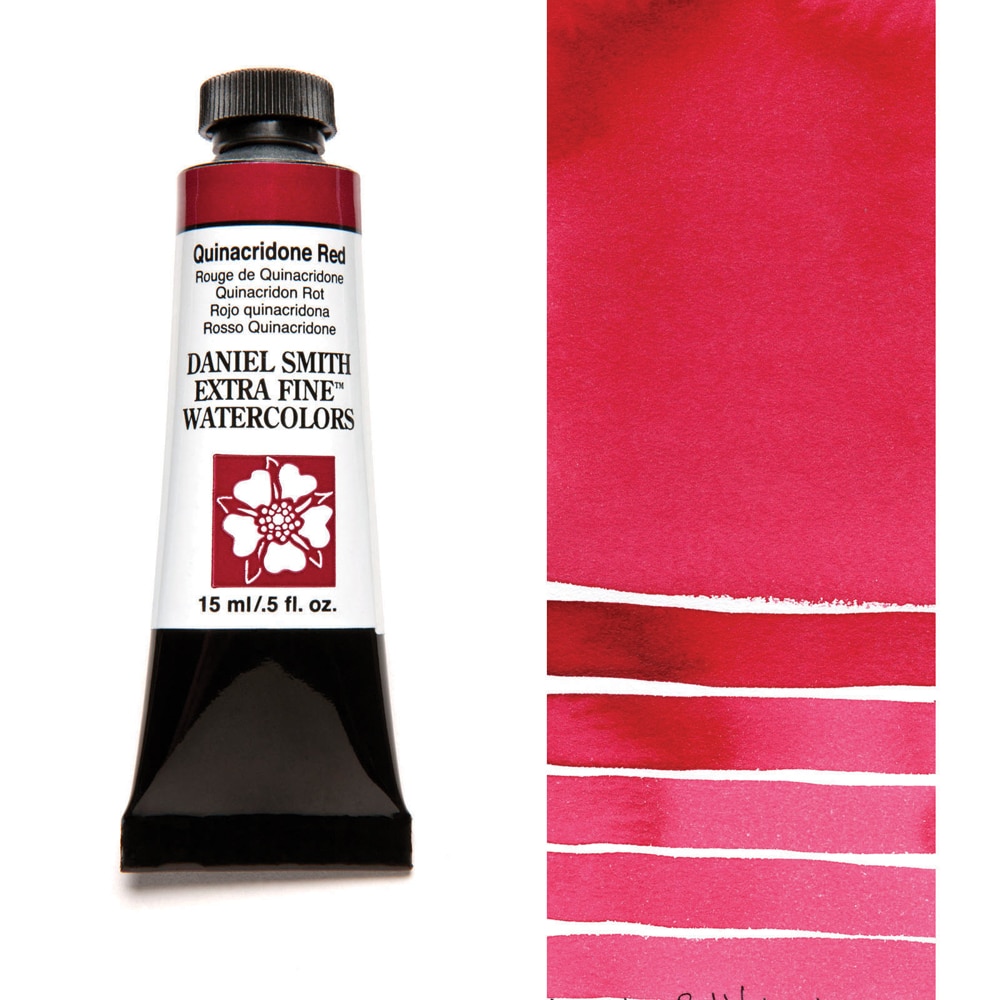
Quinacridone Red — Bold and Radiant
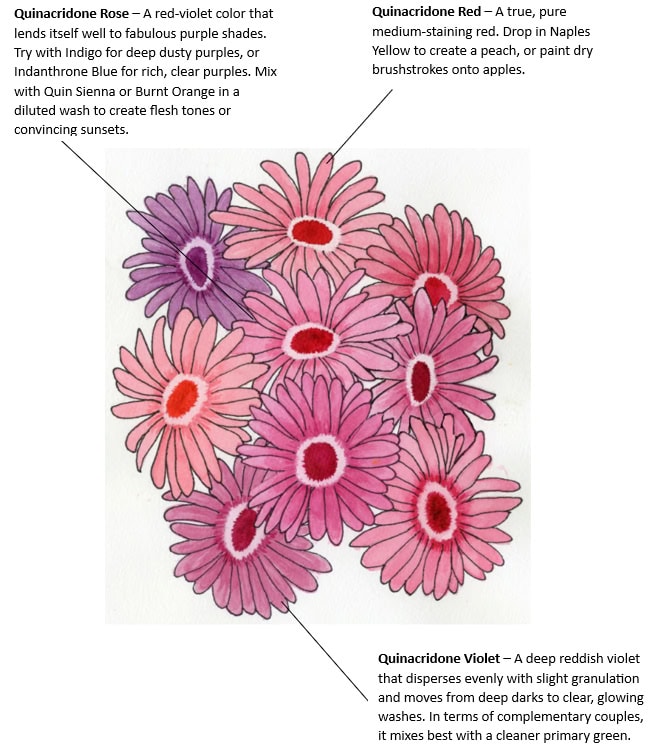
A luminous, vibrant red with a warm, rosy character and beautiful transparency. Explore its versatility for expressive florals, glowing washes, rich botanical subjects, and vibrant color mixing.
A true, pure medium-staining red. Drop Naples Yellow into Quinacridone Red and create a peach, or paint dry brushstrokes onto apples. Highly durable and extremely transparent, all the DANIEL SMITH Quinacridone colors excel in vivid clarity and intensity.
Quinacridone Rose — Rich and Romantic
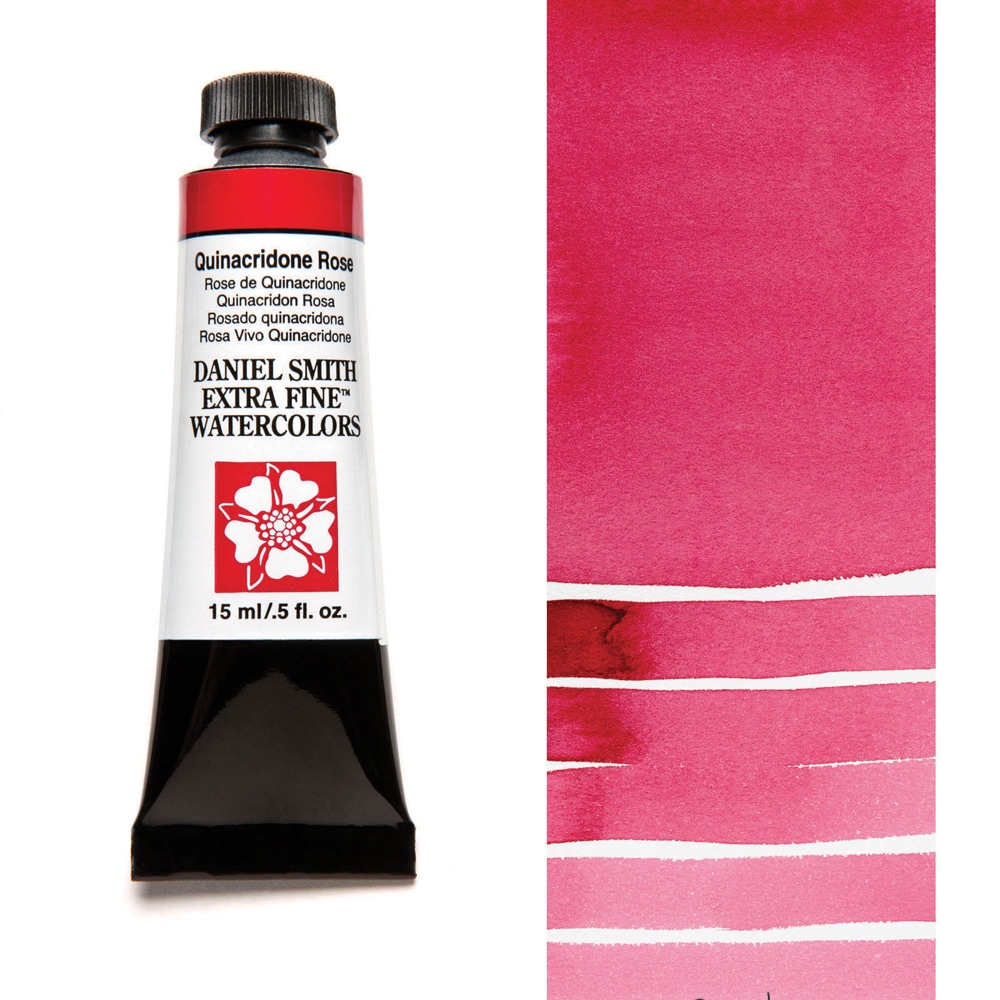
Quinacridone Rose, with its red-violet color, lends itself to fabulous purples. Try with Indigo for deep dusty purples, or Indanthrone Blue for rich, clear purples. Quinacridone Rose can be mixed with Quinacridone Sienna or Burnt Orange in dilute wash states to create fleshtones or convincing sunsets. Highly durable and extremely transparent, all the DANIEL SMITH Quinacridone colors excel in vivid clarity and intensity.
Quinacridone Rose offers remarkable depth and versatility. Its cool-leaning hue makes it ideal for luminous florals, glowing skies, expressive portraits, and vibrant color mixing.
Quinacridone Violet — Deep and Dramatic
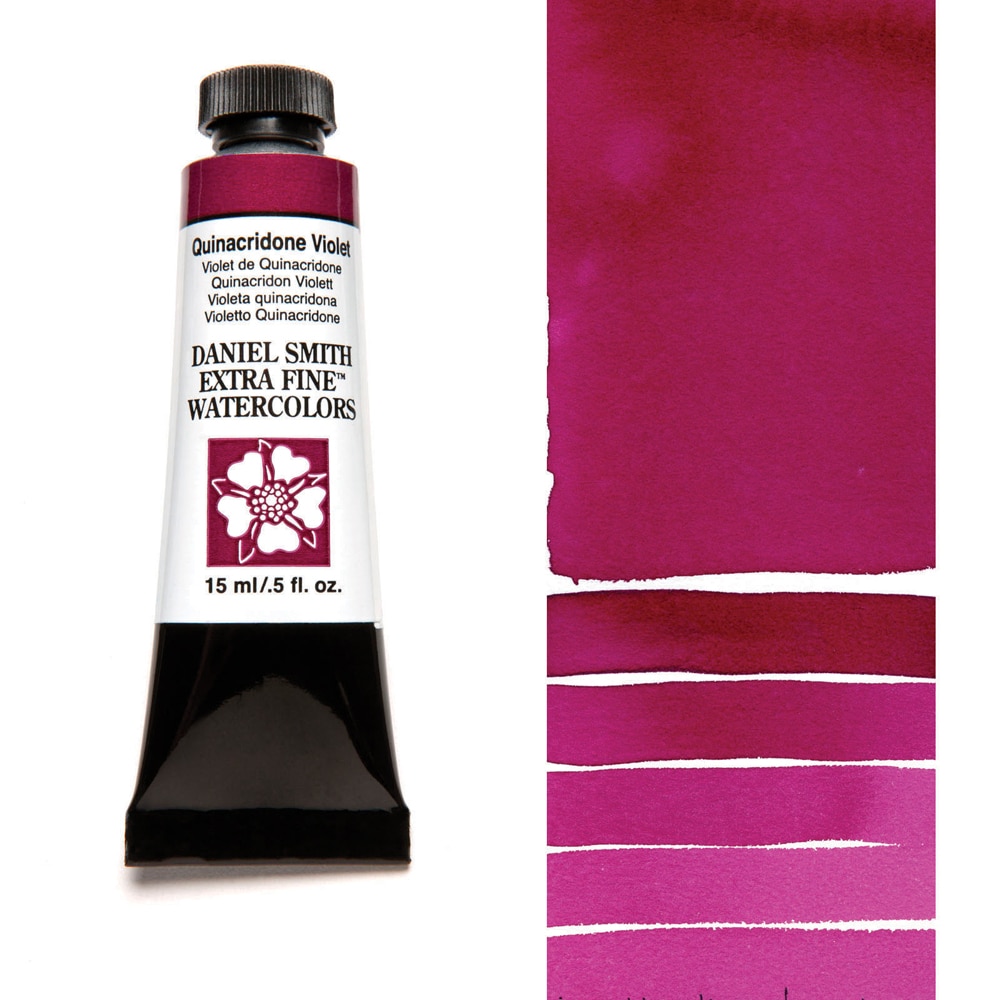
A deep, reddish violet, Quin Violet disperses evenly with slight granulation and moves from deep darks to clear, glowing washes. Like all Quinacridones, it is an extremely lightfast organic pigment. In terms of complementary couples, Quinacridone Violet mixes best with a cleaner primary green. Highly durable and extremely transparent, all the DANIEL SMITH Quinacridone colors excel in vivid clarity and intensity.
Its versatility makes it especially suited for dramatic florals, atmospheric landscapes, expressive shadows, and sophisticated color mixing.
Seeing the Difference on Paper


What Happens When We Mix Them?
Mixed with Ultramarine Blue

Mixed with Isoindoline Yellow


Since the Quinacridones are so vibrant, they’re also a natural for painting glowing skin tones.

Mix for Florals

Choosing Your Favorite Expression of PV 19
One Pigment, Endless Possibilities
Quinacridone Red, Quinacridone Rose, and Quinacridone Violet remind us that there’s always more to discover about the colors on our palettes. While they share the same PV19 pigment, each offers a different expression of color and its own creative possibilities.
The next time you reach for your favorite quinacridone, take a closer look at its pigment information, explore how it mixes, and see what makes it special.
Which expression of PV19 is your favorite? We’d love to hear what you’ve discovered!