



What if we told you that three seemingly different watercolor colors share exactly the same pigment?
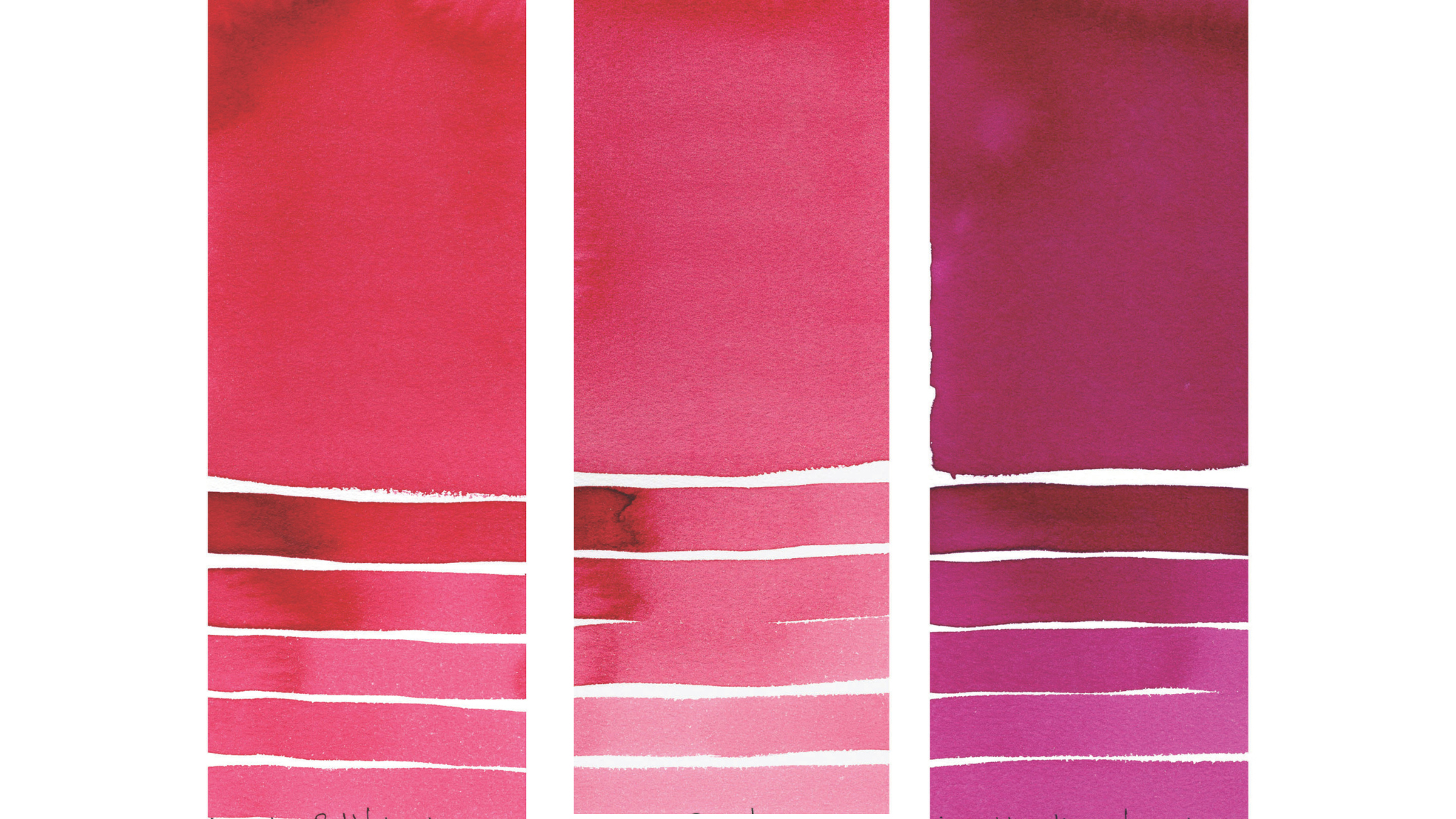
Treffen DANIEL SMITH Quinacridone Red, Quinacridone Rose, and Quinacridone Violet. At first glance, each has its own distinctive personality, from lively red to rich rose and deep violet. Yet look closely at their pigment information, and you’ll discover something fascinating: all three are made with PV19.
So how can one pigment produce three different colors? Let’s explore the fascinating world of pigments and discover what makes each of these quinacridones unique.
Understanding PV19: One Pigment, Different Expressions
Same pigment PV19, different colors—what does this mean?
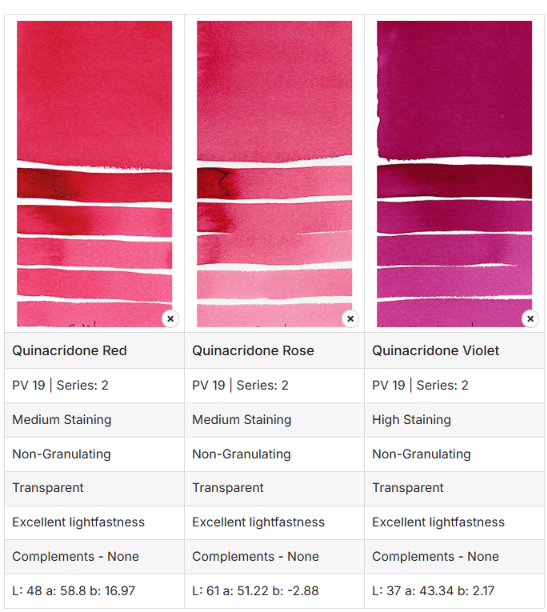
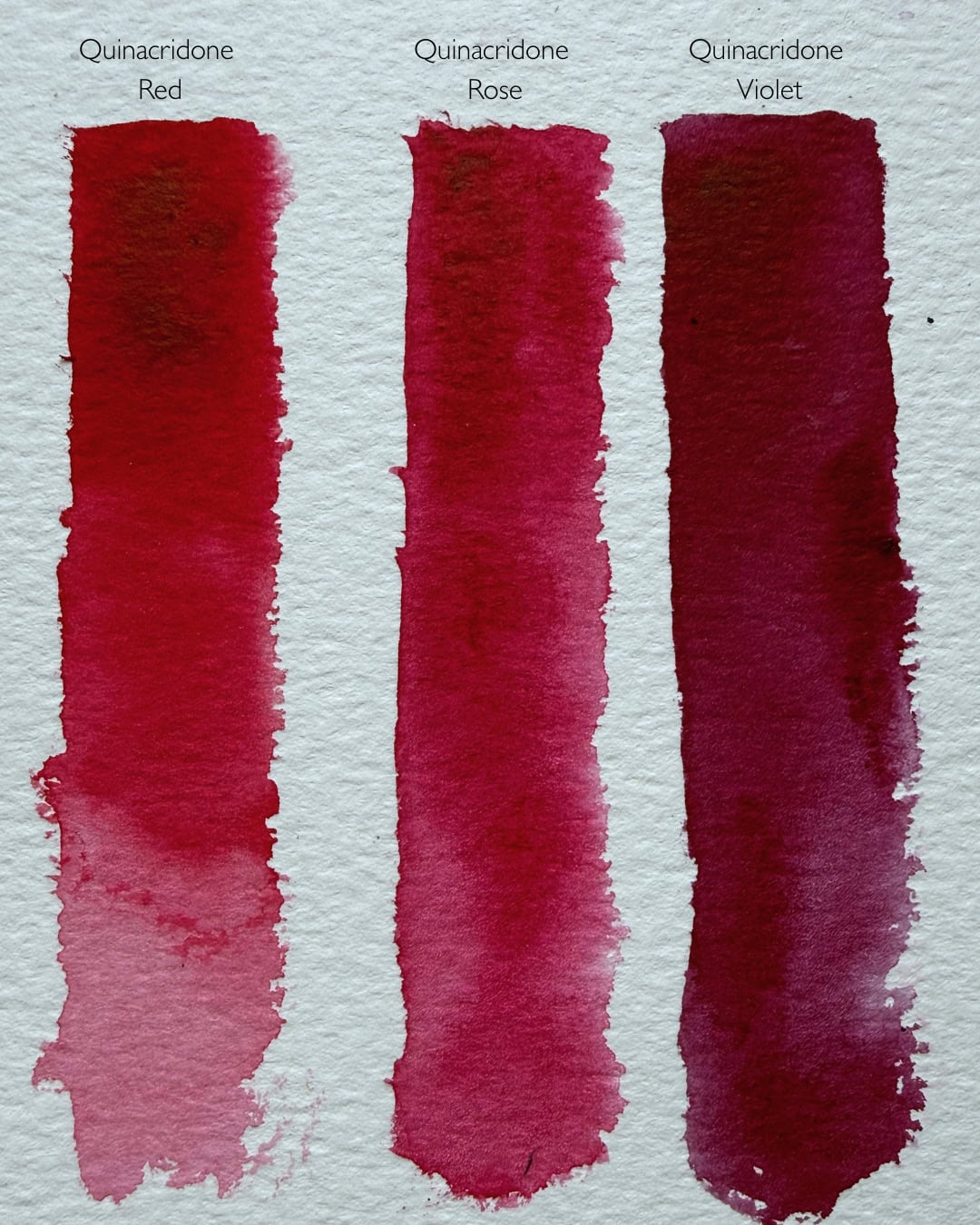
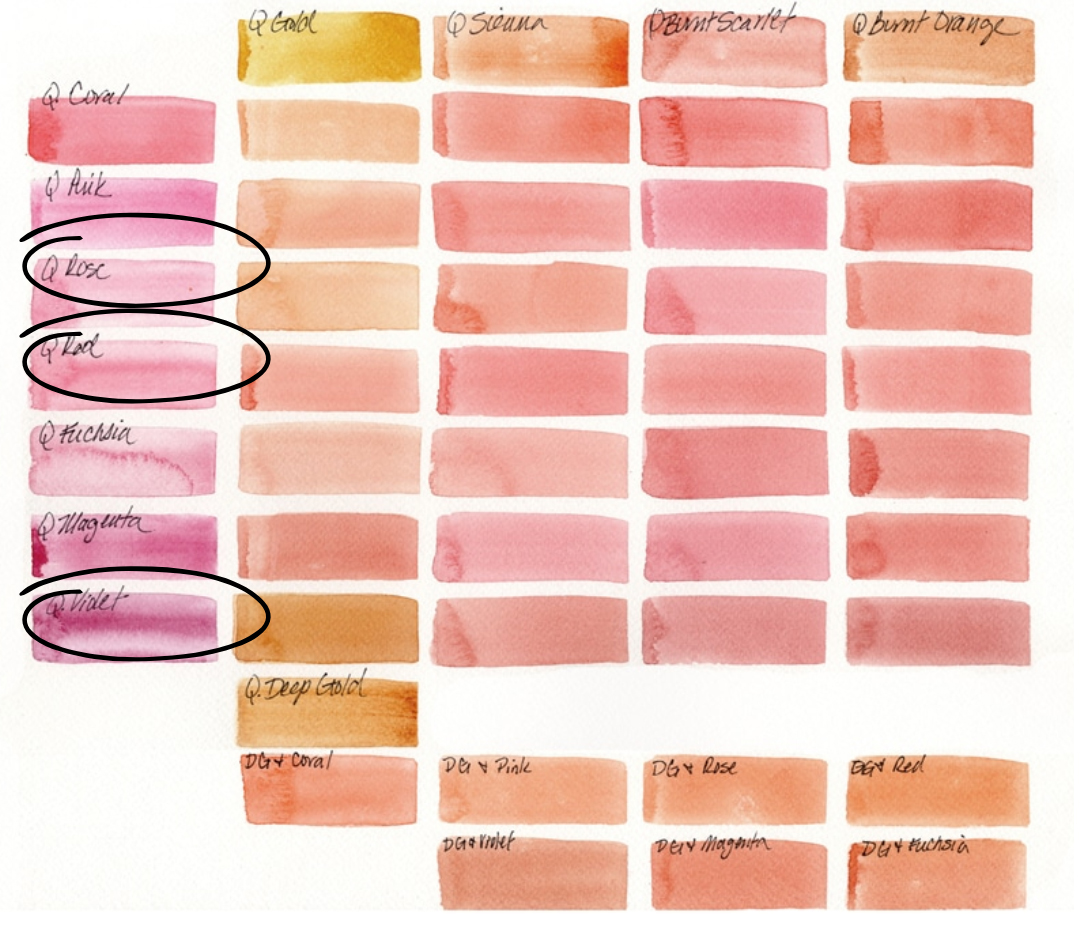
Swatch comparison generated from the Color Map
- PV 19 is a Quinacridone pigment that can have various shades of color from the pigment manufacturer.
- PV 19 can be an alpha, beta, or gamma polymorph. They are all chemically identical, but have a different arrangement of the molecules in their crystal lattice. This different arrangement gives different shades of color.
- Quinacridone Red, Quinacridone Rose, and Quinacridone Violet use one pigment. All three colors are PV 19.
Meet the Three Personalities of PV19 in Three Colors
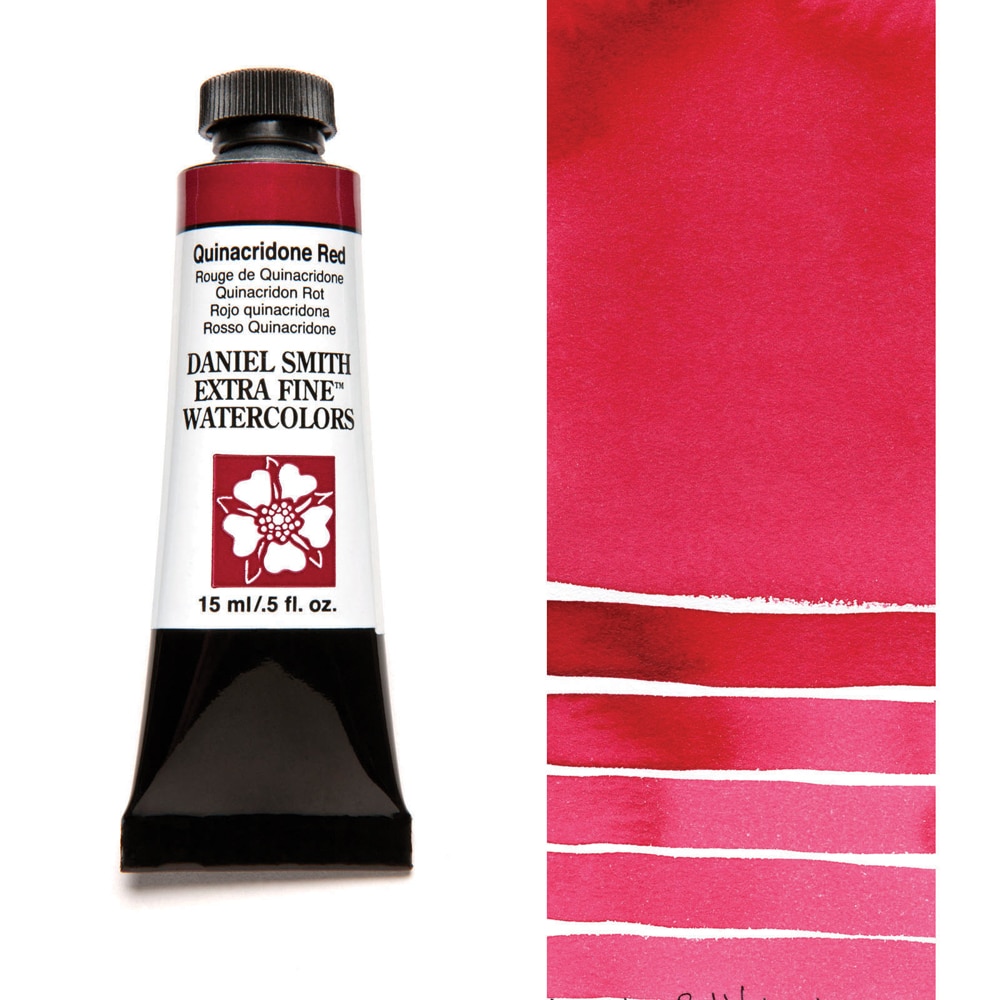
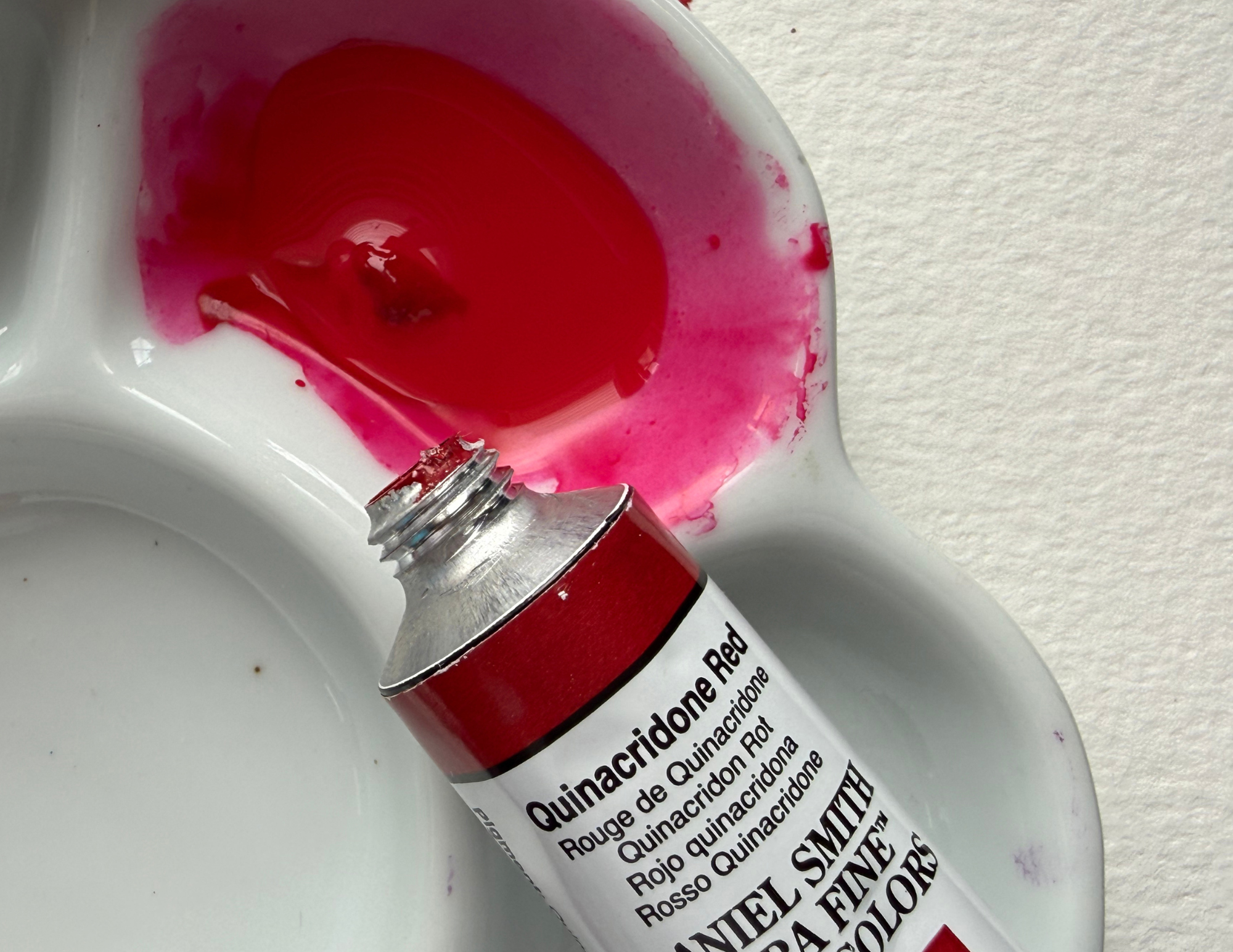
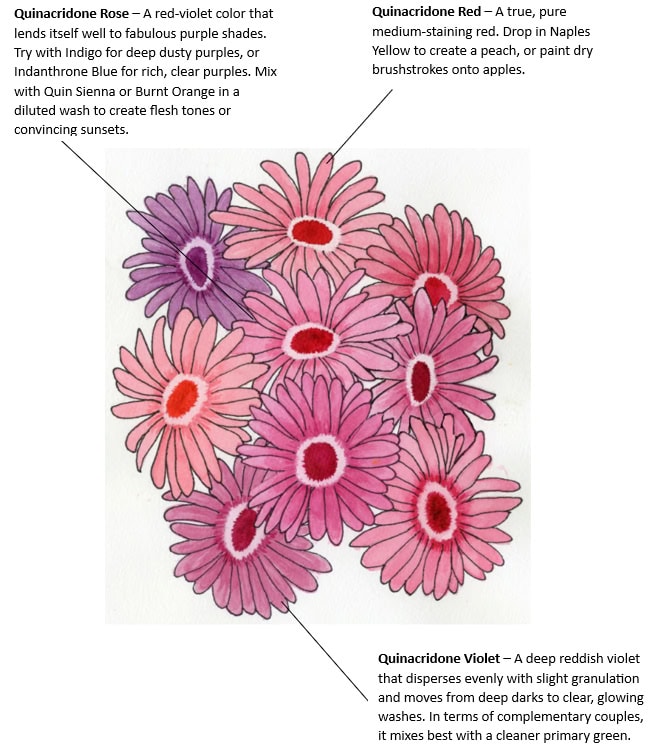
Quinacridone Red — Bold and Radiant
A luminous, vibrant red with a warm, rosy character and beautiful transparency. Explore its versatility for expressive florals, glowing washes, rich botanical subjects, and vibrant color mixing.
Ein reines, mittelstark färbendes Rot. Geben Sie Neapelgelb in Chinacridonrot, um einen Pfirsichton zu erhalten, oder malen Sie mit trockenen Pinselstrichen auf Äpfel. Alle Chinacridonfarben von DANIEL SMITH sind äußerst haltbar und transparent und zeichnen sich durch lebendige Klarheit und Intensität aus.
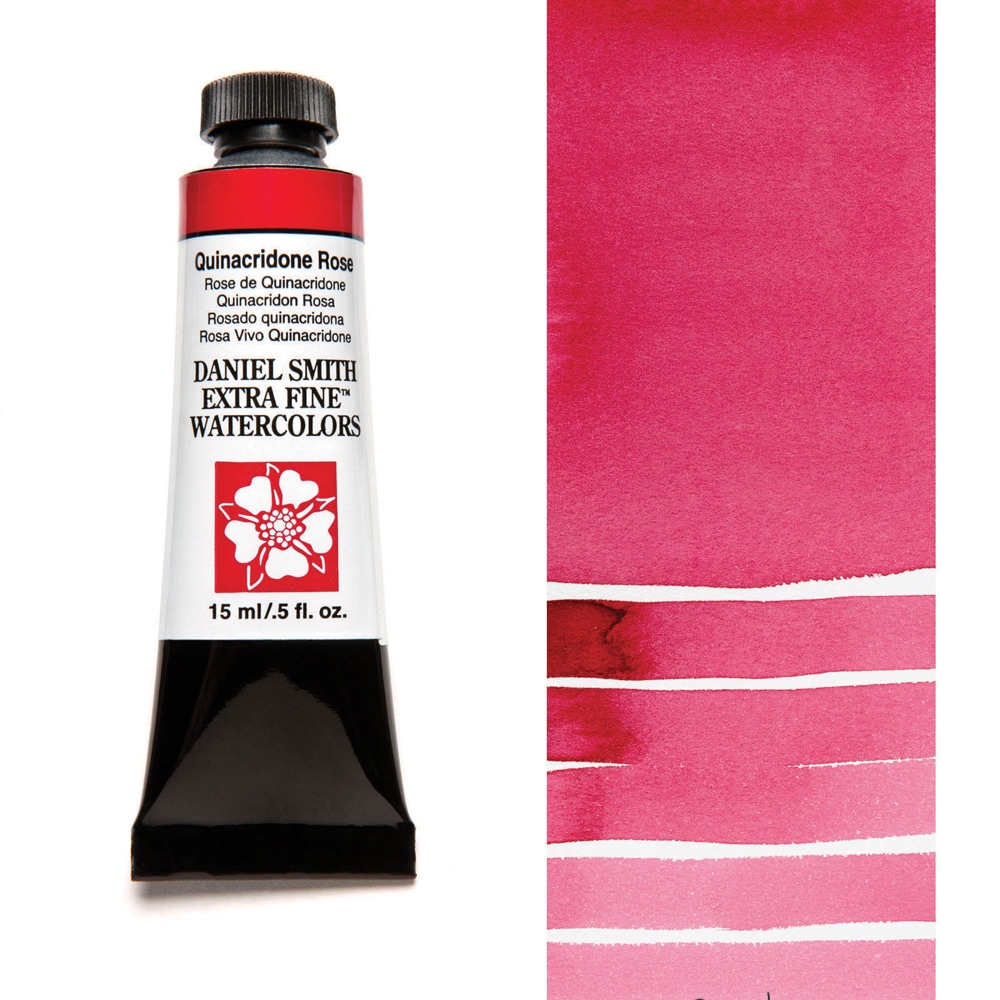
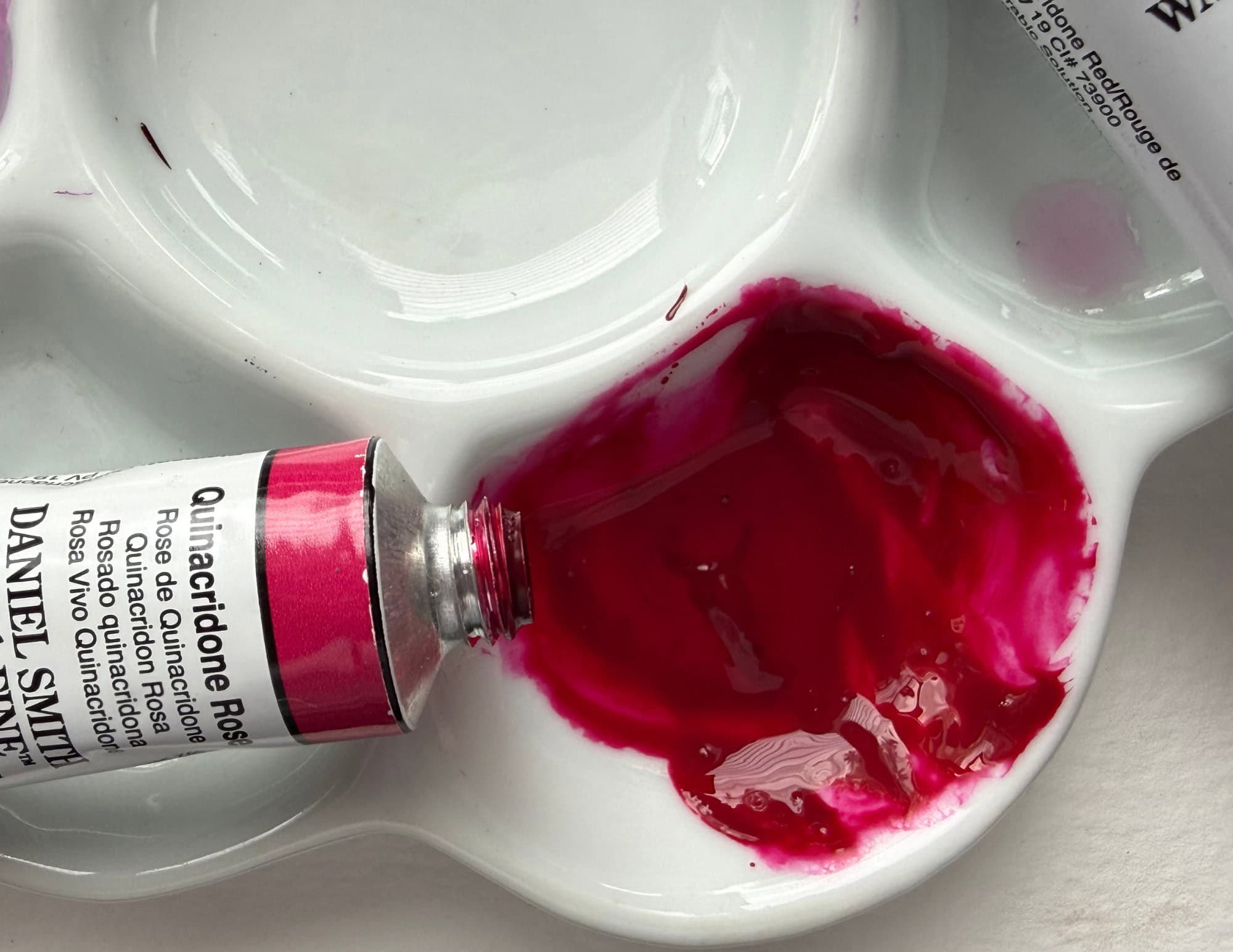
Quinacridone Rose — Rich and Romantic
Chinacridonrosa, mit seiner rotvioletten Farbe, eignet sich hervorragend für wunderschöne Violetttöne. Kombinieren Sie es mit Indigo für tiefe, staubige Violetttöne oder mit Indanthronblau für satte, klare Violetttöne. Chinacridonrosa kann in verdünnter Form mit Chinacridonsienna oder Gebranntem Orange gemischt werden, um Hauttöne oder ausdrucksstarke Sonnenuntergänge zu erzeugen. Alle Chinacridonfarben von DANIEL SMITH sind äußerst haltbar und transparent und zeichnen sich durch lebendige Klarheit und Intensität aus.
Quinacridone Rose offers remarkable depth and versatility. Its cool-leaning hue makes it ideal for luminous florals, glowing skies, expressive portraits, and vibrant color mixing.
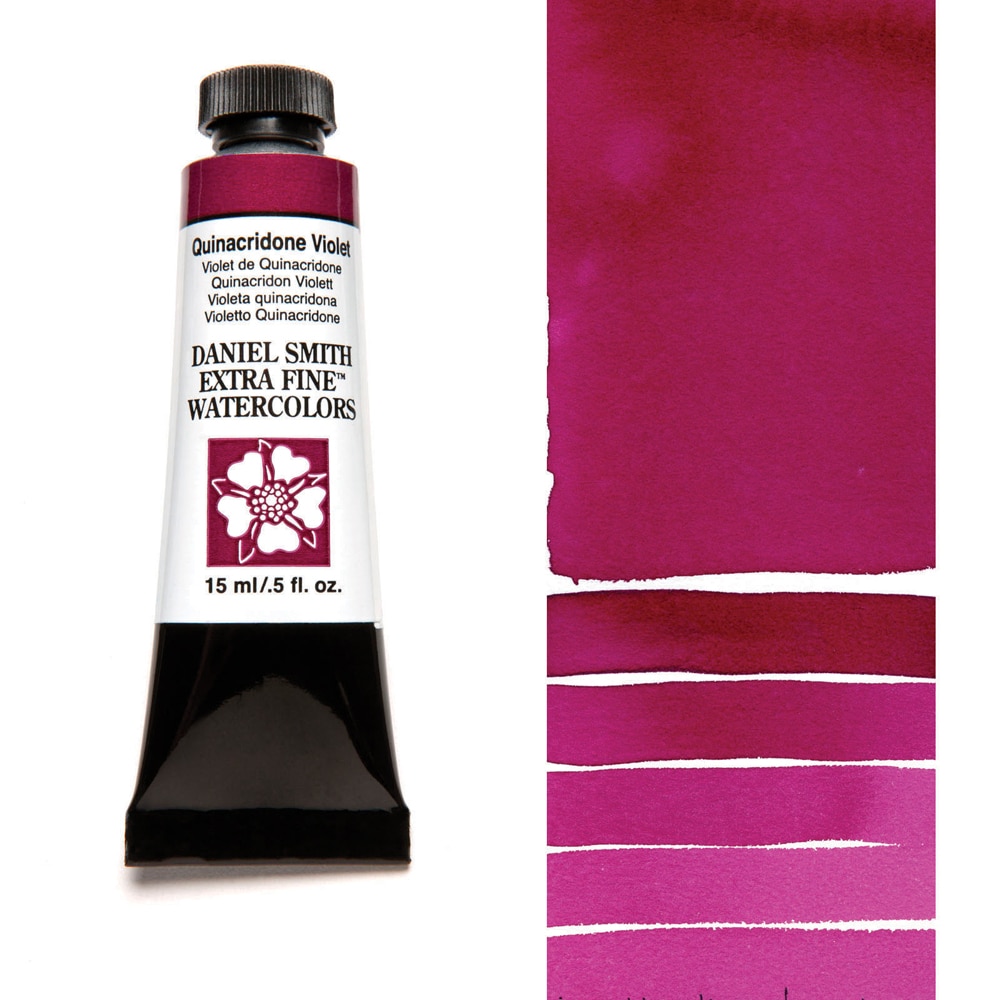
Quinacridone Violet — Deep and Dramatic
Quin Violet ist ein tiefes, rötliches Violett, das sich gleichmäßig mit leichter Körnung verteilt und von tiefen Dunkeltönen bis hin zu klaren, leuchtenden Lasuren reicht. Wie alle Chinacridonpigmente ist es ein extrem lichtechtes organisches Pigment. In Bezug auf Farbkombinationen harmoniert Quin Violet am besten mit einem reineren Primärgrün. Alle Quinacridone-Farben von DANIEL SMITH zeichnen sich durch hohe Strapazierfähigkeit und extreme Transparenz sowie durch lebendige Klarheit und Intensität aus.
Its versatility makes it especially suited for dramatic florals, atmospheric landscapes, expressive shadows, and sophisticated color mixing.
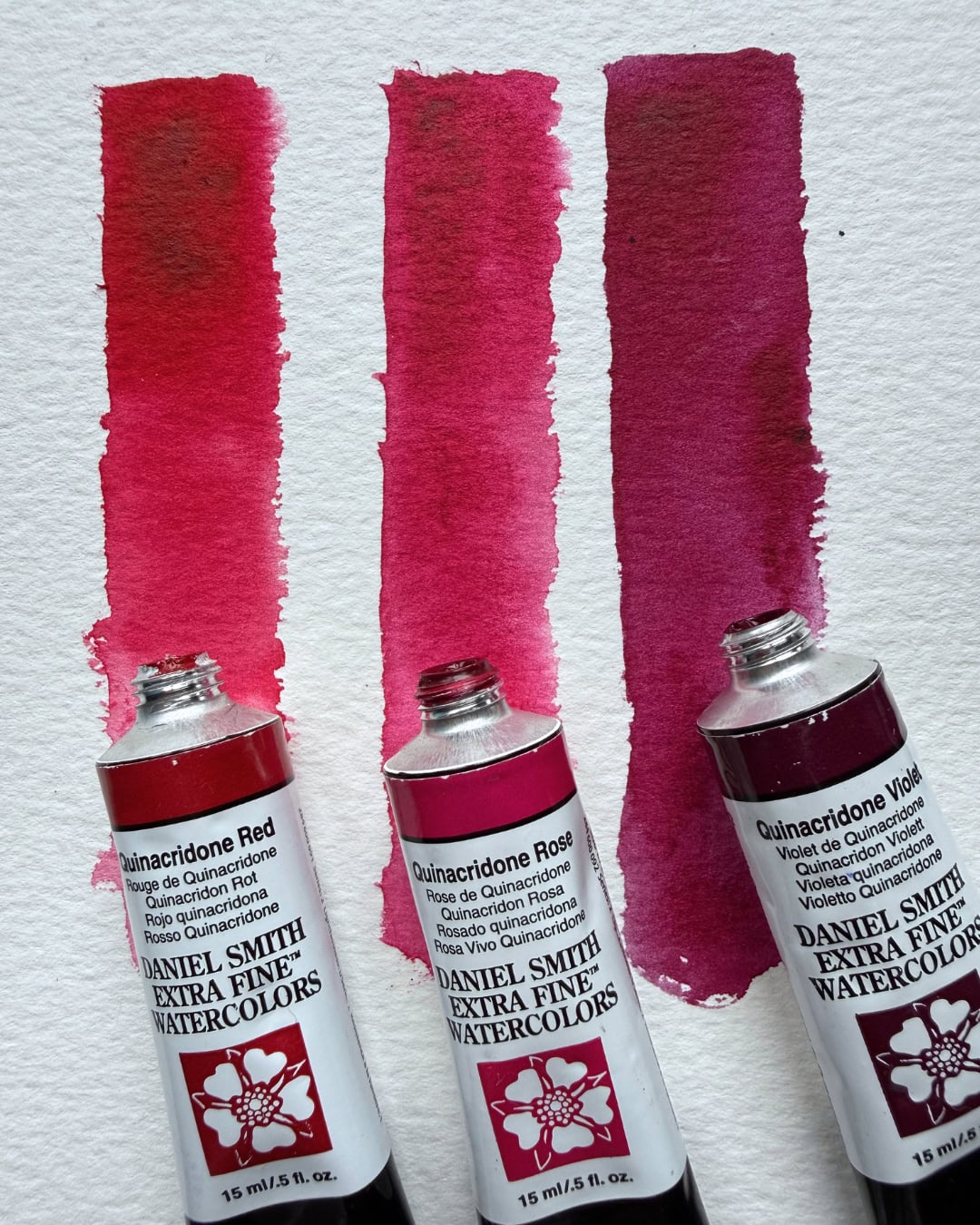
Seeing the Difference on Paper
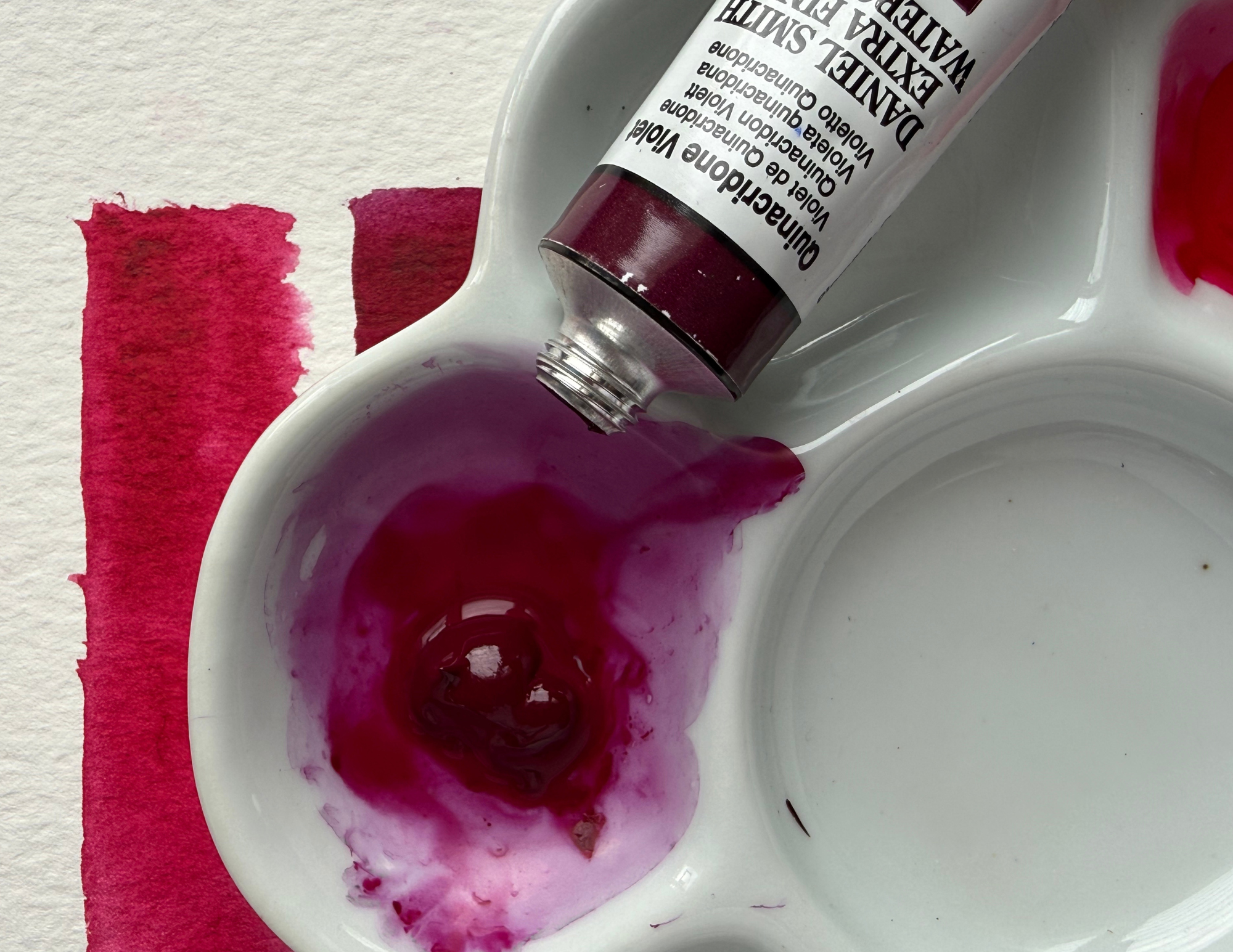
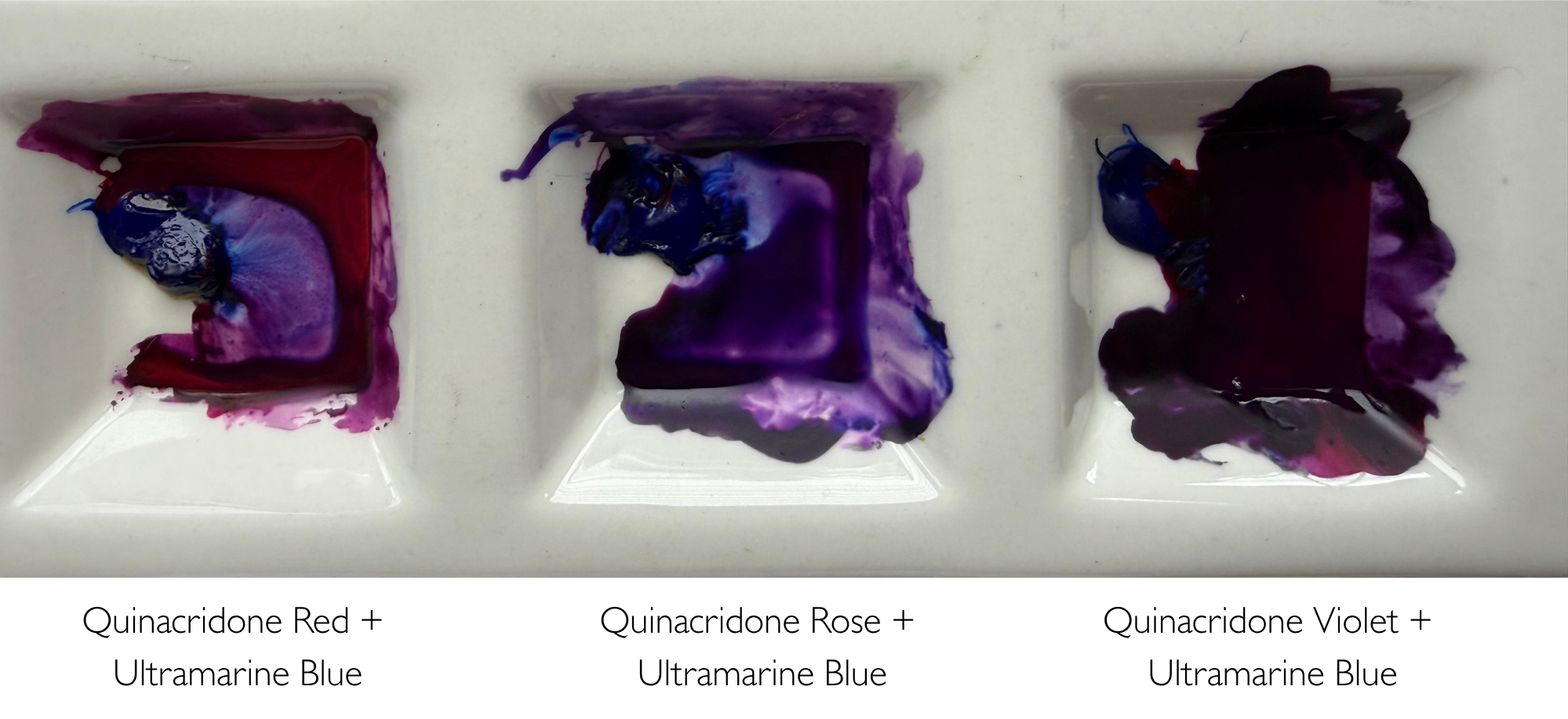
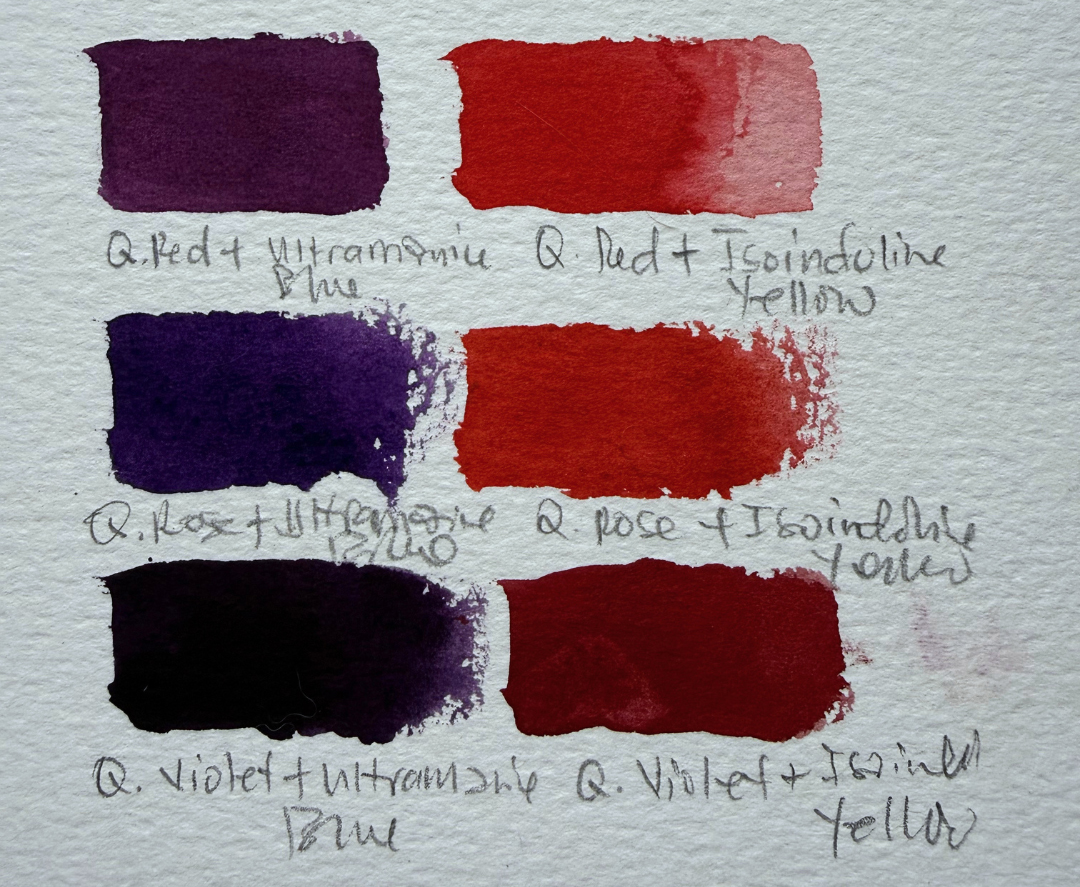
What Happens When We Mix Them?
Mixed with Ultramarine Blue
Mixed with Isoindoline Yellow
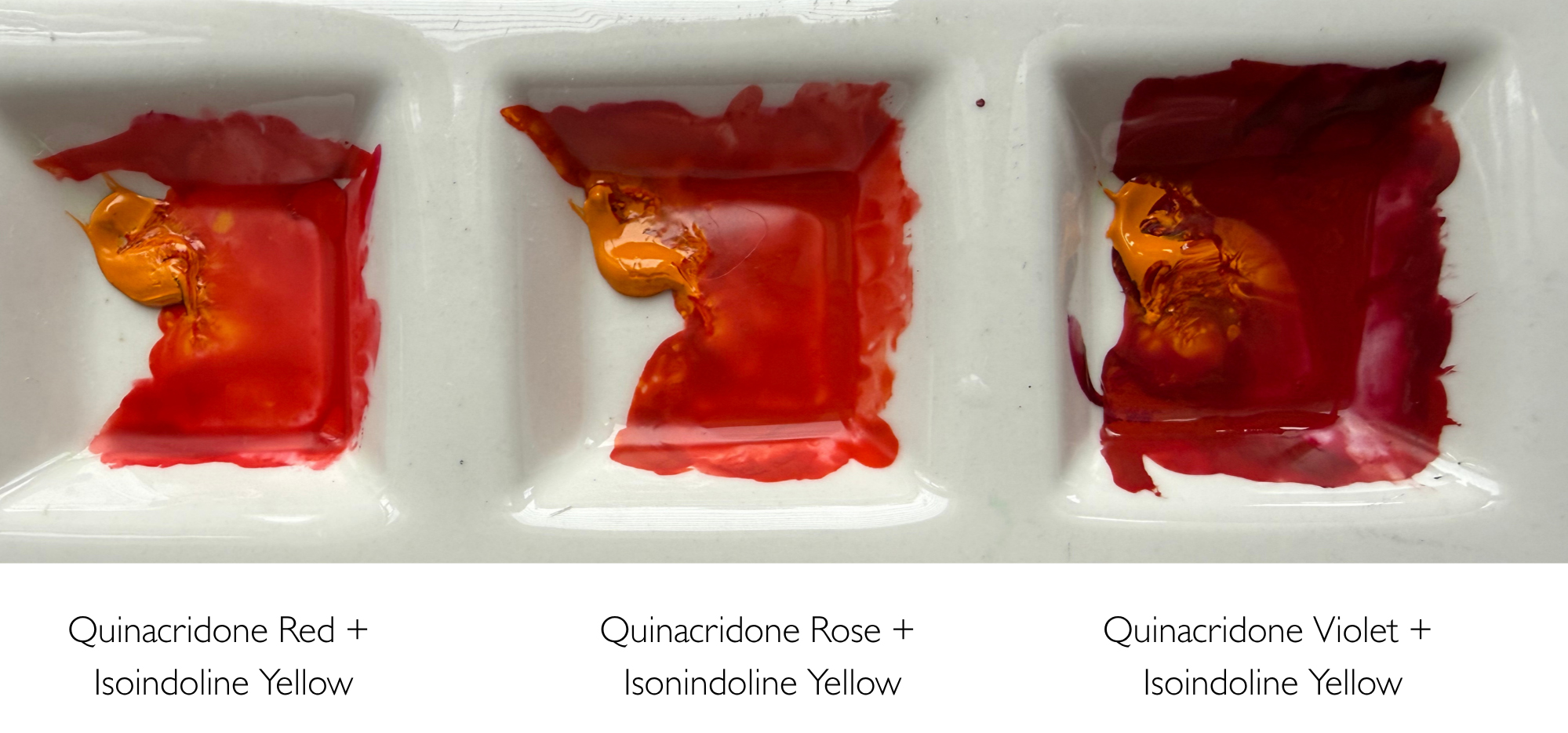
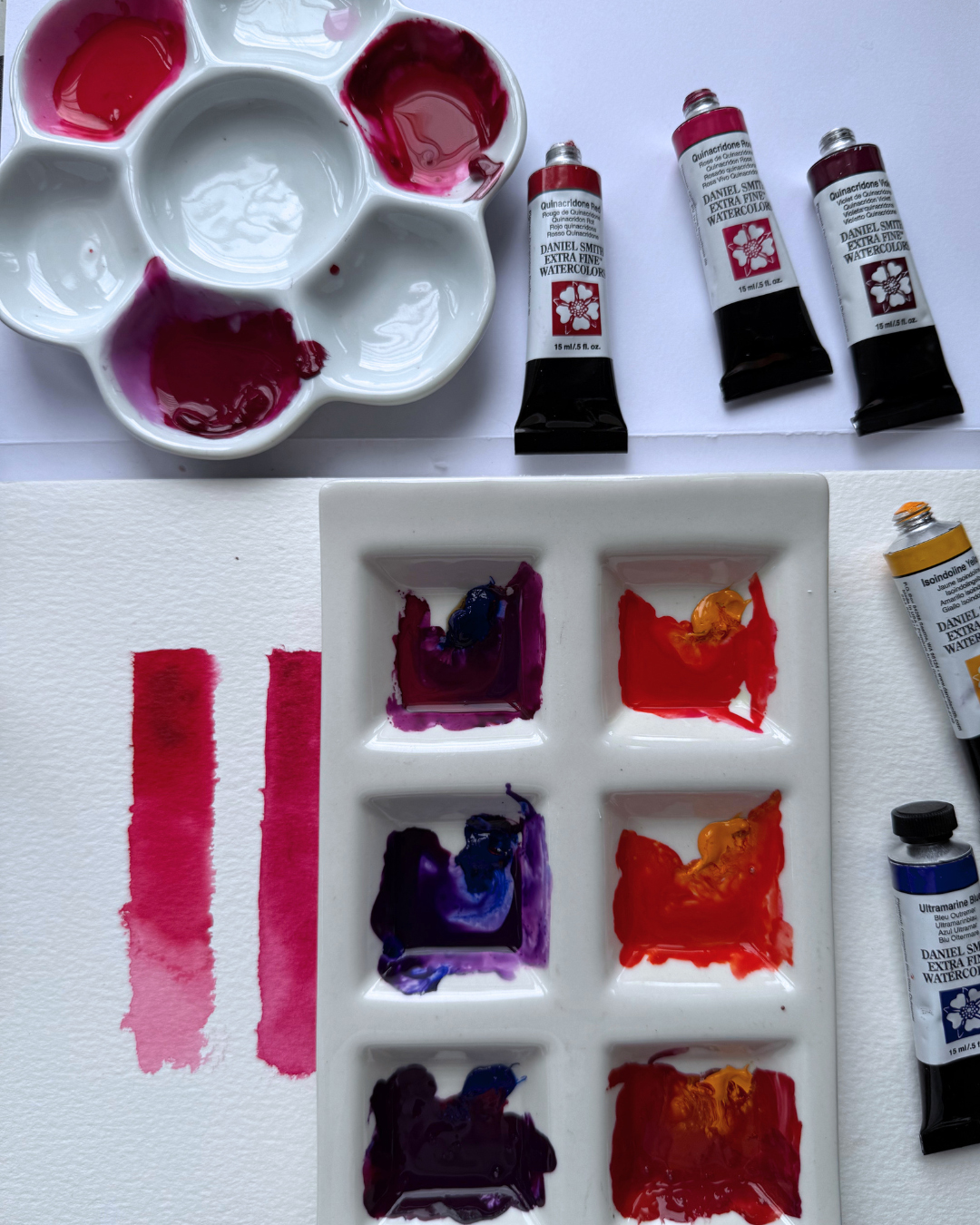
Since the Quinacridones are so vibrant, they’re also a natural for painting glowing skin tones.
Mix for Florals
Choosing Your Favorite Expression of PV 19
One Pigment, Endless Possibilities
Quinacridone Red, Quinacridone Rose, and Quinacridone Violet remind us that there’s always more to discover about the colors on our palettes. While they share the same PV19 pigment, each offers a different expression of color and its own creative possibilities.
The next time you reach for your favorite quinacridone, take a closer look at its pigment information, explore how it mixes, and see what makes it special.
Which expression of PV19 is your favorite? We’d love to hear what you’ve discovered!