


What if we told you that three seemingly different watercolor colors share exactly the same pigment?
Gặp DANIEL SMITH Quinacridone Red, Quinacridone Rose, and Quinacridone Violet. At first glance, each has its own distinctive personality, from lively red to rich rose and deep violet. Yet look closely at their pigment information, and you’ll discover something fascinating: all three are made with PV19.
So how can one pigment produce three different colors? Let’s explore the fascinating world of pigments and discover what makes each of these quinacridones unique.
Understanding PV19: One Pigment, Different Expressions
Same pigment PV19, different colors—what does this mean?
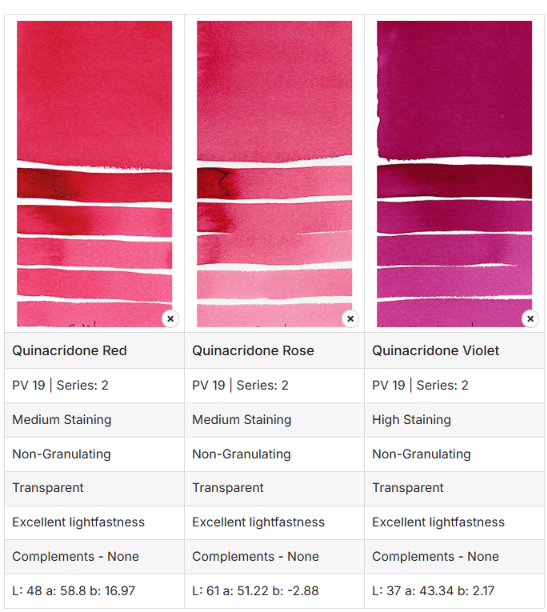
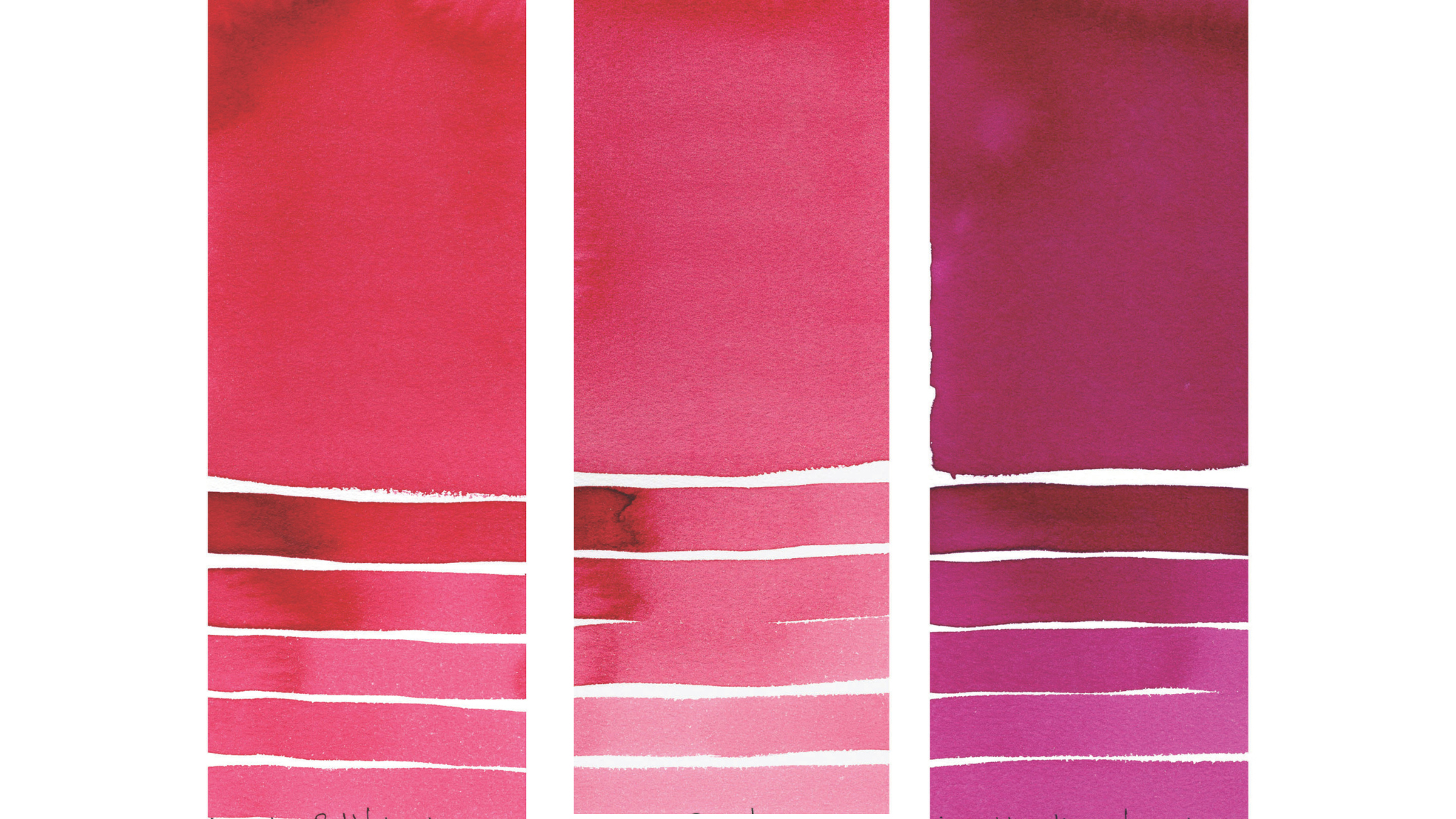
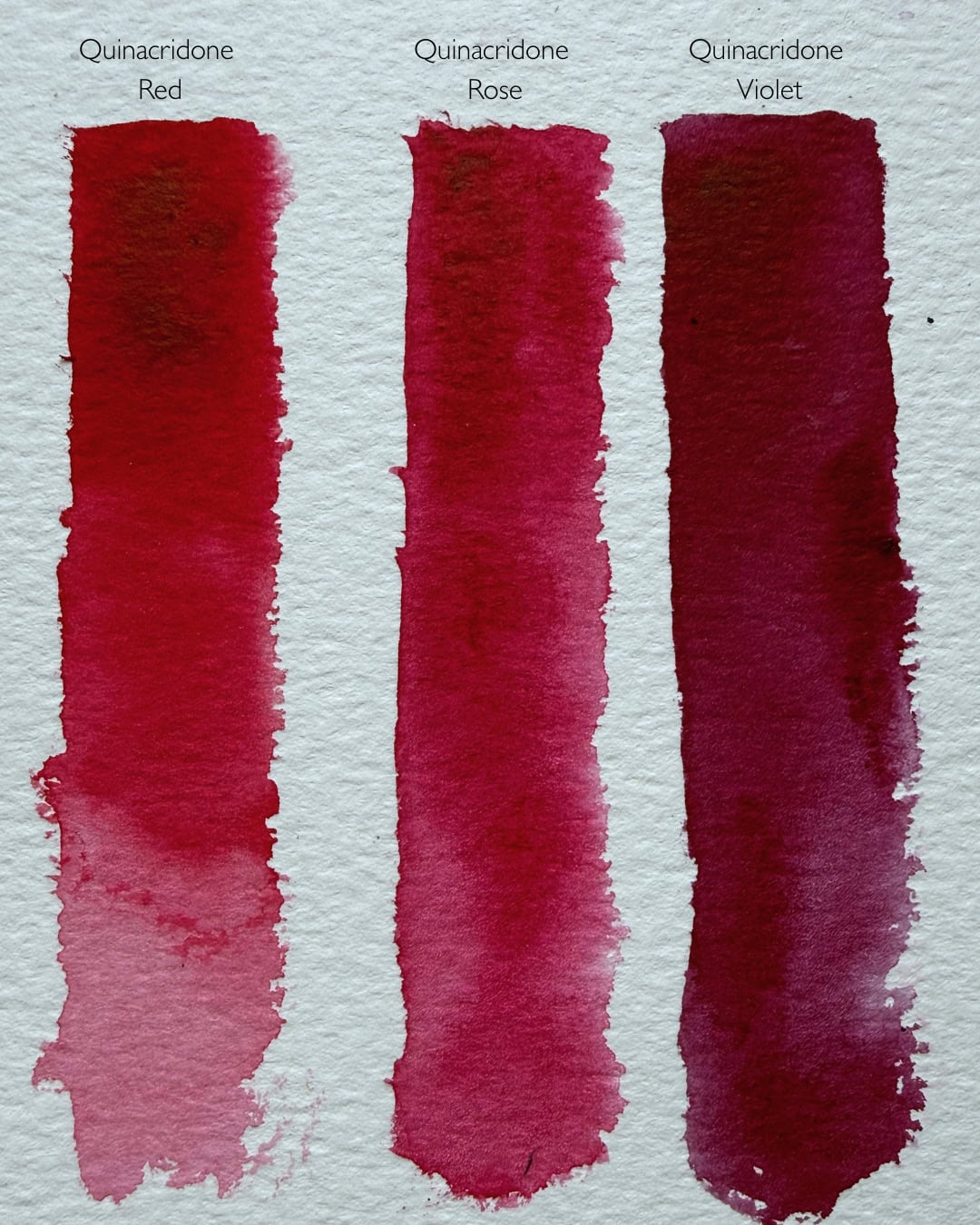
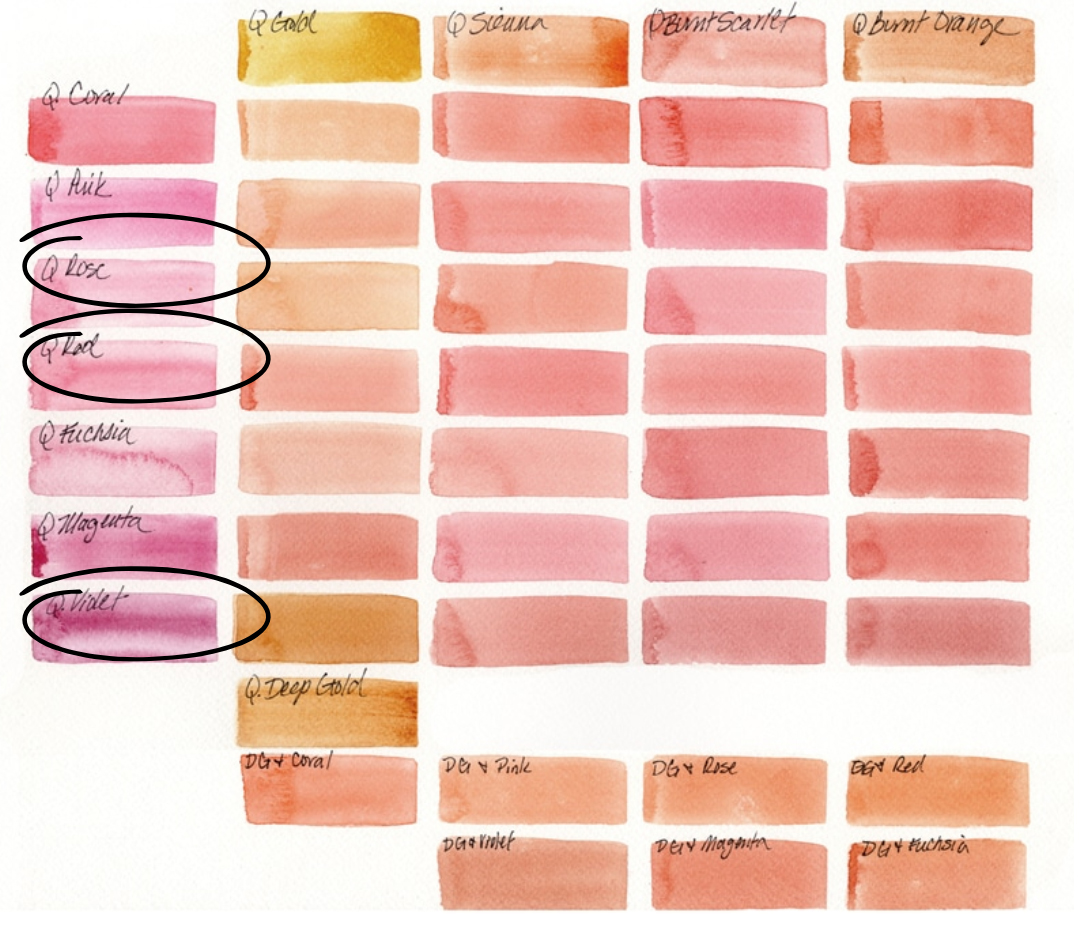
Swatch comparison generated from the Color Map
- PV 19 is a Quinacridone pigment that can have various shades of color from the pigment manufacturer.
- PV 19 can be an alpha, beta, or gamma polymorph. They are all chemically identical, but have a different arrangement of the molecules in their crystal lattice. This different arrangement gives different shades of color.
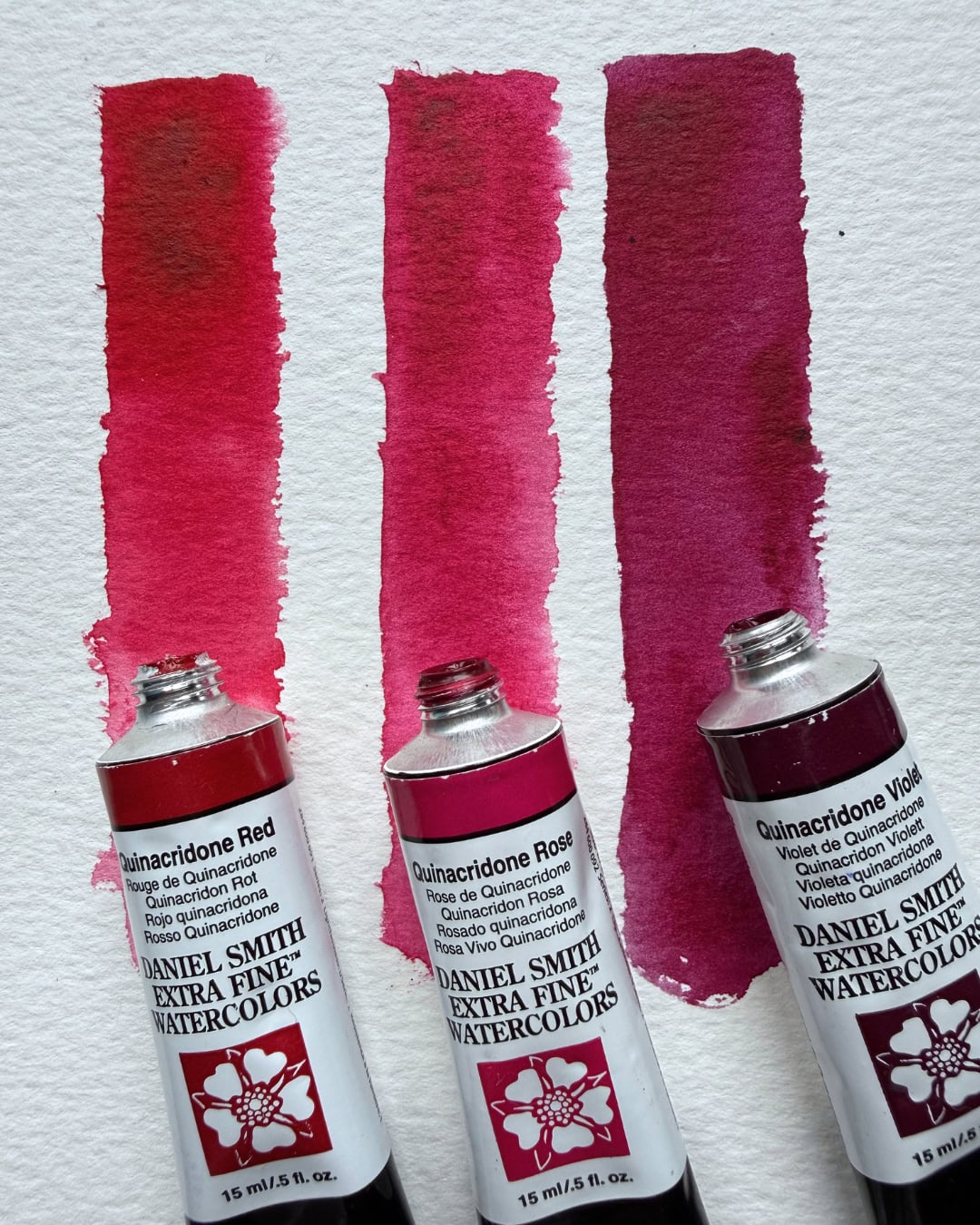
- Quinacridone Red, Quinacridone Rose, and Quinacridone Violet use one pigment. All three colors are PV 19.
Meet the Three Personalities of PV19 in Three Colors
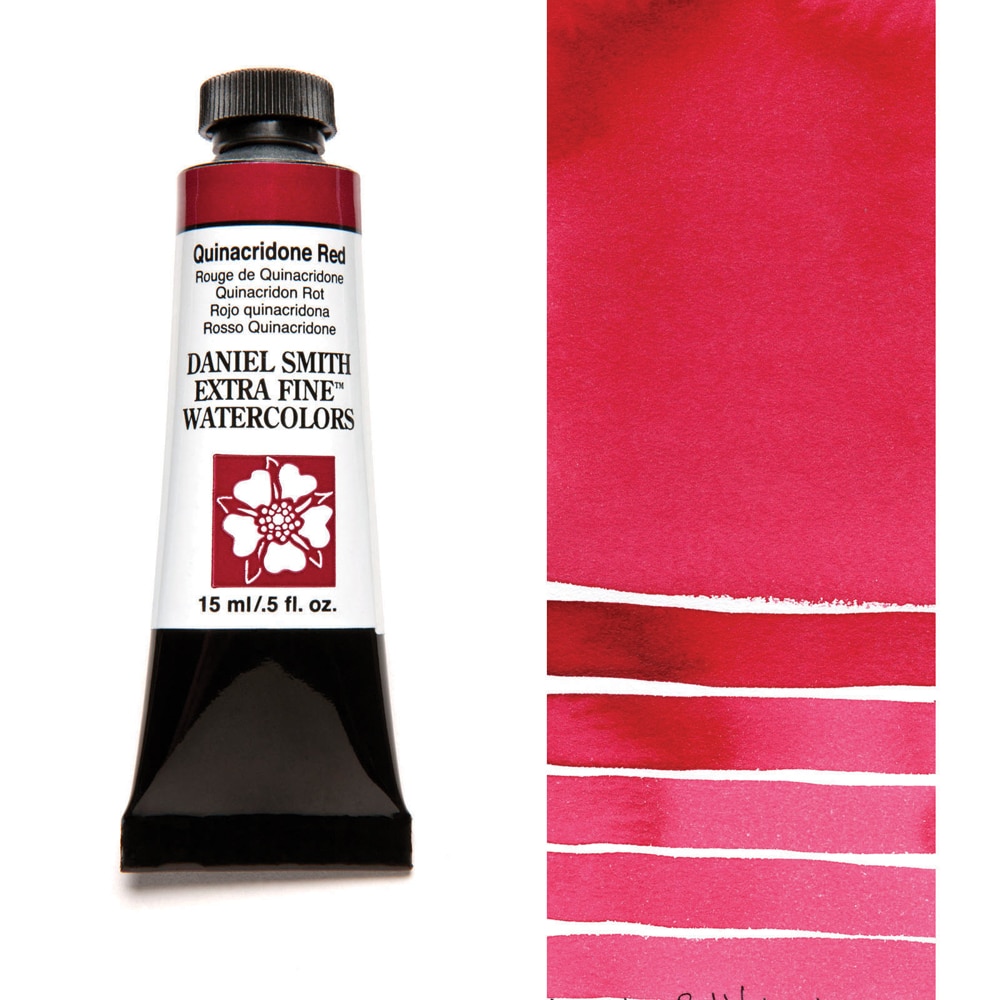
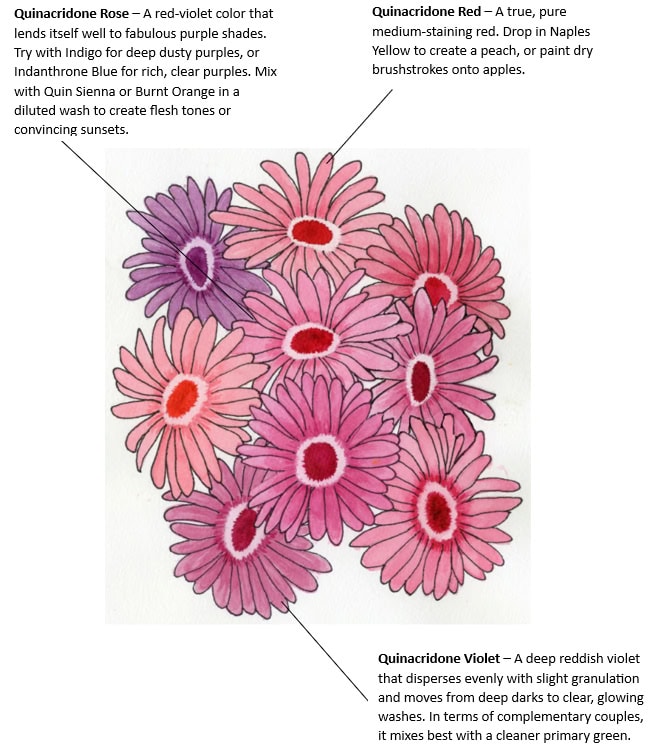
Quinacridone Red — Bold and Radiant
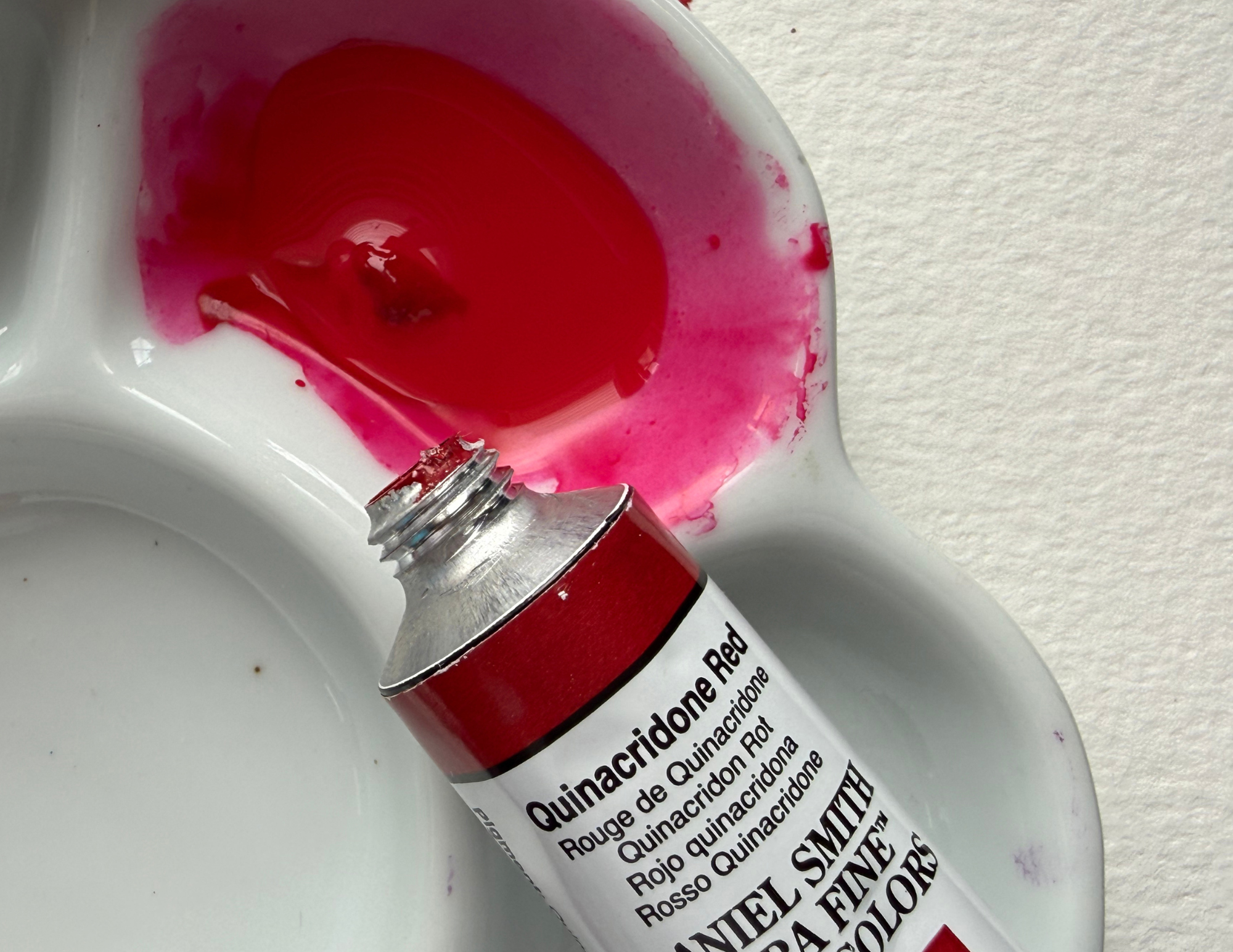
A luminous, vibrant red with a warm, rosy character and beautiful transparency. Explore its versatility for expressive florals, glowing washes, rich botanical subjects, and vibrant color mixing.
Một màu đỏ thuần khiết, trung bình, có độ bám màu tốt. Pha thêm màu vàng Naples vào màu đỏ Quinacridone để tạo ra màu đào, hoặc dùng cọ khô vẽ lên táo. Có độ bền cao và cực kỳ trong suốt, tất cả các màu Quinacridone của DANIEL SMITH đều nổi bật về độ rõ nét và cường độ màu sắc sống động.
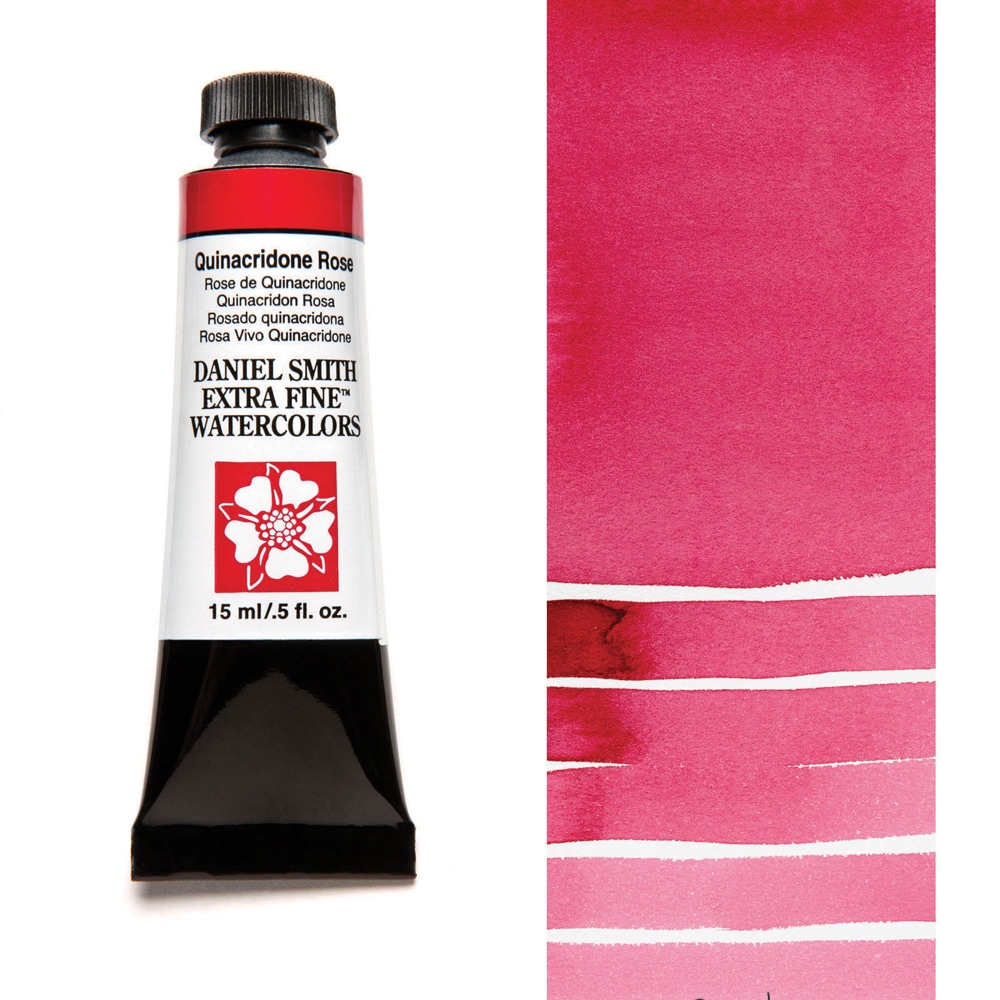
Quinacridone Rose — Rich and Romantic
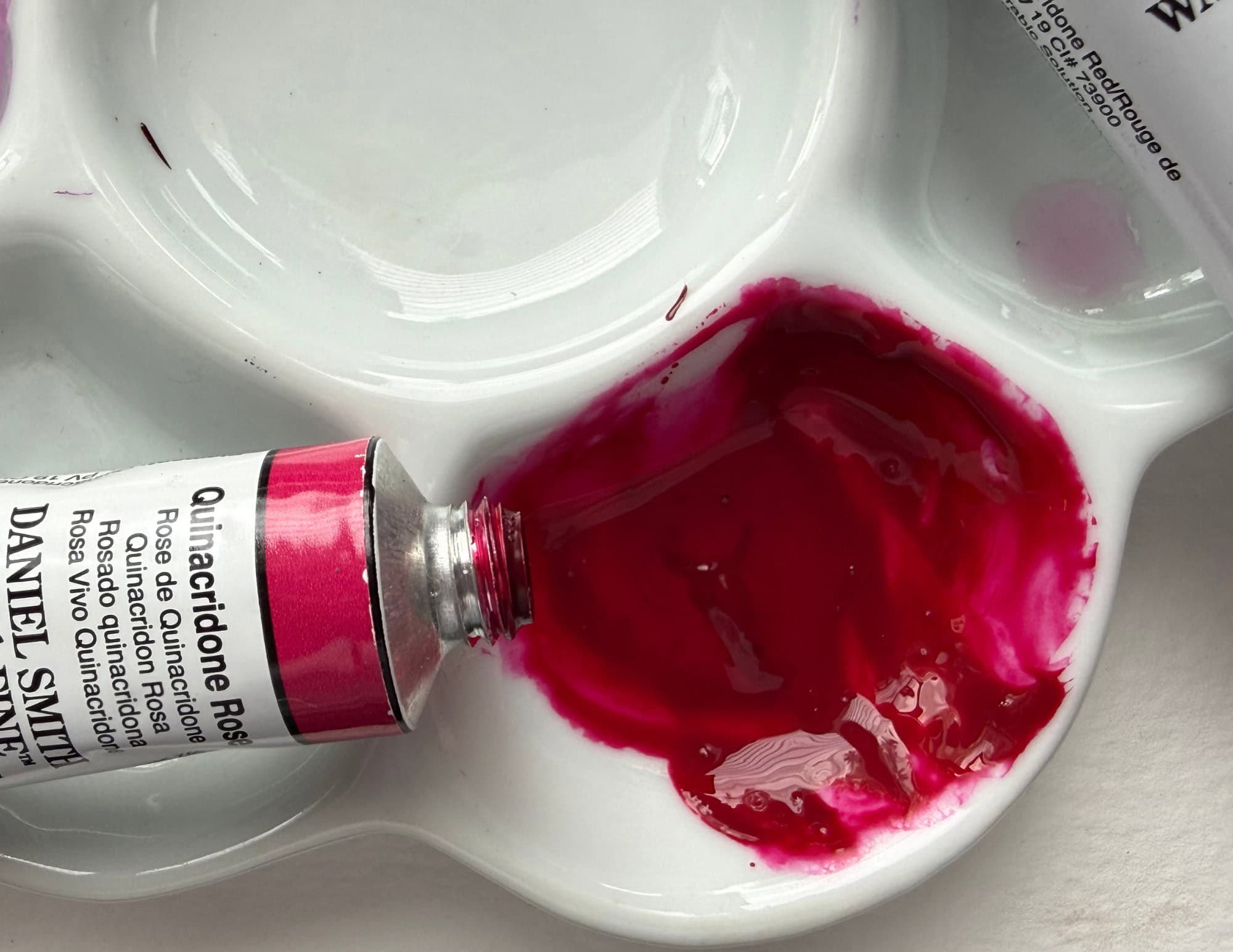
Màu Quinacridone Rose, với sắc đỏ tím, rất thích hợp để tạo ra những sắc tím tuyệt vời. Hãy thử kết hợp với Indigo để tạo ra những sắc tím bụi đậm, hoặc Indanthrone Blue để tạo ra những sắc tím tươi sáng, rực rỡ. Quinacridone Rose có thể được pha loãng với Quinacridone Sienna hoặc Burnt Orange để tạo ra màu da hoặc cảnh hoàng hôn chân thực. Có độ bền cao và độ trong suốt tuyệt vời, tất cả các màu Quinacridone của DANIEL SMITH đều nổi bật về độ rõ nét và cường độ màu sắc sống động.
Quinacridone Rose offers remarkable depth and versatility. Its cool-leaning hue makes it ideal for luminous florals, glowing skies, expressive portraits, and vibrant color mixing.
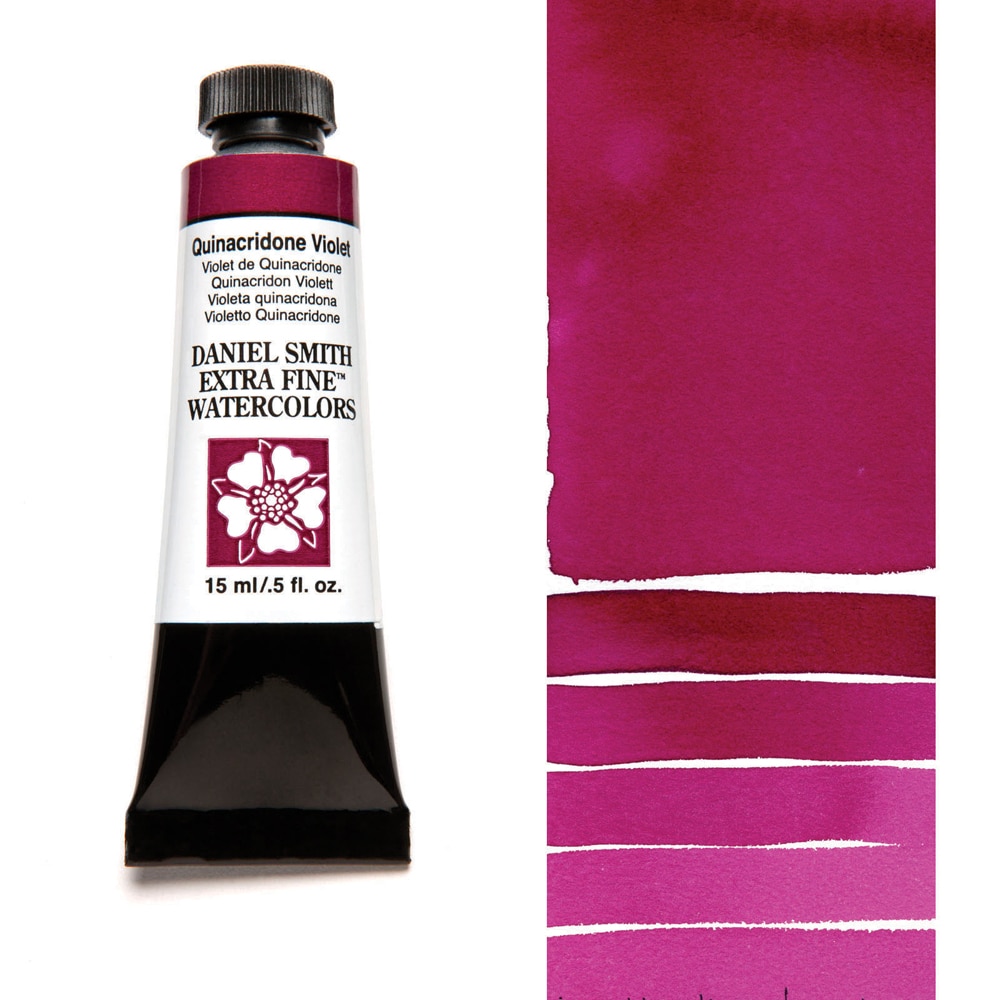
Quinacridone Violet — Deep and Dramatic
Màu tím đỏ sẫm, Quin Violet phân tán đều với độ hạt nhẹ và chuyển từ sắc độ tối đậm sang sắc độ trong suốt, rạng rỡ. Giống như tất cả các loại Quinacridone, đây là một loại sắc tố hữu cơ có độ bền màu cực cao. Về các cặp màu bổ sung, Quinacridone Violet kết hợp tốt nhất với màu xanh lá cây cơ bản trong hơn. Có độ bền cao và cực kỳ trong suốt, tất cả các màu Quinacridone của DANIEL SMITH đều nổi bật về độ rõ nét và cường độ màu sắc sống động.
Its versatility makes it especially suited for dramatic florals, atmospheric landscapes, expressive shadows, and sophisticated color mixing.
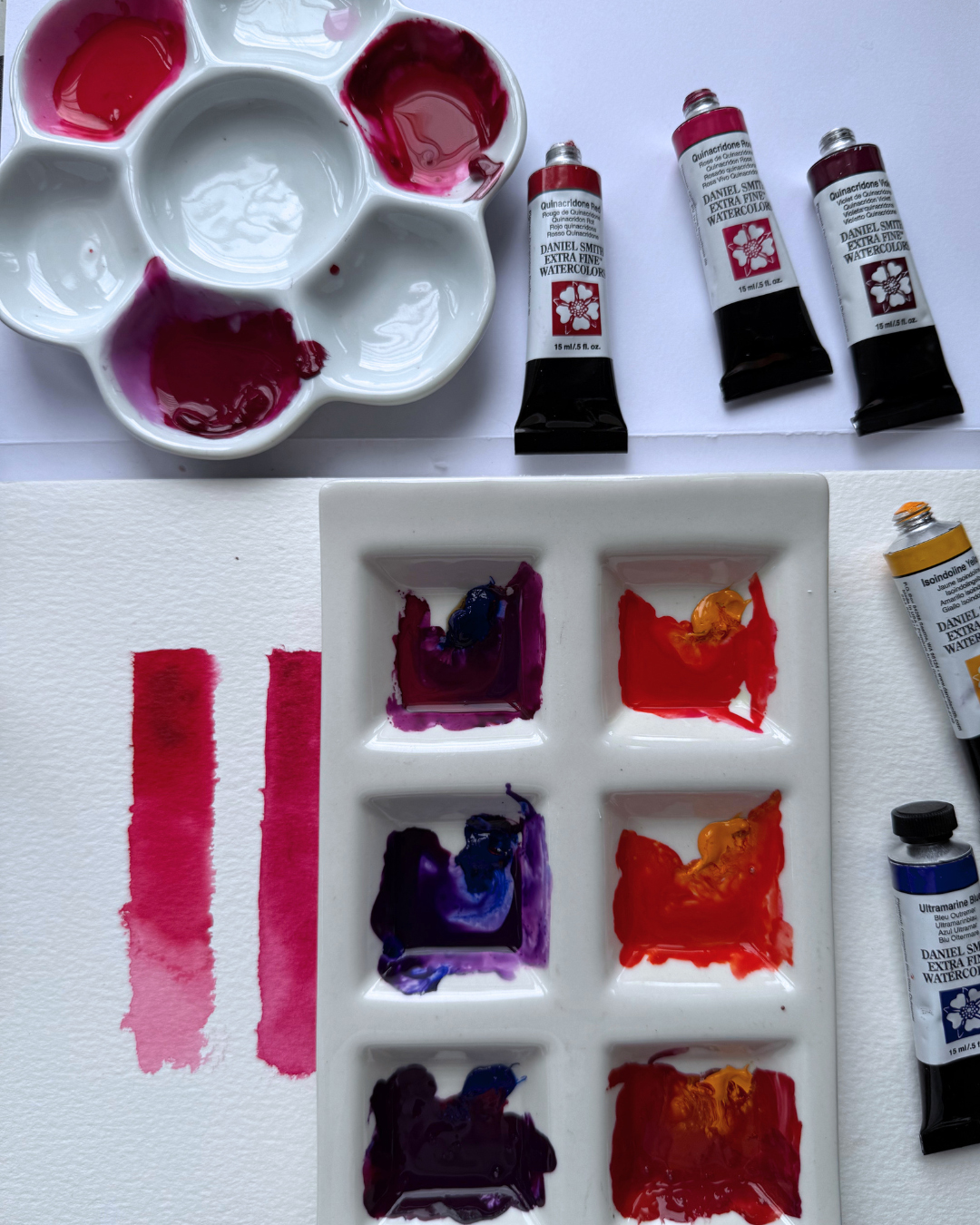
Seeing the Difference on Paper
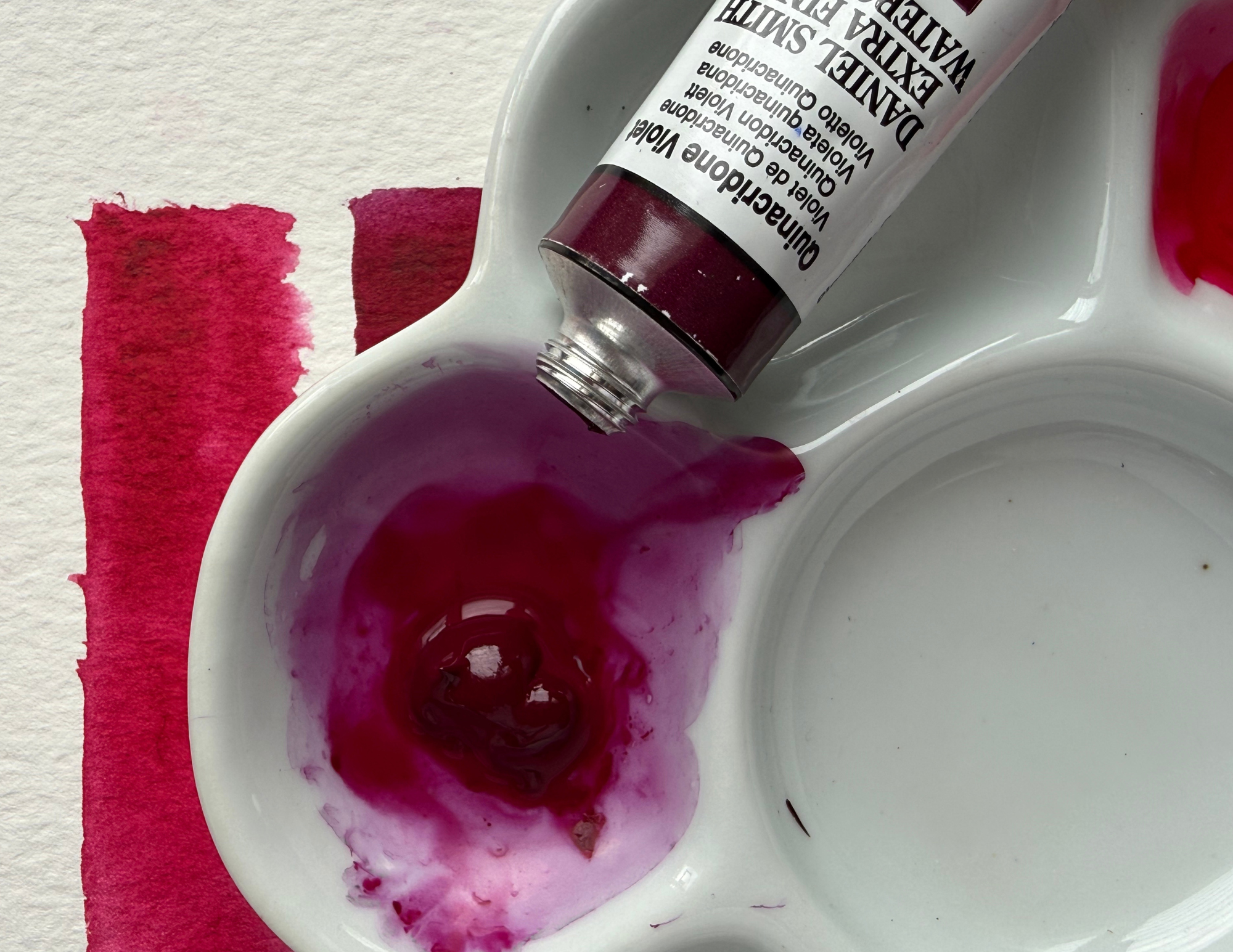
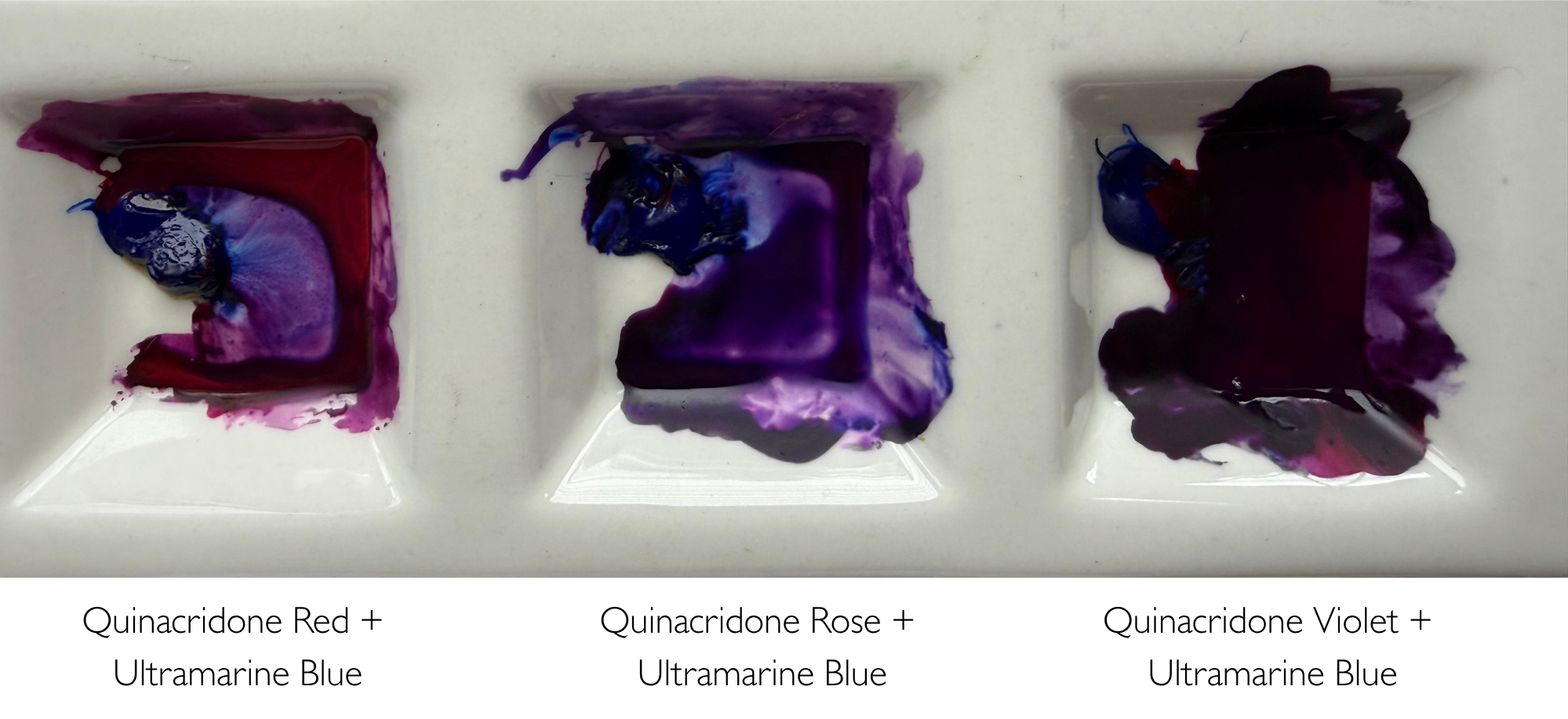
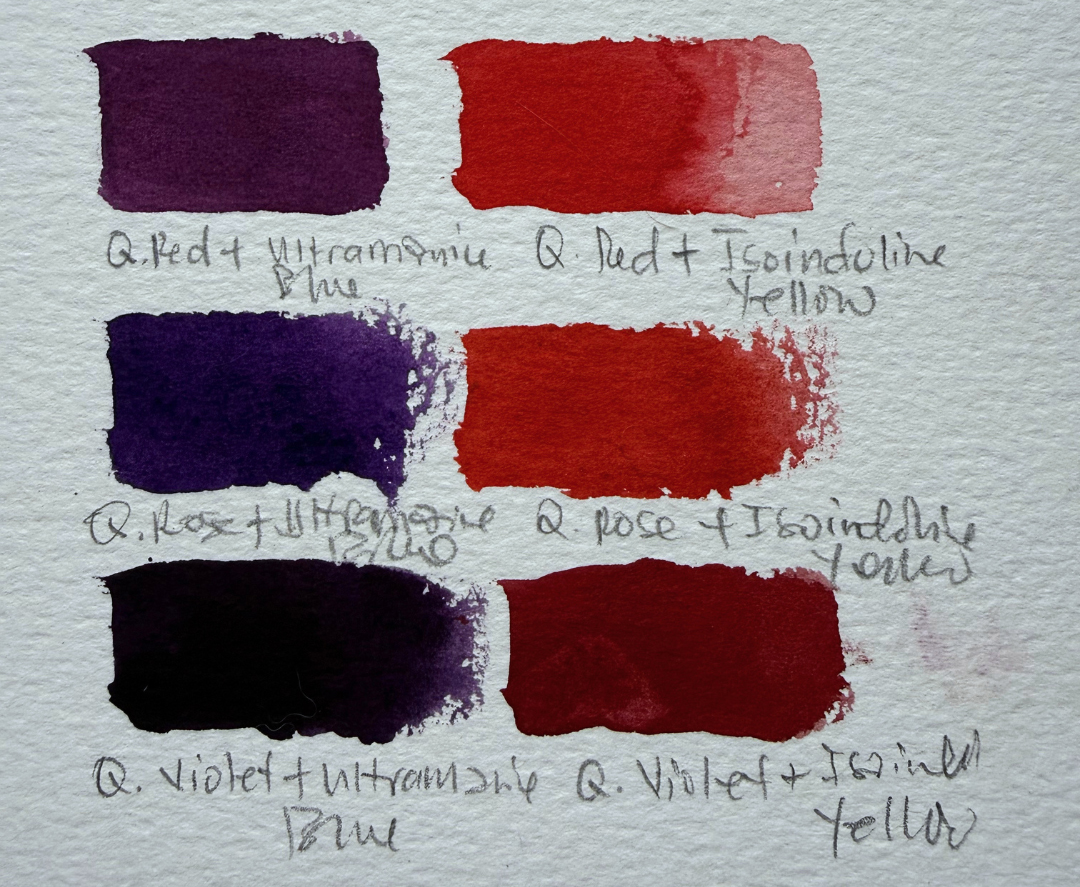
What Happens When We Mix Them?
Mixed with Ultramarine Blue
Mixed with Isoindoline Yellow
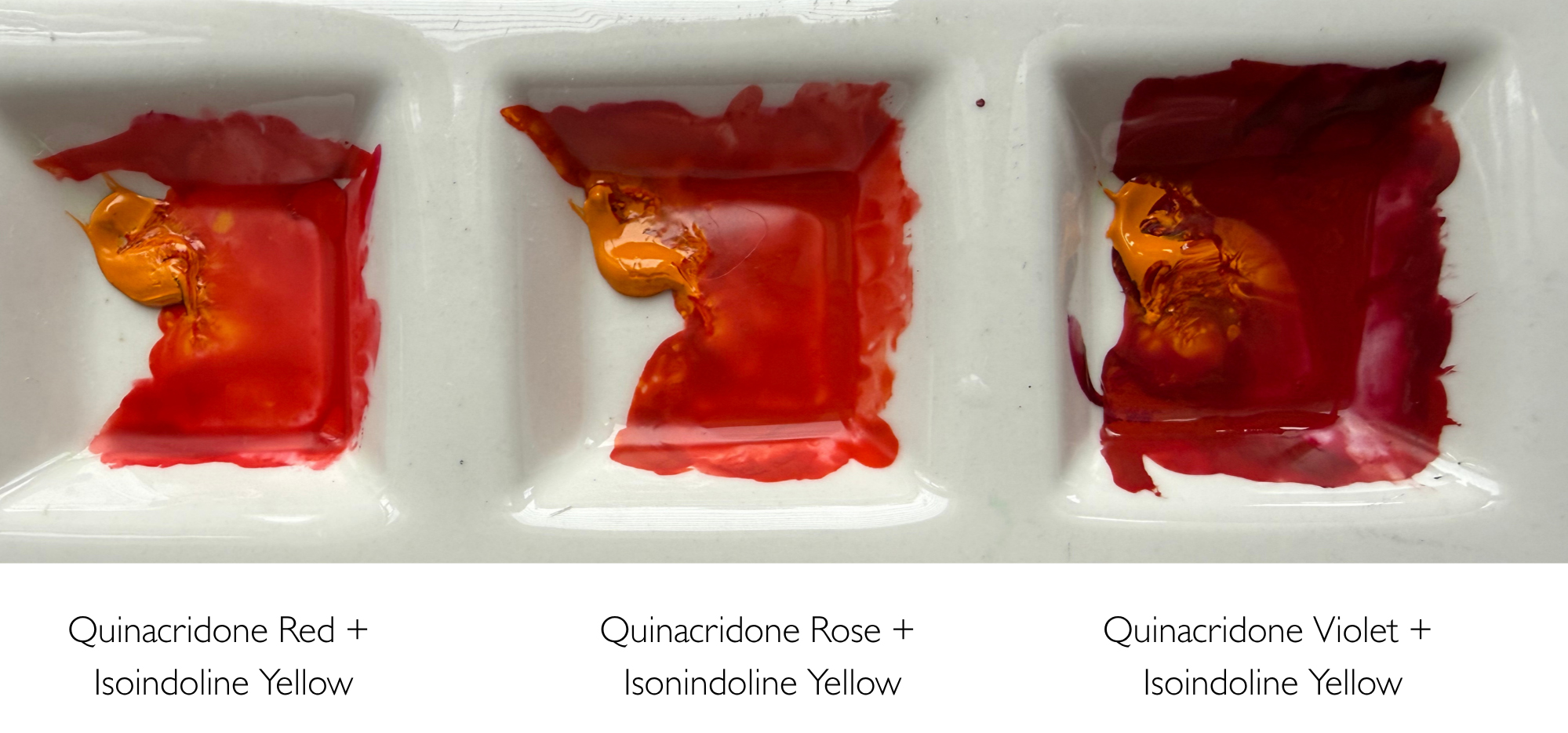
Since the Quinacridones are so vibrant, they’re also a natural for painting glowing skin tones.
Mix for Florals
Choosing Your Favorite Expression of PV 19
One Pigment, Endless Possibilities
Quinacridone Red, Quinacridone Rose, and Quinacridone Violet remind us that there’s always more to discover about the colors on our palettes. While they share the same PV19 pigment, each offers a different expression of color and its own creative possibilities.
The next time you reach for your favorite quinacridone, take a closer look at its pigment information, explore how it mixes, and see what makes it special.
Which expression of PV19 is your favorite? We’d love to hear what you’ve discovered!