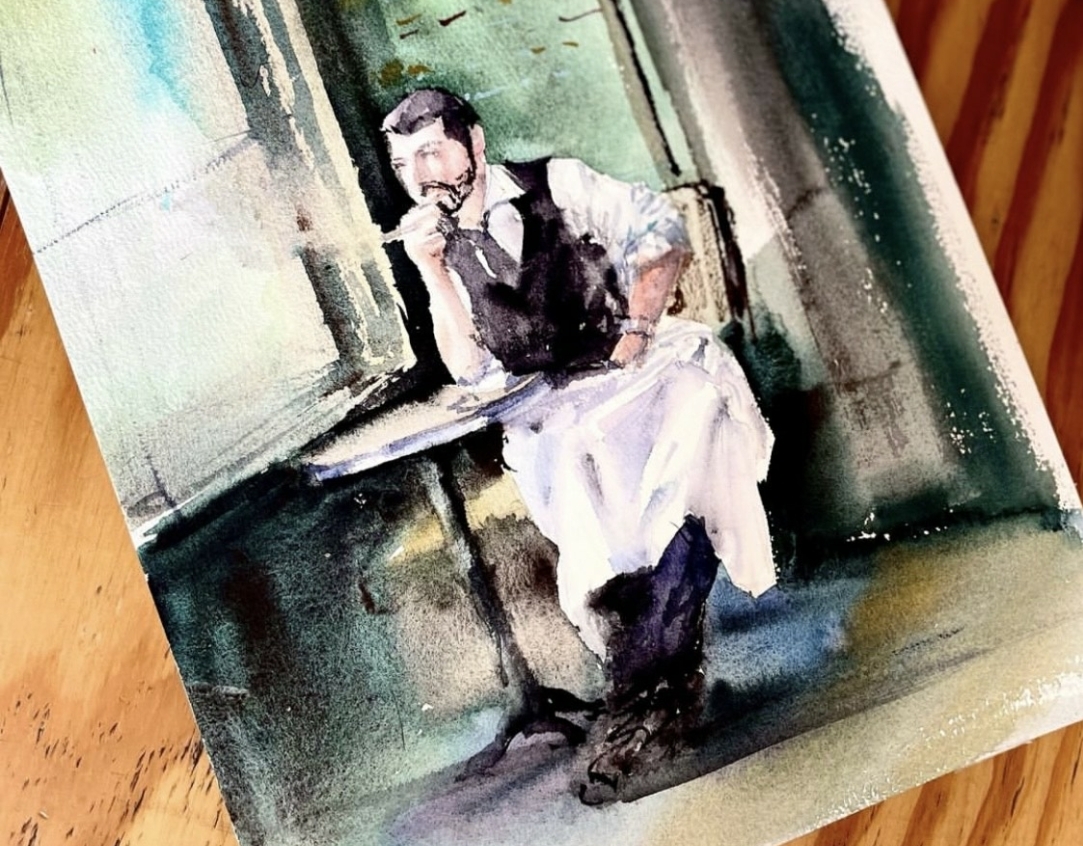














Catarina Alkemark Eine Schwedin teilt ihre Lieblings-Aquarellfarbenpalette und -techniken.
Hier ein kurzes Interview mit Catarina:
Warum machst du Kunst?
Ich glaube, ich habe etwas in mir, das mich zum Erschaffen antreibt. Das habe ich mein ganzes Leben lang getan. Wenn es nicht Malen ist, dann kann es auch das Anlegen eines Gartens sein.
Wie lange malen Sie schon?
Mein ganzes Leben lang. Meine Mutter sagte immer, meine beste Freundin und ich hätten als Kinder nie gespielt, sondern den ganzen Tag nur gezeichnet und gemalt. Als Erwachsene habe ich etwa zehn Jahre lang nicht gemalt, weil wir mit der Familiengründung und der Renovierung eines alten Hauses beschäftigt waren. Seit 2016 widme ich mich jedoch wieder verstärkt dem Ziel, eine gute Malerin zu werden.
Haben Sie eine formale künstlerische Ausbildung genossen?
Leider nein. Nach meinem Schulabschluss 1989 besuchte ich mit einer Freundin einen Abendkurs für Anfänger und wir lernten die Grundlagen. Ansonsten bin ich größtenteils Autodidakt. Meine Freunde und ich trafen uns früher wöchentlich zum Malen. Ich lernte viel über Zeichnen, Farbenmischen und das Zusammenspiel von Farbe und Papier. Ich habe das Glück, in derselben Gegend zu wohnen wie Julie Ann Karlsson Und Anders Andersson, die mich mit vielen anderen Künstlern bekannt gemacht haben und deren Wochenendkurse ich besucht habe.
Sind Sie ein professioneller Künstler oder ein Hobbykünstler?
Ich bin Hobbyistin. Hauptberuflich bin ich Intensivkrankenschwester.
Woher nimmst du deine Inspiration?
Ich male am liebsten nach Orten, die ich besucht habe. Die Bilder sollen eine Geschichte erzählen. Instagram bietet eine große Auswahl an wunderschönen Fotos aus aller Welt, falls du keine eigenen Fotos machen kannst (frag aber unbedingt den Urheber um Erlaubnis). Auch eine neue Farbe kann eine Inspirationsquelle sein.
Welche Musik hörst du beim Malen?
Viel Soul und andere Musik, die ich in meiner Jugend gehört habe, hauptsächlich aus den 80ern. Ruhige, sanfte oder schnelle Lieder, ganz egal. Vor der Pandemie war mir gar nicht bewusst, wie sehr ich Musik beim Malen brauche. Mein Mann arbeitete damals von zu Hause aus, und ich konnte wegen seiner Teammeetings keine Musik hören. Ich habe auch festgestellt, dass ich wahrscheinlich immer singe, wenn ich male. Mein letztes Gemälde, Der Friseursalon in Rangun, entstand beim Hören von Aretha Franklin.
Hattest du einen Mentor?
Nein, aber zu den Malern, die ich bewundere, gehört Stanislaw Zoladz, ein schwedisch-polnischer Künstler, der Wasser so malen kann, wie es wirklich aussieht. Eines Tages werde ich versuchen, Wasser so zu malen wie er. Ich mag auch Marcos Beccari für seine Porträts und Iain Stewart für seine Gebäude und Straßenansichten. Als ich anfing, nächtliche Stadtansichten zu malen, entdeckte ich John Salminen und Laurie Goldstein-Warren.
Malst du jeden Tag?
Vor der Pandemie habe ich fast täglich gemalt. Doch meine Arbeit als Intensivkrankenschwester hat die letzten drei Jahre für meine Kollegen und mich sehr herausfordernd gemacht. Covid hat Schweden, insbesondere meine Heimatregion, schwer getroffen. In den ersten Monaten war es eine Erleichterung, nach Hause zu kommen und zu malen, aber nach einer Weile fehlte mir die Kraft für Kreativität. Die zweite Welle traf uns noch härter als die erste, daher habe ich einige Zeit gebraucht, um mich zu erholen. Ich habe erst letzten Herbst wieder angefangen zu malen und kann nun wieder pure Freude empfinden.
Malst du ein Bild nach dem anderen oder arbeitest du an mehreren gleichzeitig?
Ich male normalerweise ein Bild nach dem anderen und arbeite dabei mit Referenzfotos.
Malen Sie lieber im Atelier oder im Freien?
In meinem Heimstudio, weil ich auf ganzen Blättern male – meine Malweise passt nicht zum Malen im Freien.
Wie viele Kernfarben verwenden Sie?
Das hängt davon ab, was ich male. Wenn ich Stadtnächte male, verwende ich Opernrosa Und Phthalogelbgrün (Ideal für Leuchtreklamen). Kobaltblau für kühle Lichter und Chinacridon Gold für warmes Lampenlicht. Wenn ich Gebäude male, verwende ich die PrimaTek-Farben wie Piemontit Original, Sedona Genuine, Echtes Tigerauge, Echter schwarzer Turmalin Und Sodalith echt eignen sich perfekt für Dächer und Fassaden von Gebäuden.
Früher dachte ich, Rot sei eine schwierige Farbe, deshalb habe ich geübt, damit zu malen. Jetzt sind Rottöne meine Lieblingsfarben, besonders Kadmiumrot, scharlachroter Farbton Und Maya-Orange. Grün ist meine nächste schwierige Farbe, die ich meistern muss, deshalb werdet ihr in Zukunft wohl viele Bilder mit verschiedenen Grüntönen sehen. Als ich wochenlang Nachtschichten gearbeitet habe, habe ich mir neue Aquarellfarben von Daniel Smith als Belohnung gekauft. Ich arbeite zwar nicht mehr nachts, aber ich habe Kisten voller wunderschöner Farben. Was für ein Glück!
Tuben, Pfannen oder Stäbe?
Röhren und Pfannen.
Woran erkennen Sie, dass Ihr Werk fertig ist?
Wenn ich mich langweile, stelle ich das Bild für drei bis vier Wochen auf das alte Bett meines Sohnes und betrachte es jeden Tag, um zu sehen, ob etwas fehlt – vielleicht ein Schatten oder ein Lichtreflex. Während des Malens mache ich Fotos. So sehe ich gut, was noch verbessert werden muss.
••••••••••
Seien Sie jede Woche online dabei, wenn wir uns mit John Cogley, CEO und Inhaber von Daniel Smith, sowie Gastkünstlern aus aller Welt persönlich austauschen. Donnerstags (14:00 Uhr pazifischer Zeit) stellt John verschiedene Produktmerkmale vor und beantwortet Ihre Fragen. Freitags (10:30 Uhr pazifischer Zeit) berichtet ein Gastkünstler, wie er diese Merkmale in seine Kunst integriert. Hier klicken für die Zoom-Links der kommenden Woche.
Auf unserer Facebook-Seite finden Sie Neuigkeiten zu kommenden Gastkünstlern oder können sich frühere Wiederholungen ansehen. Jedes Zoom-Meeting wird außerdem aufgezeichnet und auf unserem YouTube-Kanal geteilt. Die Übersetzung auf Spanisch ist verfügbar – wählen Sie den Kanal auf Spanisch und Zoom aus.