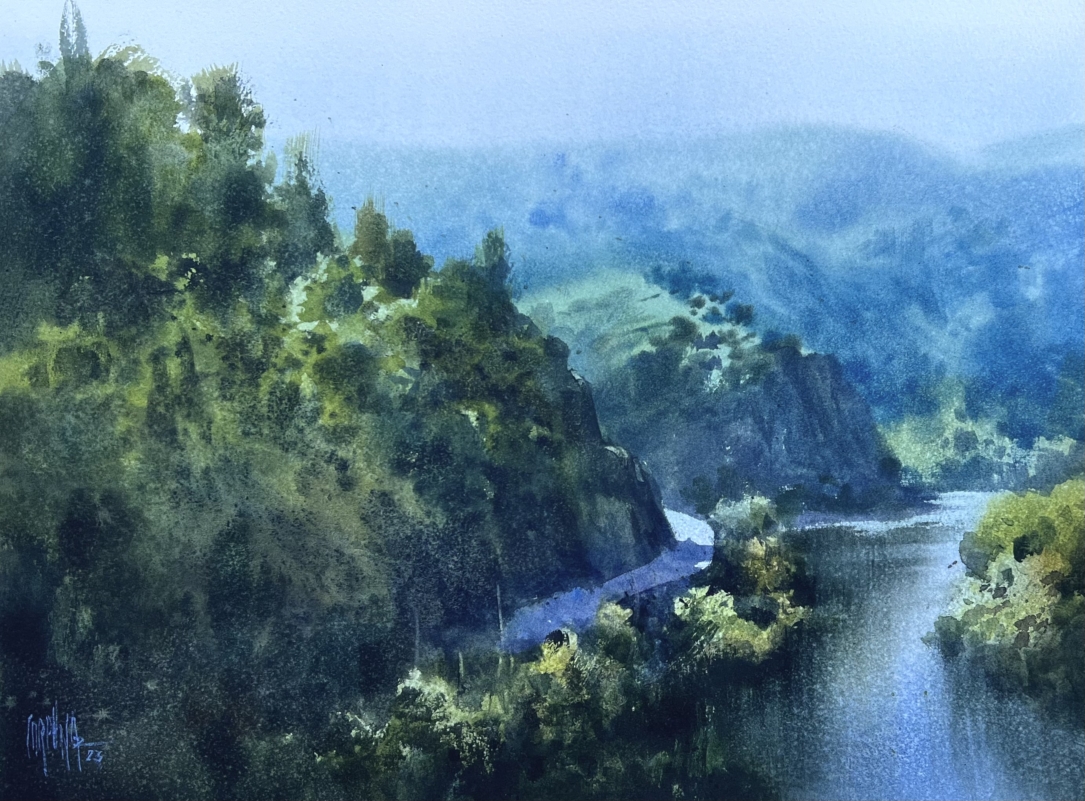









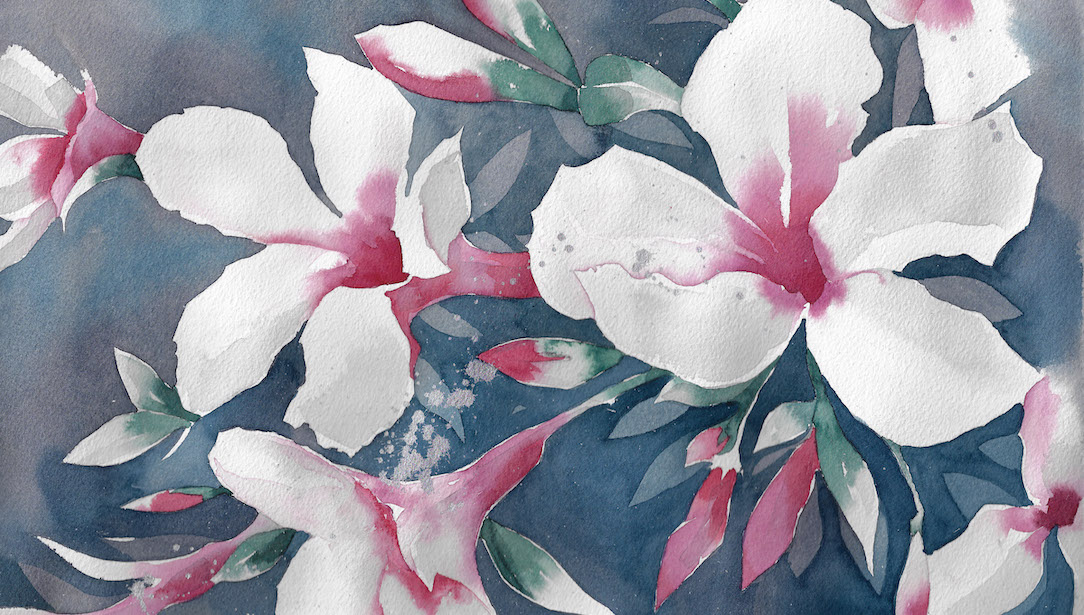

Buffy Kaufman Sie kam am Freitag, den 8. Juli, live aus den USA zu uns, um ihre Aquarelltechniken und ihre Lieblingsfarbpalette vorzustellen.
Hier ein kurzes Frage-Antwort-Spiel mit Buffy:
Warum machst du Kunst?
Es ist ein Ausdruck meiner größten Leidenschaften – Glaube, Farben und Natur. Die Kunst war mir stets ein treuer Begleiter, ein Ausdrucksmittel, wenn mir die Worte fehlen, ein Ventil in jeder Lebenslage, von Freude bis Trauer.
Wie lange malen Sie schon?
Schon in meiner frühesten Kindheit habe ich Spuren hinterlassen. Ganz bescheiden riss ich die ersten und letzten leeren Seiten aus den Büchern meiner Mutter, um sie als Skizzenpapier zu benutzen; mein Medium war ein Kugelschreiber. Zeichnen, Skizzieren und Kritzeln begleiteten mich bis ins Erwachsenenalter, als ich Zugang zu professionellem Künstlermaterial und einer fundierten Ausbildung hatte. Nachdem ich Acryl- und Ölfarben auf Wasserbasis ausprobiert hatte, begann ich 2018 ein ernsthaftes Kunststudium und entschied mich für die Aquarellmalerei als mein Hauptmedium.
Haben Sie eine formale künstlerische Ausbildung genossen?
Nein. Ich bin Autodidaktin. Zu meinem Lernweg gehören eine stetig wachsende Sammlung von Kunstbüchern, eine unschätzbare DVD-Sammlung von Tony Couch, Live-Künstlerdemonstrationen, darunter von einigen meiner Favoriten – Soon Warren, Craig Anderson und Joseph Zbukvic – sowie Aquarellworkshops mit der kalifornischen Aquarell- und Mixed-Media-Künstlerin Helen Schafer Garcia.
Sind Sie ein professioneller Künstler oder ein Hobbykünstler?
Sie werden mich bei der Arbeit antreffen – meine zentrale Überzeugung ist, dass Kunst am besten geteilt wird, daher gebe ich meine Studieninhalte an die lokale Kunstszene zurück, indem ich Präsenzkurse gebe und auch international über meinen YouTube-Kanal unterrichte.
Was inspiriert dich?
Ich liebe das Leben im geografisch vielfältigen Südkalifornien mit seiner weitläufigen Wüste, der Küste und den Gebirgszügen. In der Stille der Natur fühle ich mich Gott am nächsten, und in diesen Momenten erwachen Farben, Licht, Schatten, die Tierwelt und kleine Szenen für mich zum Fotografieren und späteren Malen im Atelier.
Welche Musik hörst du beim Malen?
Alternative/Indie – Ich mag den Sound von Bands wie Paper Kites, Lord Huron, Hollow Coves, Hozier, Angus & Julia Stone und Death Cab for Cutie, um nur einige zu nennen. Da ich schwerhörig bin, stören mich die Texte nicht, und die sanften, atmosphärischen Instrumentalstücke beeinflussen meine Arbeit.
Hattest du einen Mentor?
Helen Schafer Garcia gebührt großer Dank. Sie ermutigte mich, zunächst in kleinen, lokalen Galerien auszustellen, mit dem Unterrichten zu beginnen und später auch in größerem Rahmen zu präsentieren. Ihr und einigen wunderbaren Künstlerfreunden (besonderer Dank gilt Lee, Connie, Karen, Jan und Diane) verdanke ich es, dass ich das Selbstvertrauen gewann, an Aquarellwettbewerben, -vereinigungen und -gesellschaften teilzunehmen. Ihre Kritiken, Ratschläge und Kontakte halfen mir, mich in der Kunstwelt zurechtzufinden und Aquarelllehrerin zu werden.
Malst du jeden Tag?
Nein, ich versuche, Arbeit, Studium und Familie in Einklang zu bringen. Mein Ziel ist es, mir an jedem Wochentag zwei Stunden konzentrierte Zeit zu nehmen. Ob Lernen, Malen oder eine Fotoreise – meine volle Aufmerksamkeit darauf zu richten, ist eine bewährte Methode.
Malst du ein Bild nach dem anderen oder arbeitest du an mehreren gleichzeitig?
Ich arbeite an einem Bild nach dem anderen, aber in Serien oder Gruppen. Oft verweile ich so lange bei einem Thema, bis ich sein Rätsel gelöst, seine Herausforderung gemeistert oder das Gefühl habe, dass es zu meiner künstlerischen Vision passt.
Erstellen Sie zuerst ein Konzept?
Ja. Übungsskizzen, Papiervorbereitung, Farbmuster und kleinere Alla-prima-Gemälde führen zum eigentlichen Kunstwerk.
Malen Sie lieber im Atelier oder im Freien?
Ich bin Ateliermalerin. Derzeit besteht meine Feldarbeit aus Fotografie. Ich hoffe, zukünftig auch Skizzen und Lavierungen im Freien in meine Arbeit einfließen zu lassen.
Wie viele Kernfarben verwenden Sie?
Sechs – Ich habe eine limitierte Farbpalette (die sogenannte “Limitless Palette”) aus 6 Farben zusammengestellt, die unzählige Misch- und Tonwertabstufungen ermöglicht, von tief gesättigten, leuchtenden Farben bis hin zu sanften Pastelltönen und neutralen Nuancen. Meine Palette ist Hansagelbes Licht, Chinacridon Siena, Chinacridonrot, Chinacridonmagenta, Phthalo-Türkis, Und Phthaloblau – Rotstich. Diese Farbpalette war für das Erlernen/Lehren der Farbmischung von entscheidender Bedeutung.
Tuben, Pfannen oder Stäbe?
Ich gieße meine eigenen vollen Pfannen aus Tuben und schneide die Stäbchen so zu, dass sie in die vollen Pfannen passen.
Woran erkennen Sie, dass Ihr Werk fertig ist?
Es kommt darauf an, ob es Übung oder Produktion ist. Bei der Übung ist das Werk abgeschlossen, sobald ich die Lektion gelernt habe. Jedes Mal, wenn Farbe aufs Papier kommt, lerne, erforsche und übe ich die Technik. Bei der Produktion ist das Gemälde fertig, wenn es sein Ziel erreicht hat. Ich mache mir Notizen zu meiner künstlerischen Vision für das Werk und male dann so lange, bis ich sie erreicht habe.
••••••••••
Besuchen Sie uns jede Woche online für ein Ein persönliches Gespräch Mit Daniel Smith, CEO und Inhaber, John Cogley und Gastkünstlern aus aller Welt. Donnerstags (14:00 Uhr pazifischer Zeit) stellt John verschiedene Funktionen unserer Produkte vor und beantwortet Ihre Fragen. Freitags (10:30 Uhr pazifischer Zeit) berichtet ein Gastkünstler, wie er diese Funktionen in seine Kunst integriert. klicken Sie hier Hier die Zoom-Links für die kommende Woche.
Schauen Sie sich unsere Facebook-Seite Hier finden Sie Neuigkeiten zu kommenden Gastkünstlern und können vergangene Aufzeichnungen ansehen. Jedes Zoom-Meeting wird außerdem aufgezeichnet und auf unserer Webseite geteilt. YouTube-Kanal. Die Übersetzung auf Spanisch ist verfügbar – wählen Sie den Kanal auf Spanisch und Zoom aus.