












Pintar acuarela sobre un superficie de gran formato invita a los artistas a pensar en grande, moverse con mayor libertad y experimentar el color de una manera completamente nueva. Rick Anderson, que la libertad comienza con la intención. Decisiones meditadas sobre composición, luz, valores, espacio negativo y su Paleta de colores de Daniel Smith crear una base sólida, dándole la confianza necesaria para abrazar la espontaneidad, la pincelada expresiva y la energía que se desata cuando se le da más libertad a la acuarela.
Entonces, ¿qué se necesita realmente para pintar en formatos más grandes sin perder la frescura, el equilibrio y la vitalidad de la acuarela? Le hicimos a Rick Anderson cinco preguntas sobre cómo trabajar a mayor escala: desde la planificación y la composición hasta la mezcla de colores, la técnica y el papel que desempeñan las acuarelas DANIEL SMITH en su proceso creativo.
A lo grande
¿Qué cambios introduces en tu técnica al pintar sobre una superficie de gran formato y cómo consigues que la pintura sea coherente, dinámica y llena de energía a medida que aumenta la escala?
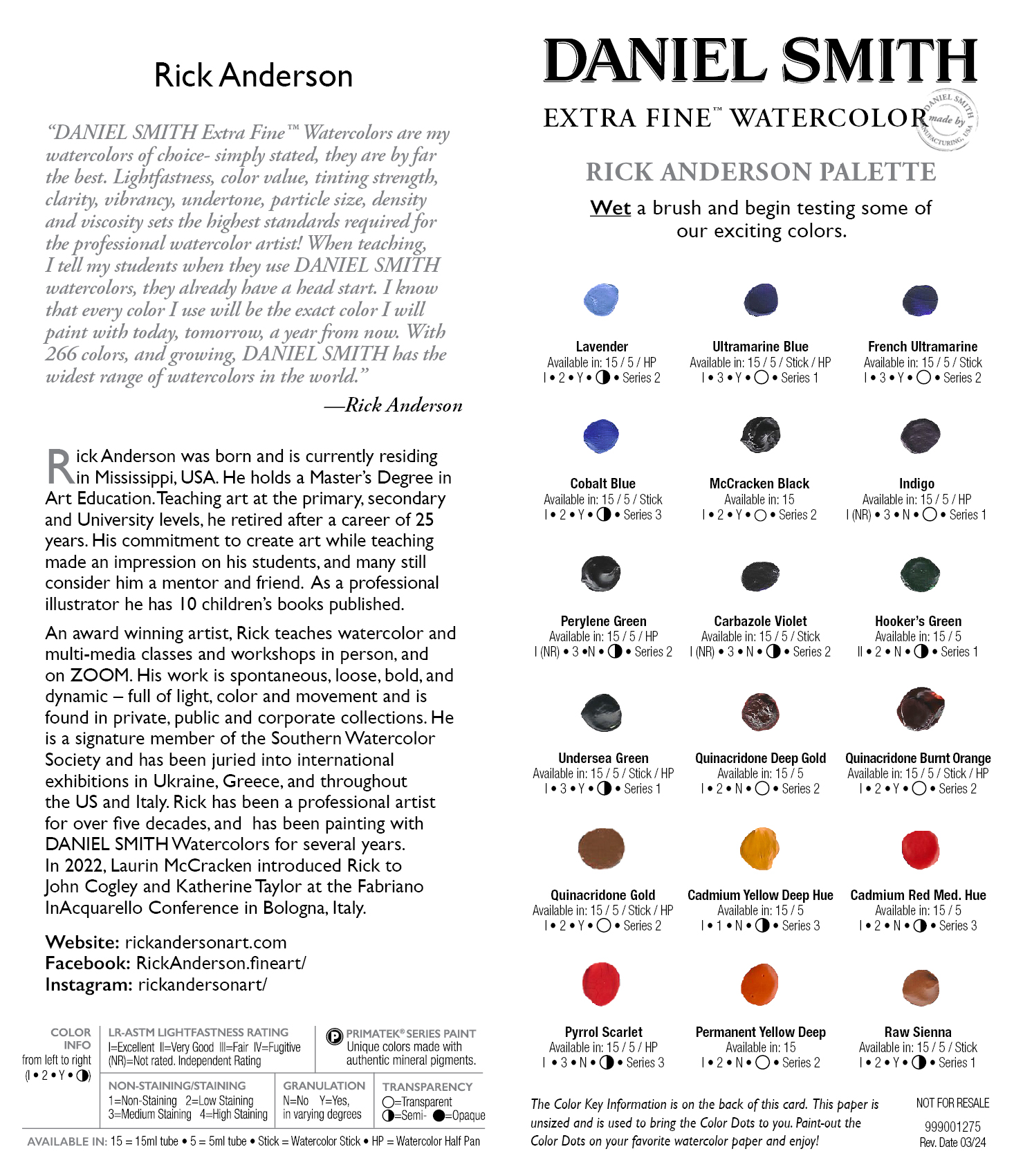
Independientemente de si pinto en un formato grande o pequeño, la planificación es fundamental. Soy artista de estudio. Antes de sentarme a pintar, tengo que tomar muchas decisiones. ¿Qué tamaño debo usar? ¿Qué colores debo elegir? ¿Necesitaré enmascarar alguna zona antes de empezar? ¿Necesitaré un boceto? ¿Qué nivel de detalle debe tener?
Si decido pintar una estructura con mucha historia y carácter visual, ¿qué nivel de detalle debería tener? ¿Cuál es la dirección de la luz y dónde se ubican los tonos claros, medios y oscuros? ¿En qué entorno debería situarla para que armonice con el sujeto principal, genere interés y, al mismo tiempo, no desvíe la atención de la estructura? ¿Qué tamaño quiero que tenga el edificio? ¿Cuál será el tamaño adecuado para lograr el mejor diseño en la página y cómo se integrará con el espacio circundante? ¿Debería incluir más o menos espacio negativo en la pintura para favorecer el diseño general?
Estas son las preguntas que me hago antes de poner el pincel y la pintura sobre el papel, y me ayudan a que la obra sea coherente, dinámica y llena de energía. Esto es solo el principio. Por muchas preguntas que tenga antes de empezar, siempre surgen más después de comenzar a pintar. Afortunadamente, gracias a mis años de experiencia, muchas de estas preguntas se responden de forma intuitiva mientras pinto.
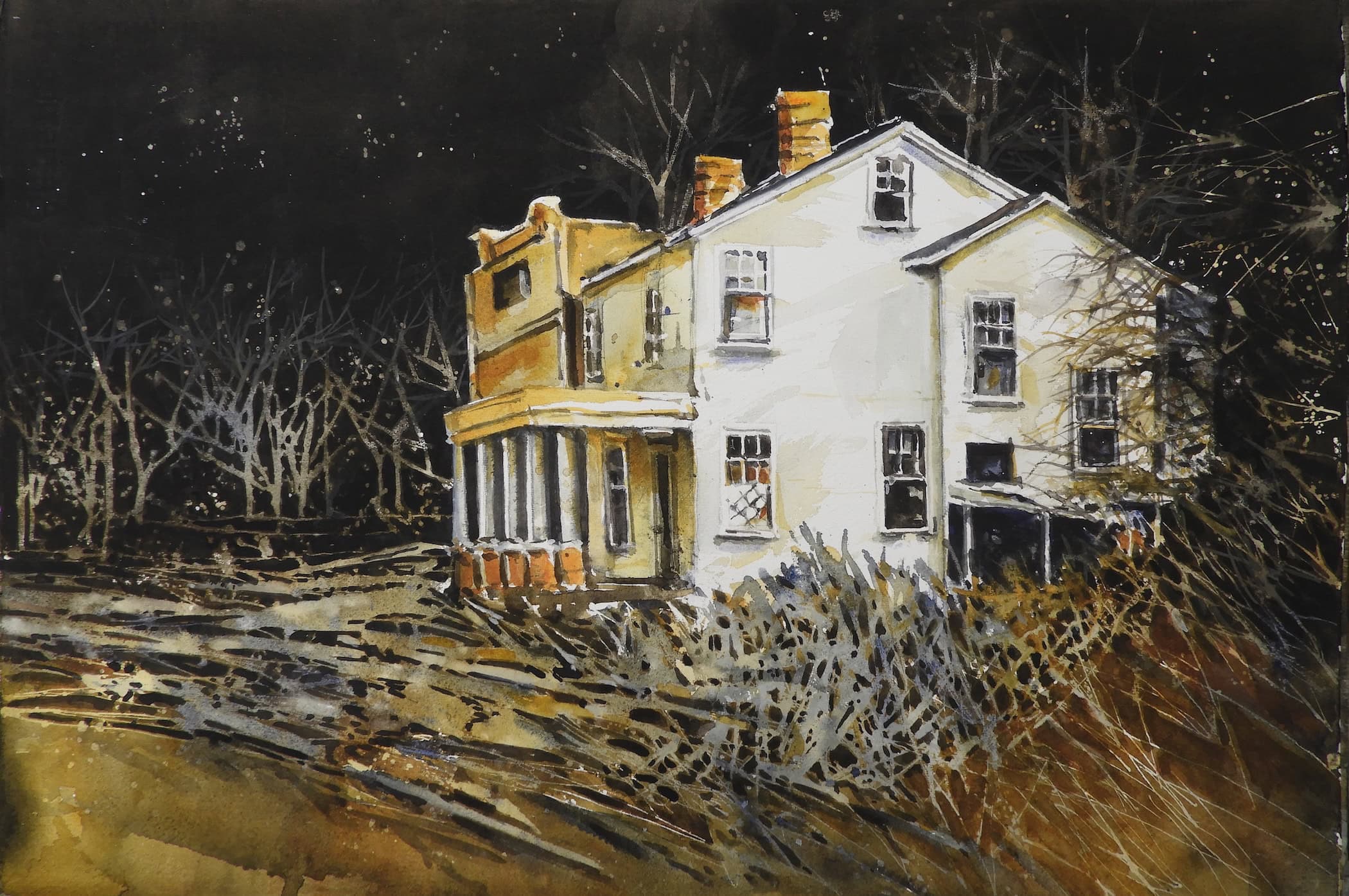
Noche sin estrellas de Rick Anderson
El color en un escenario más amplio
¿Cómo influye trabajar a mayor escala en la forma en que eliges, superpones y equilibras tus colores? ¿Qué papel juegan las acuarelas DANIEL SMITH para lograr la intensidad y profundidad que buscas? ¿Cuál es tu tríada de colores DANIEL SMITH favorita para crear estos efectos?
Trabajar a mayor escala me brinda más oportunidades para crear áreas de interés dentro de la pintura. Puedo crear áreas más detalladas sin desviar la atención del efecto general de la obra y continuar utilizando técnicas sueltas y espontáneas incluso dentro de los elementos más estructurados. Pinto con acuarelas extrafinas DANIEL SMITH. Como embajadora de la marca DANIEL SMITH, sé que cada tubo será igual, independientemente de si se fabricó hace un año o hoy. Puedo confiar en ello. La consistencia en mi pintura es importante para mí, al igual que el papel que utilizo o los pinceles que uso. Sé que, al pintar, puedo confiar en cómo se mezclarán los colores para obtener siempre el resultado deseado.
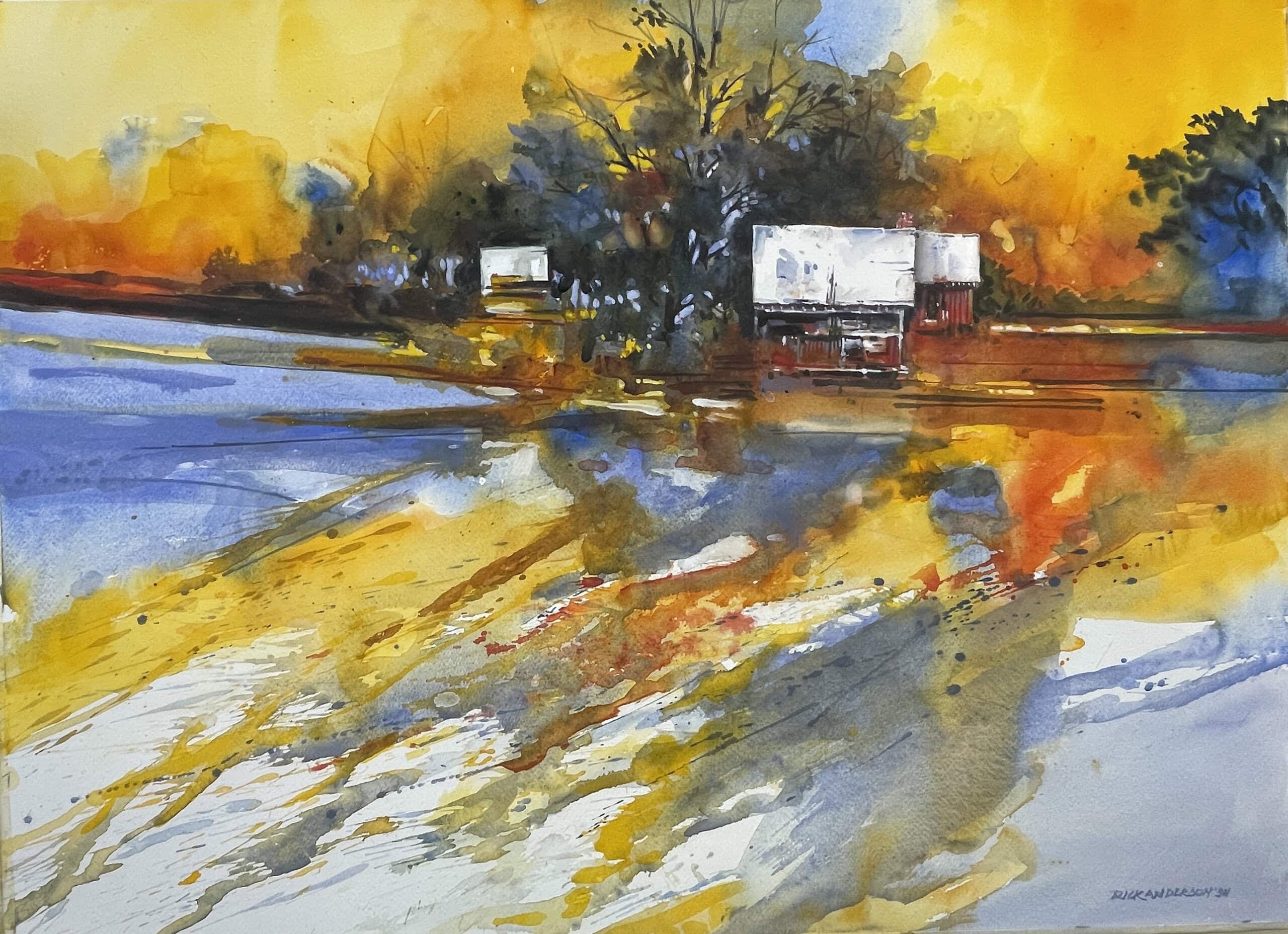
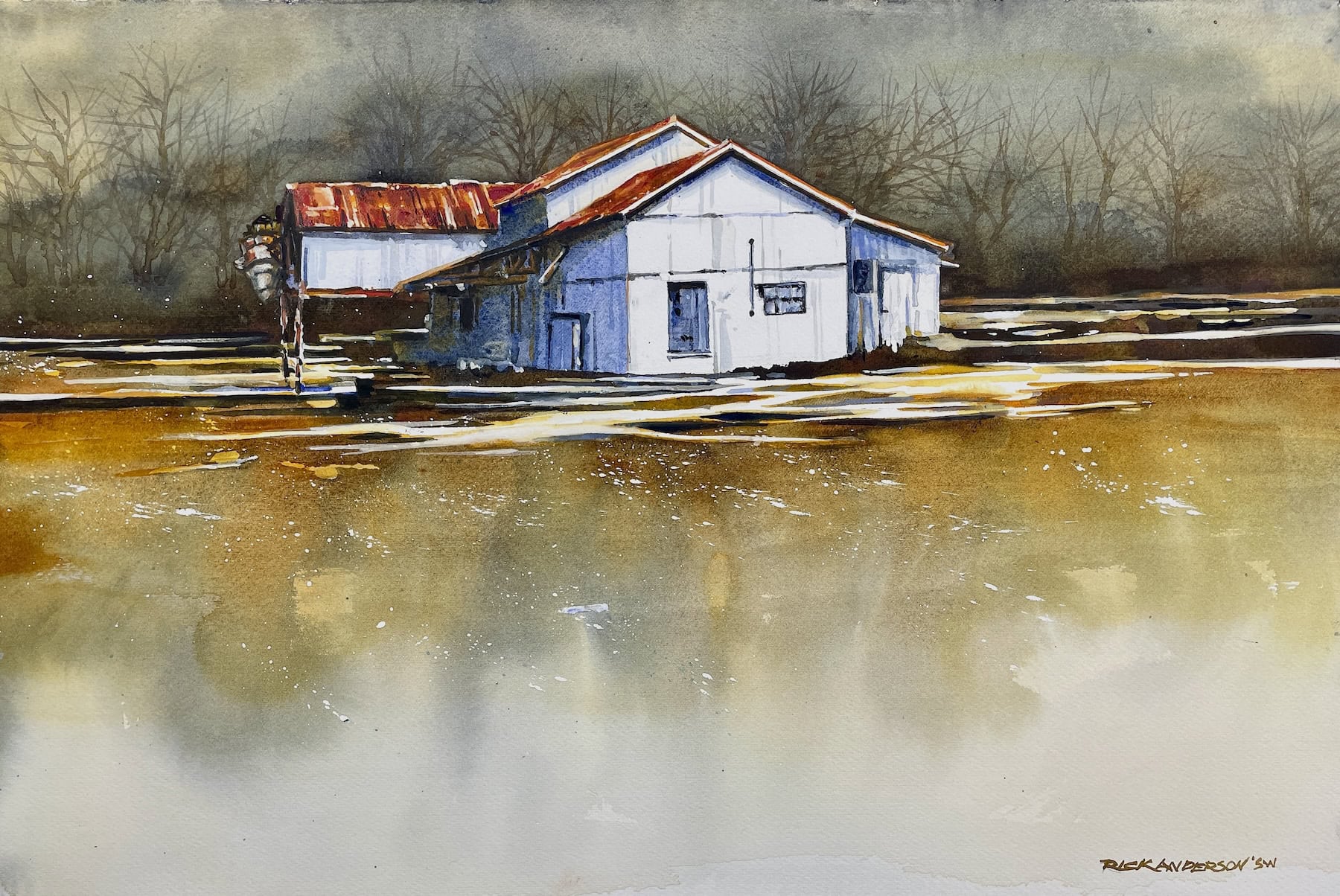
Un día brillante y colorido, por Rick Anderson
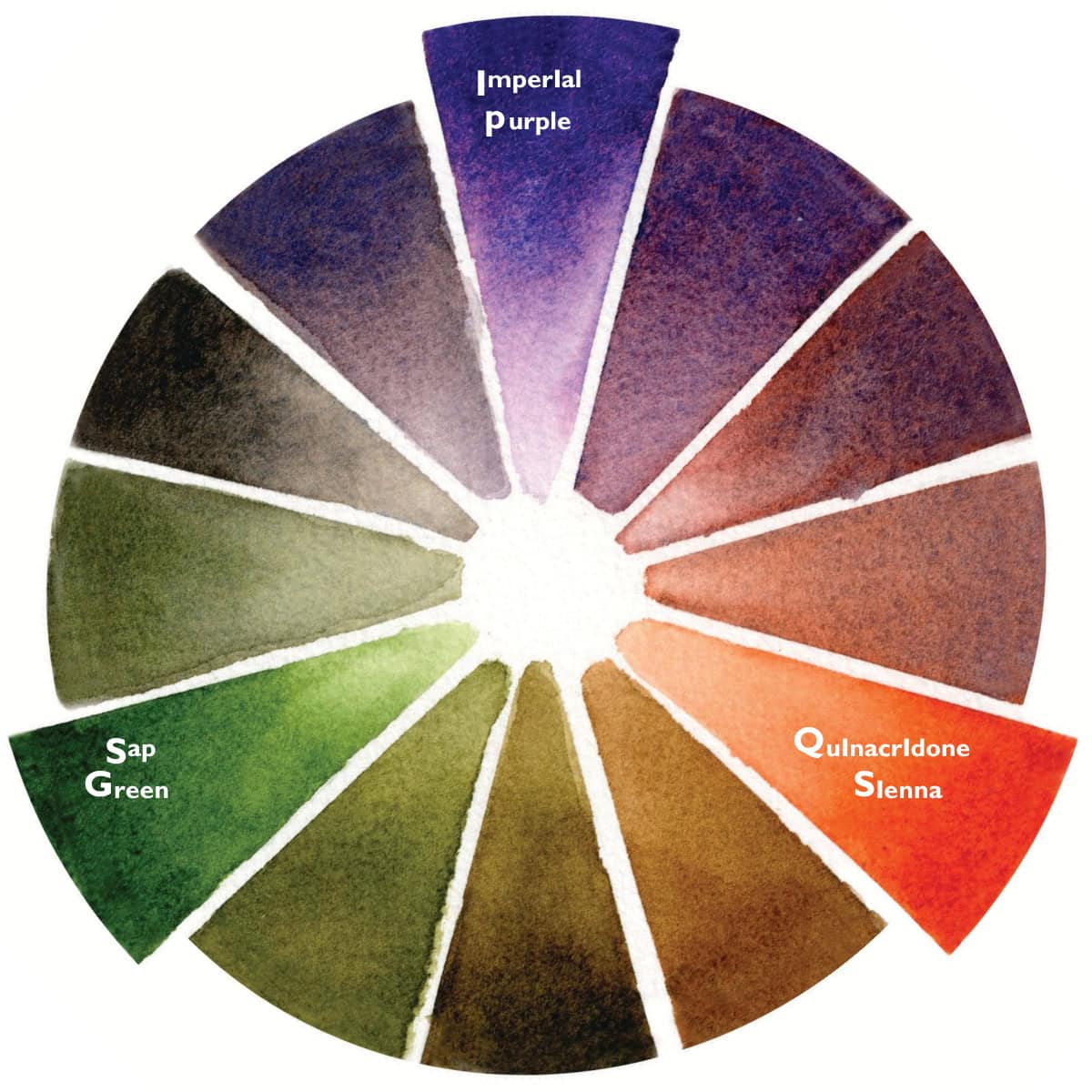
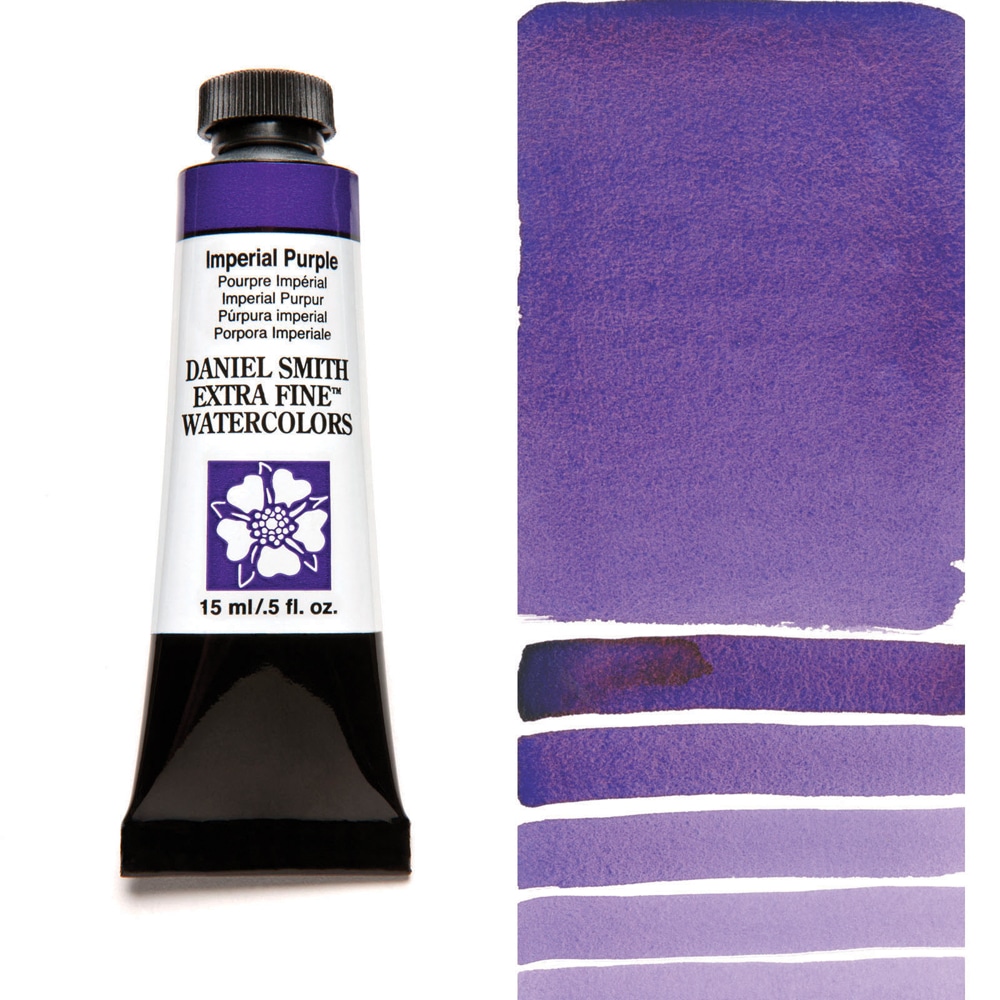
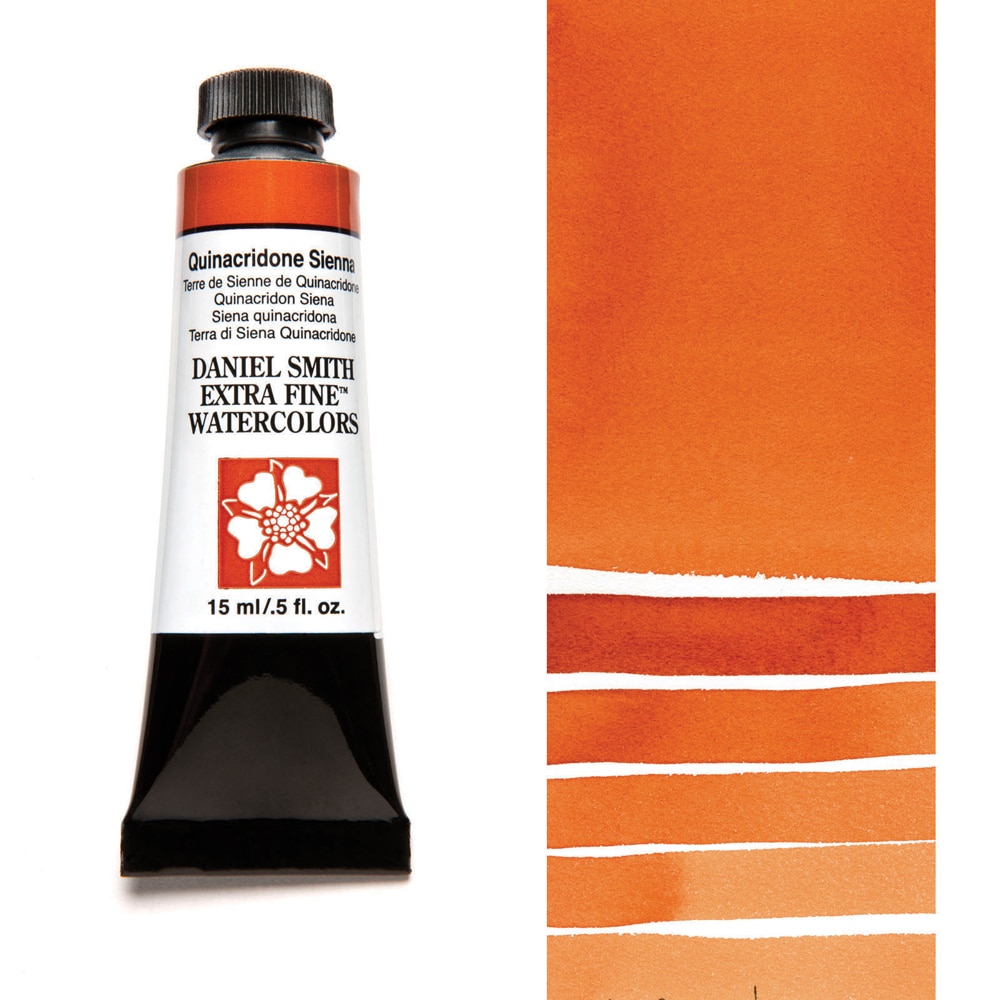
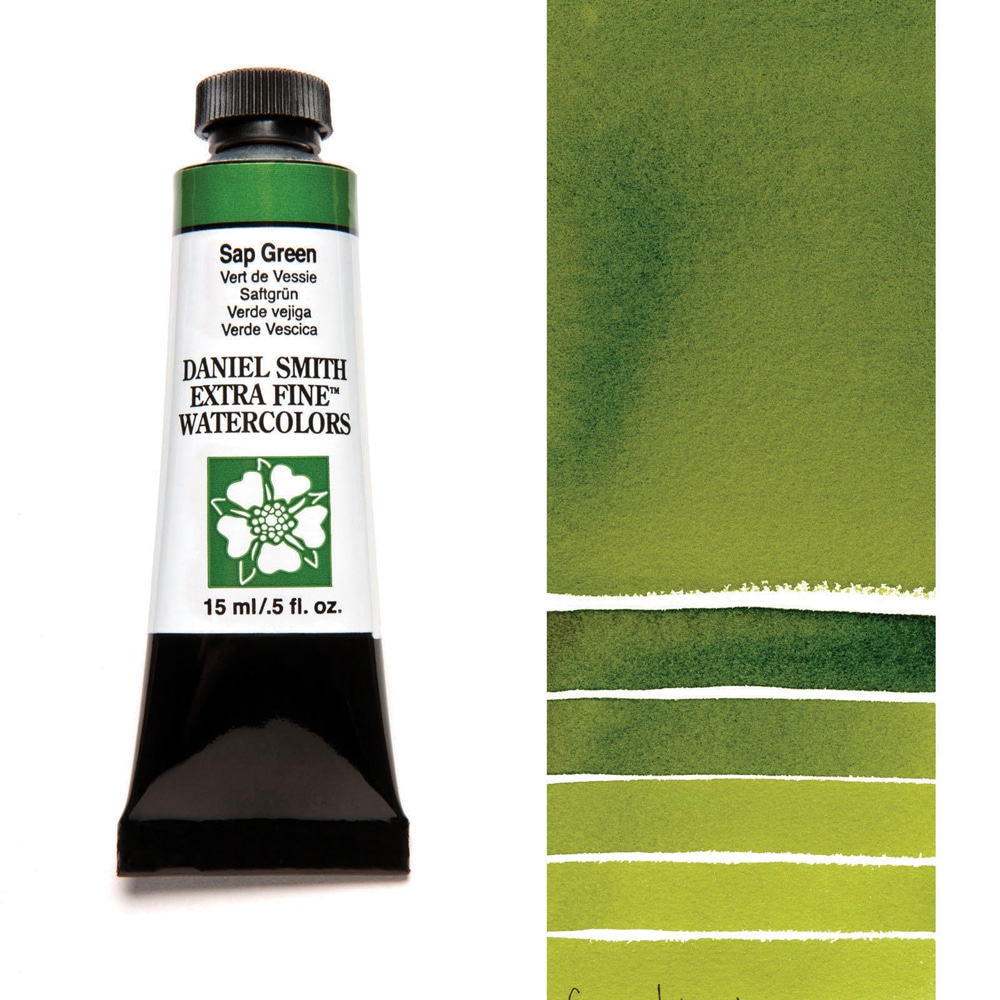
No tengo una tríada de colores preempaquetada de DANIEL SMITH favorita para crear estos efectos, pero si quiero estar preparado para cualquier ocasión, me gustaría tener a mano los tres colores primarios y los tres colores secundarios de DANIEL SMITH.
Juegos de mezcla de acuarelas primarias y secundarias de Daniel Smith
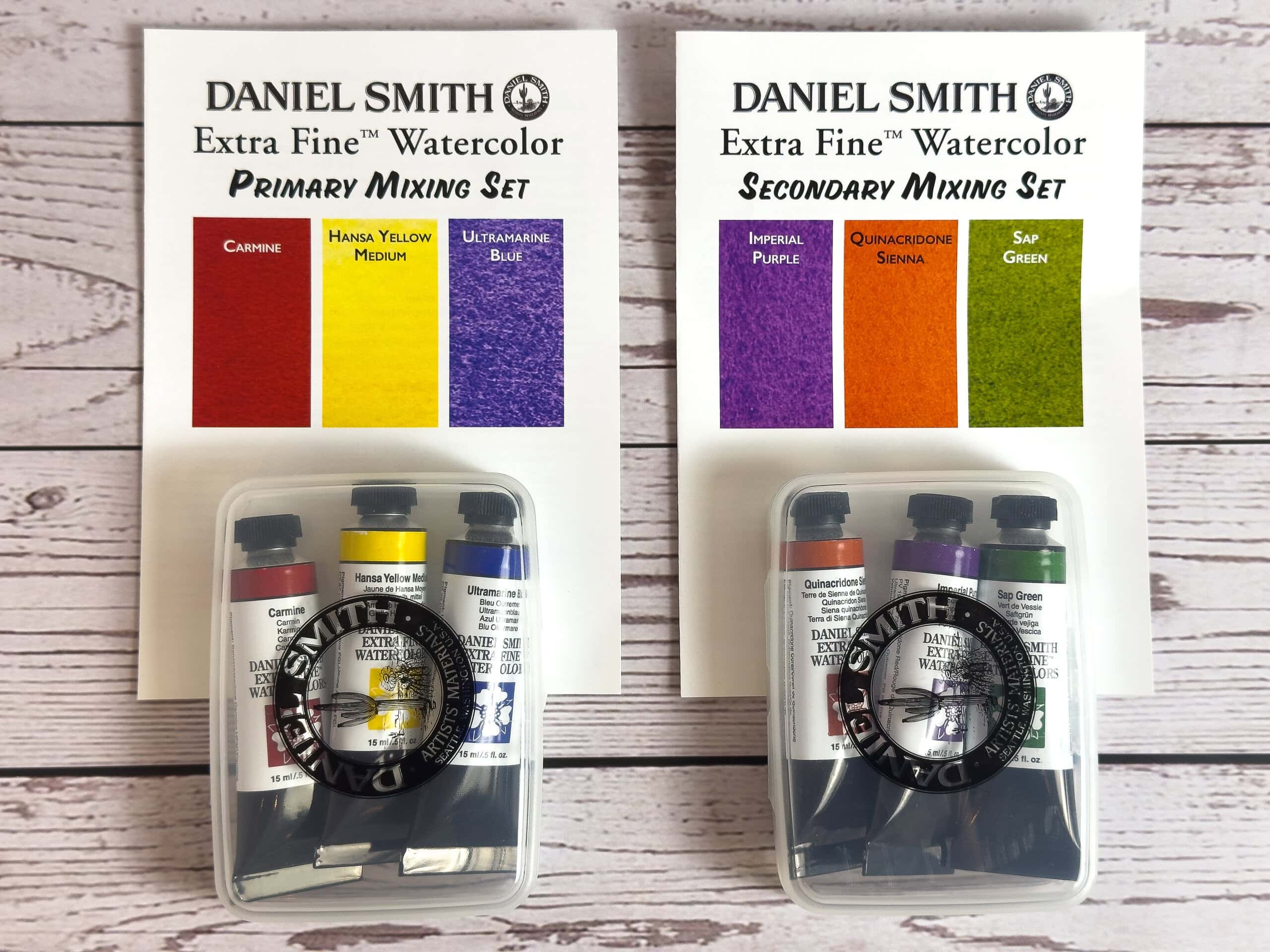
El conjunto de mezcla principal
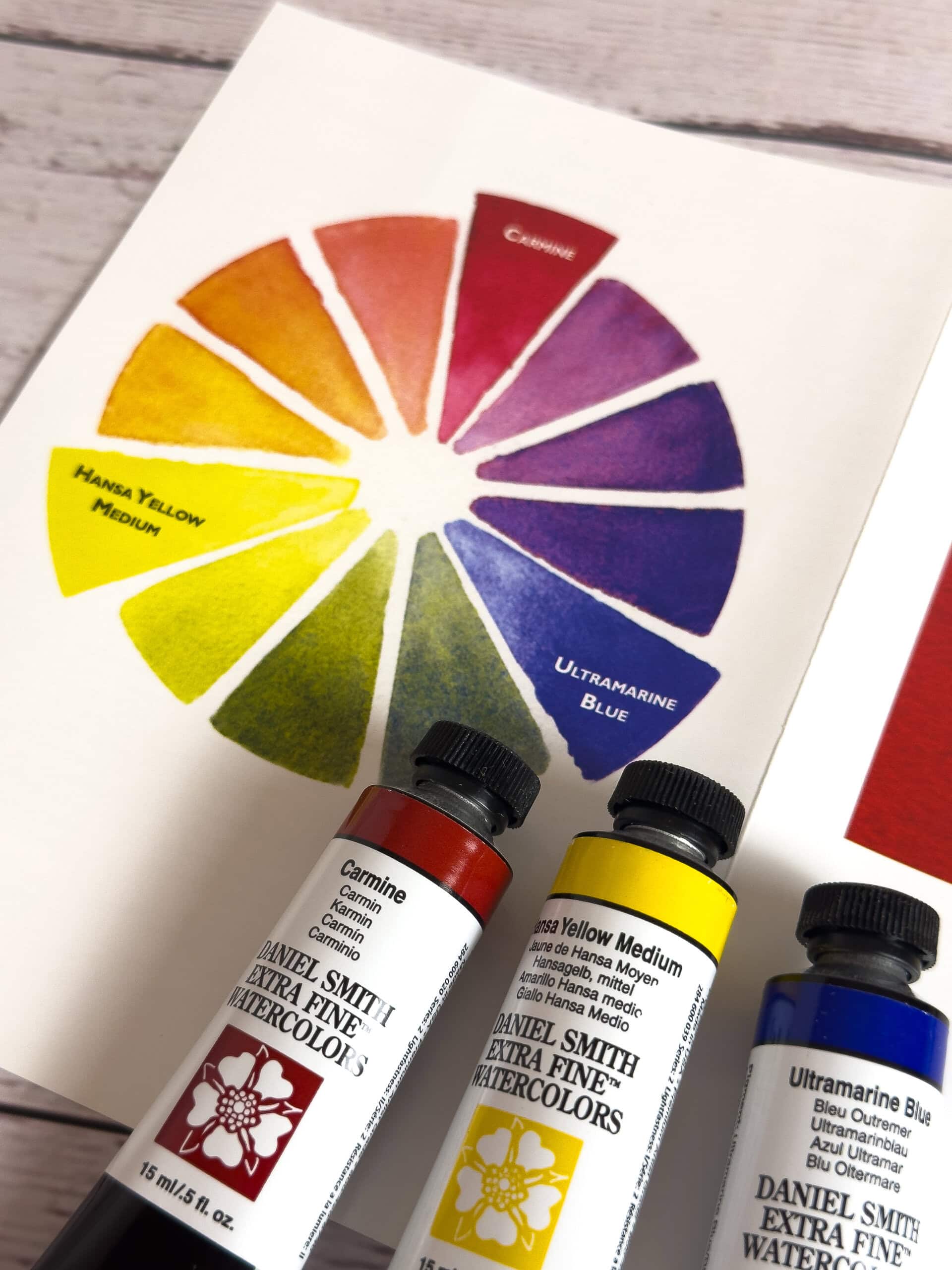
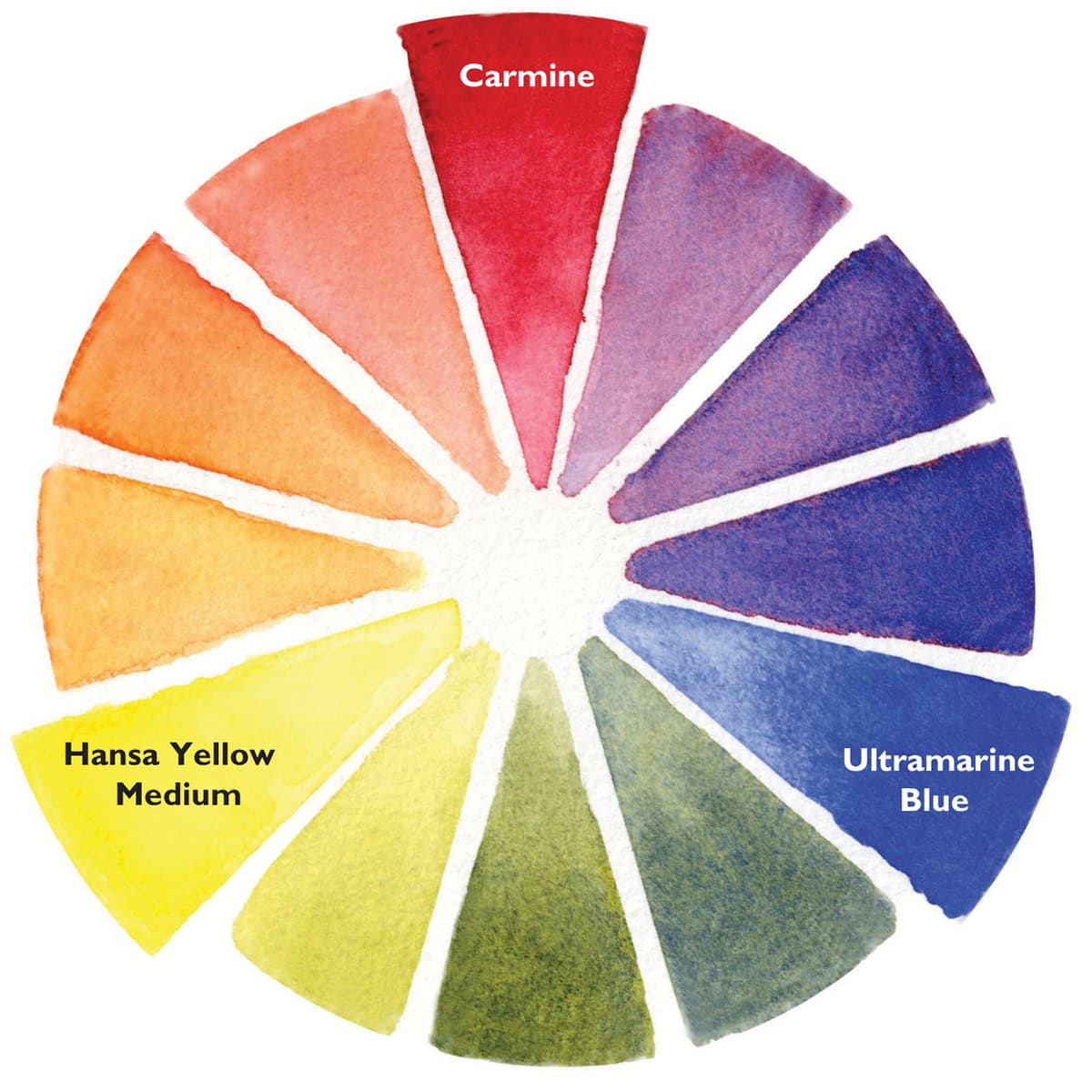
El conjunto de mezcla principal
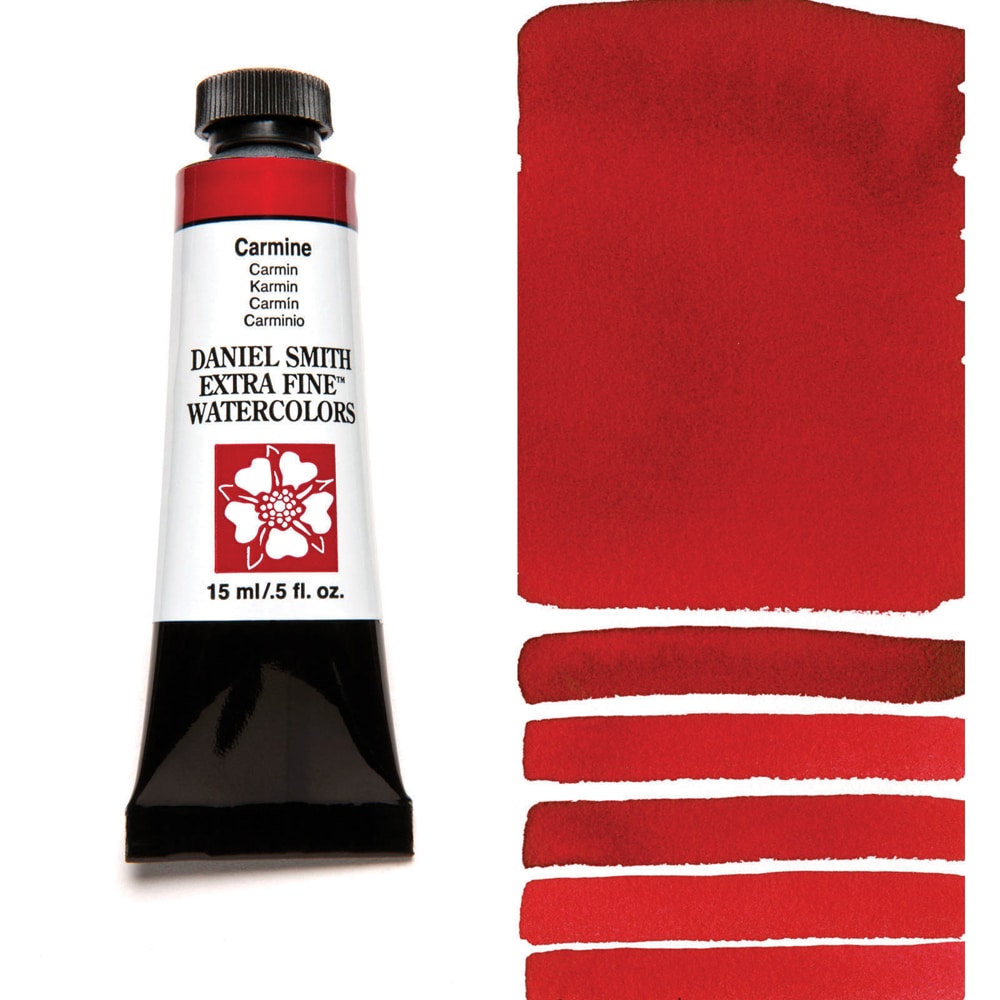
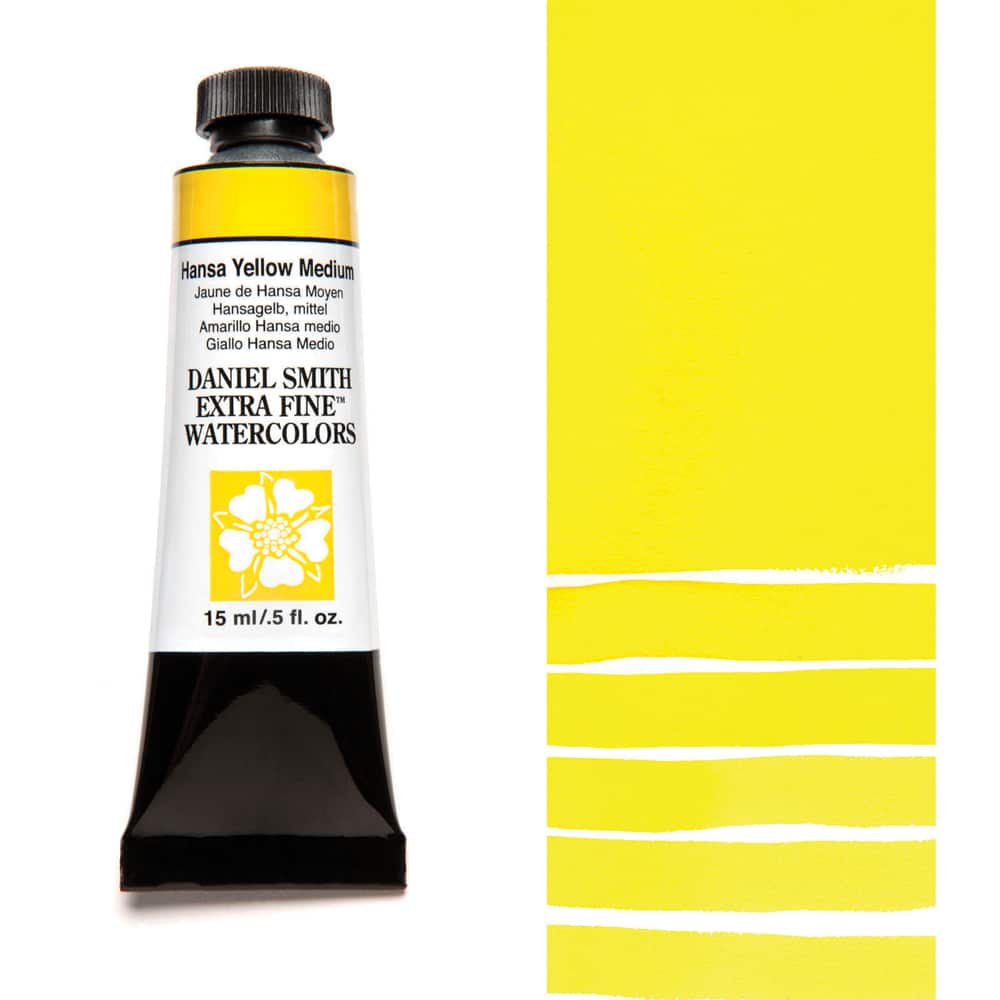
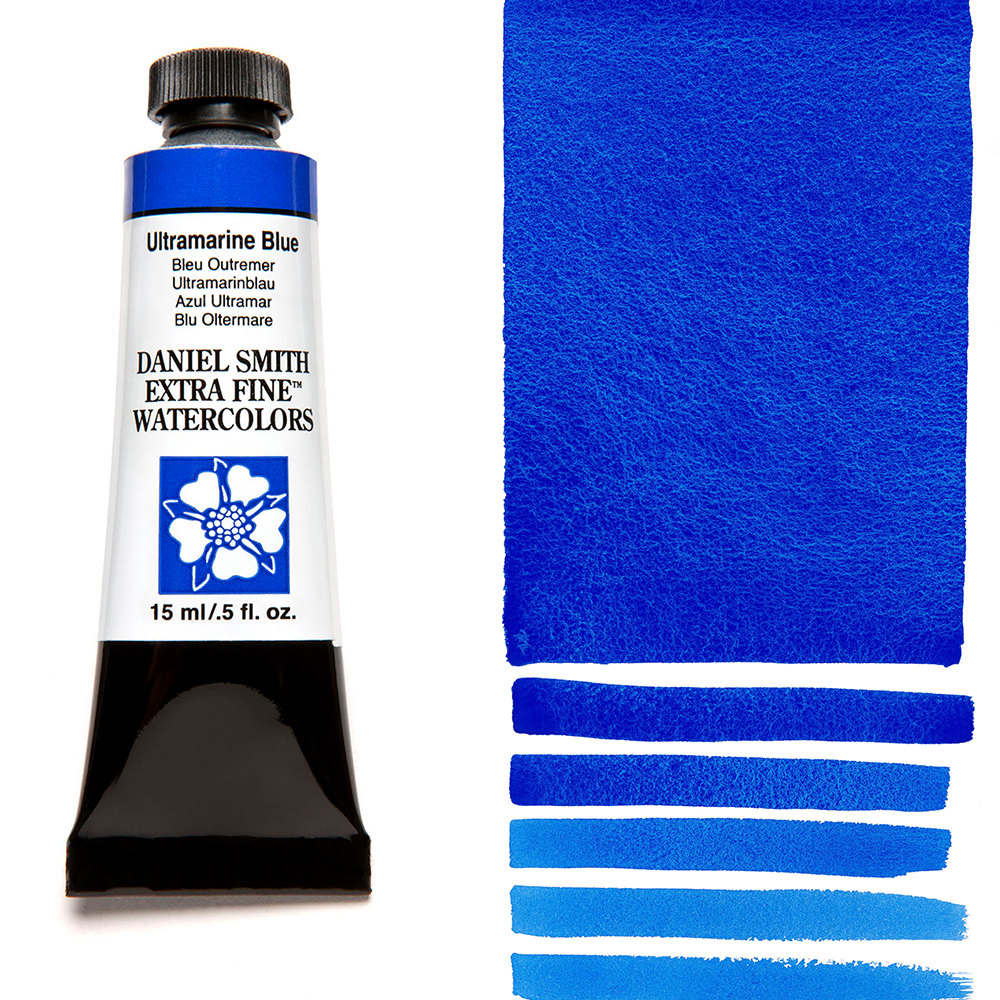
El conjunto de mezcla secundaria
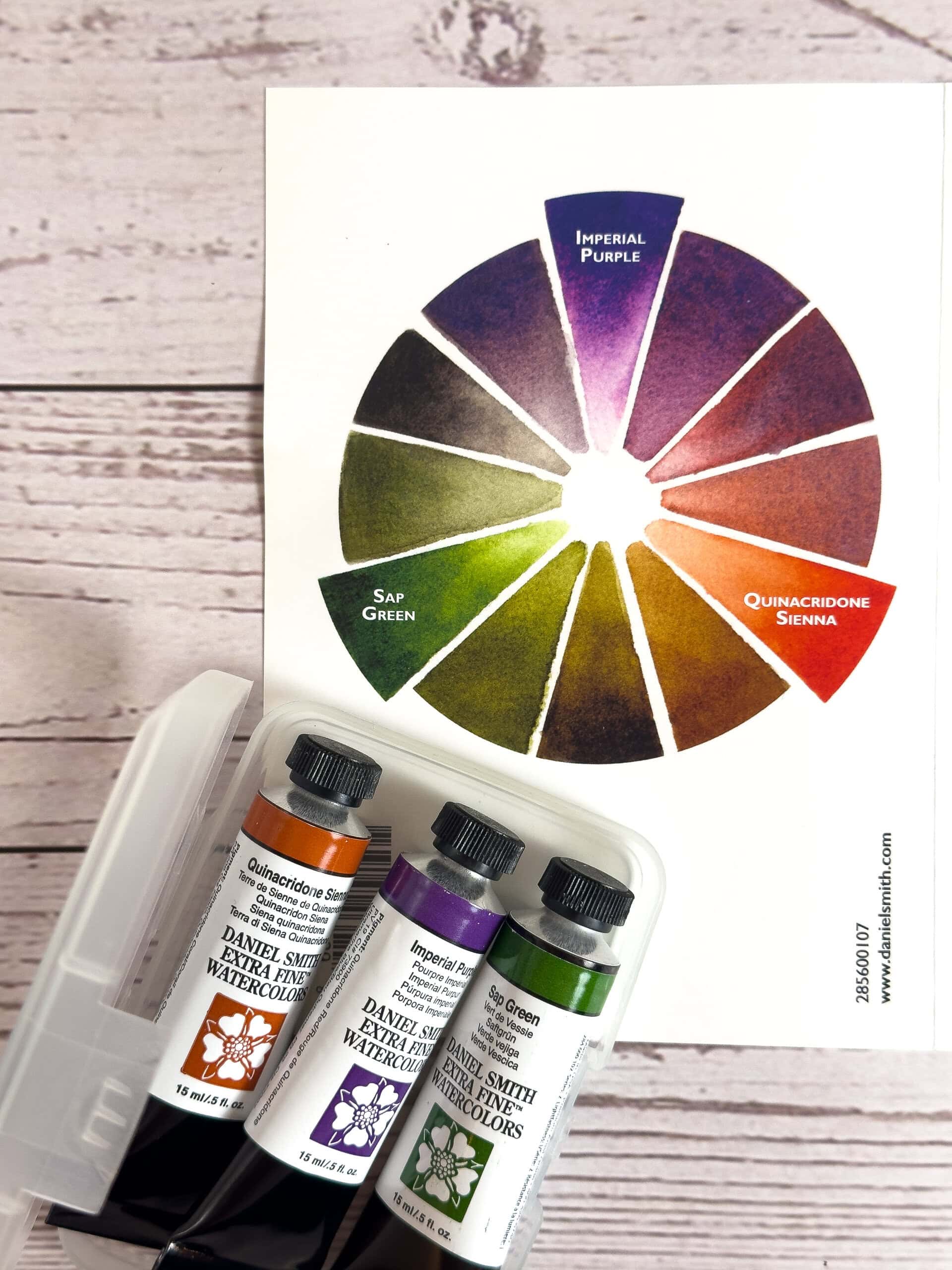
El arte de mezclar colores
Tienes una forma muy particular de mezclar colores. ¿Podrías explicarnos cómo creas una mezcla de colores y cómo influyen los pigmentos únicos de Daniel Smith en los resultados que obtienes?
Partiendo de mi tarjeta de puntos DANIEL SMITH de 18 colores y conociendo ciertos resultados que puedo lograr, he estado experimentando seleccionando colores que no había usado para ver cómo se mezclan con mis 18 básicos. Al incorporar nuevos colores, estoy descubriendo muchas combinaciones interesantes que puedo usar para ampliar mi paleta cromática.
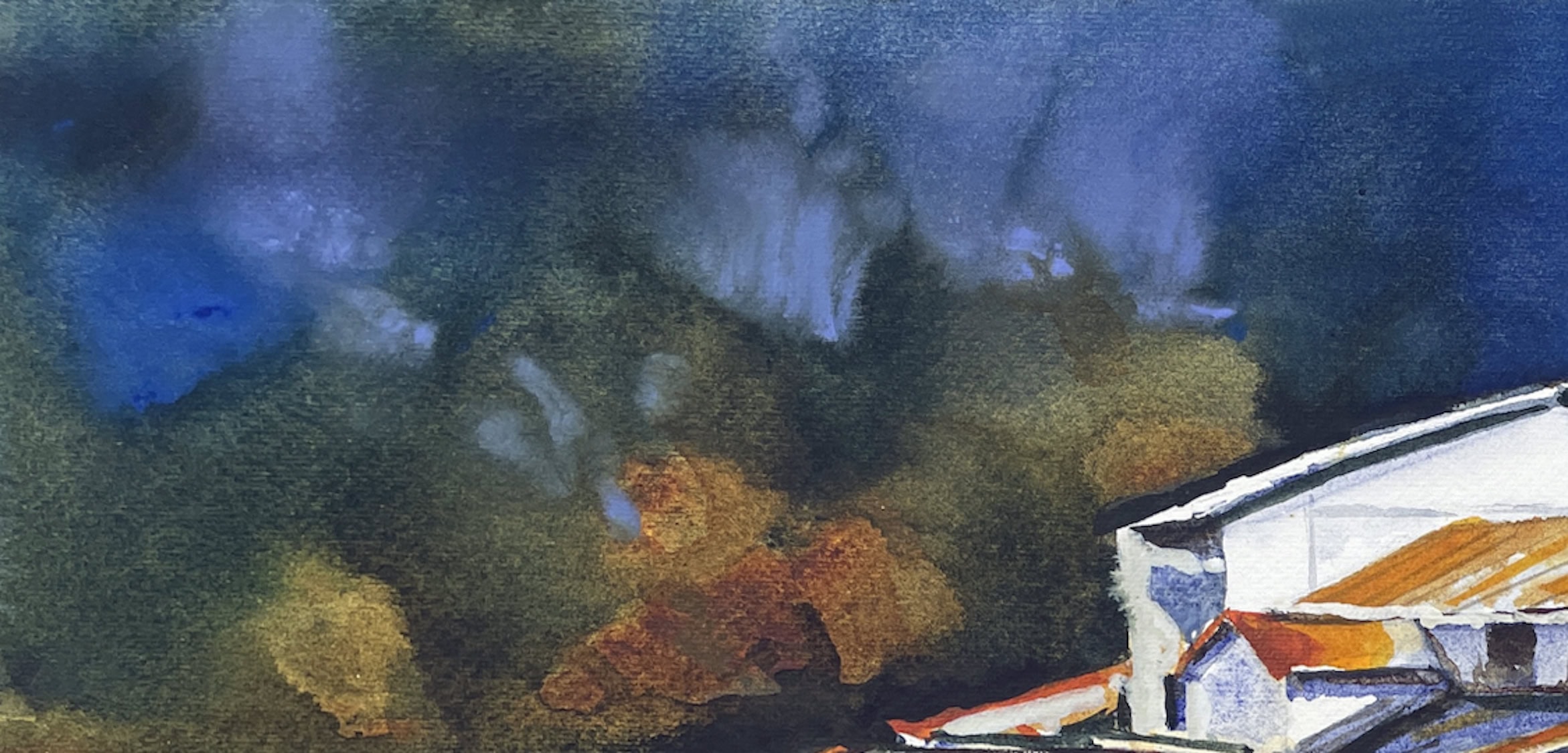
Suelo mezclar los colores directamente sobre el papel cuando aún está húmedo. Por ejemplo, cuando pinto una zona con árboles usando una mezcla de Verde Submarino, Azul Ultramar Francés, Azul Ultramar e Índigo sobre una zona previamente pintada con Oro Quinacridona, esta mezcla se integra a la perfección, creando el efecto que buscaba.
A medida que esta zona húmeda comienza a penetrar profundamente en el papel de 300 lb. prensado en frío, me gusta añadir otra mezcla sobre los árboles en algunas áreas. El color que me gusta llamar mágico es lavanda. Con un pincel cargado de tinta, toco suavemente la punta de la brocha sobre los árboles. Es entonces cuando comienza la magia. La lavanda empieza a abrirse paso entre los árboles, creando asombrosos efectos visuales. A continuación, se muestra un ejemplo.
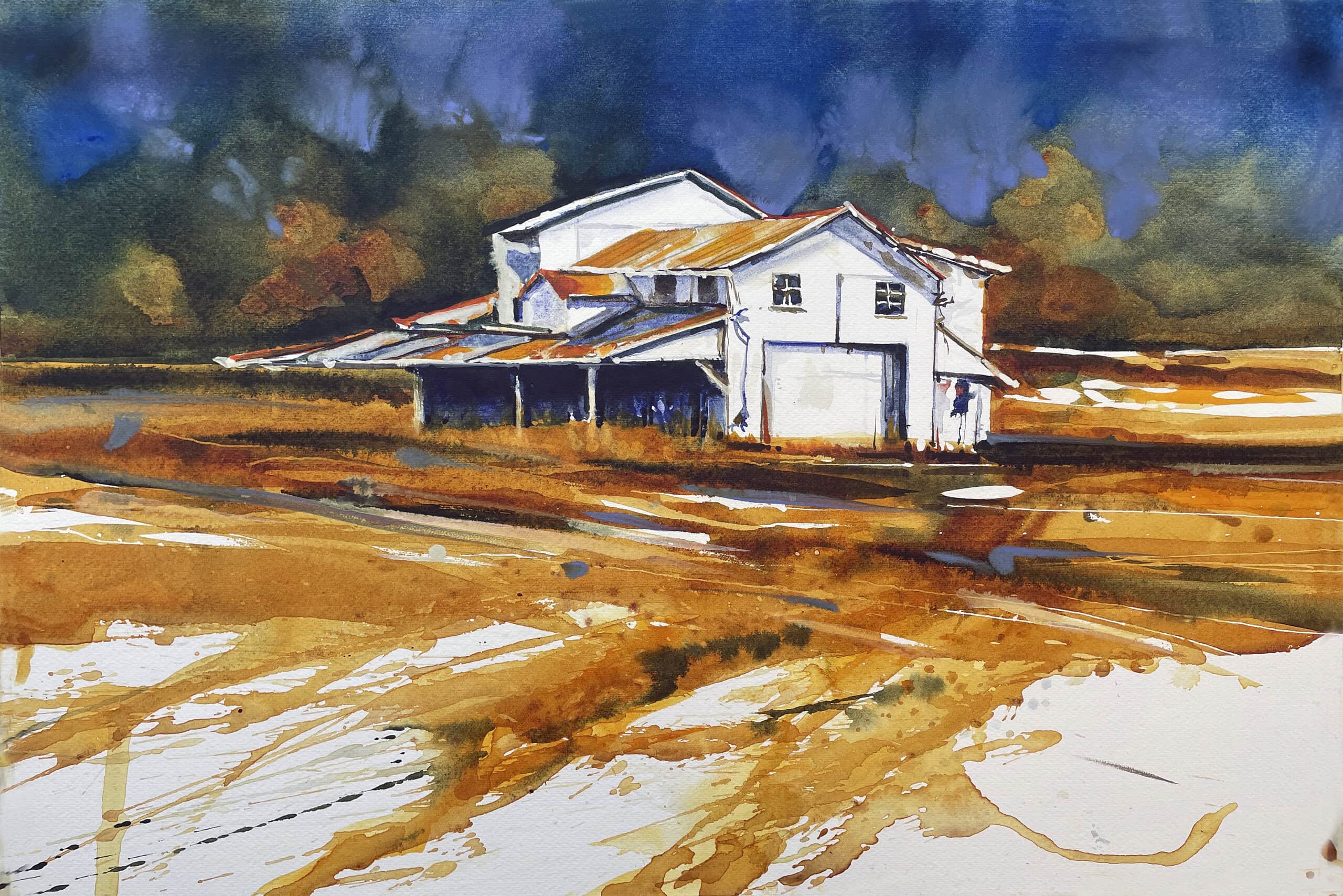
La tormenta que se avecina, de Rick Anderson
Más allá de la paleta
¿Hay colores o combinaciones de pigmentos de DANIEL SMITH a los que recurras con frecuencia cuando buscas una granulación, luminosidad o efectos atmosféricos inesperados? ¿Qué hace que estas combinaciones te resulten efectivas?
Mi acuarela, “Luces Nocturnas”, de 56 x 76 cm, es un ejemplo perfecto de cómo la planificación y la flexibilidad crean efectos inesperados. Me encanta cuando surge la magia de la acuarela. A esto lo llamo dejar que la pintura me guíe. Permito que la obra se desarrolle, dejando que el pigmento y el agua sigan su curso natural, por así decirlo. Se convierte en un reto apasionante, y cuando la pintura se transforma en una obra exitosa, la recompensa es enorme.
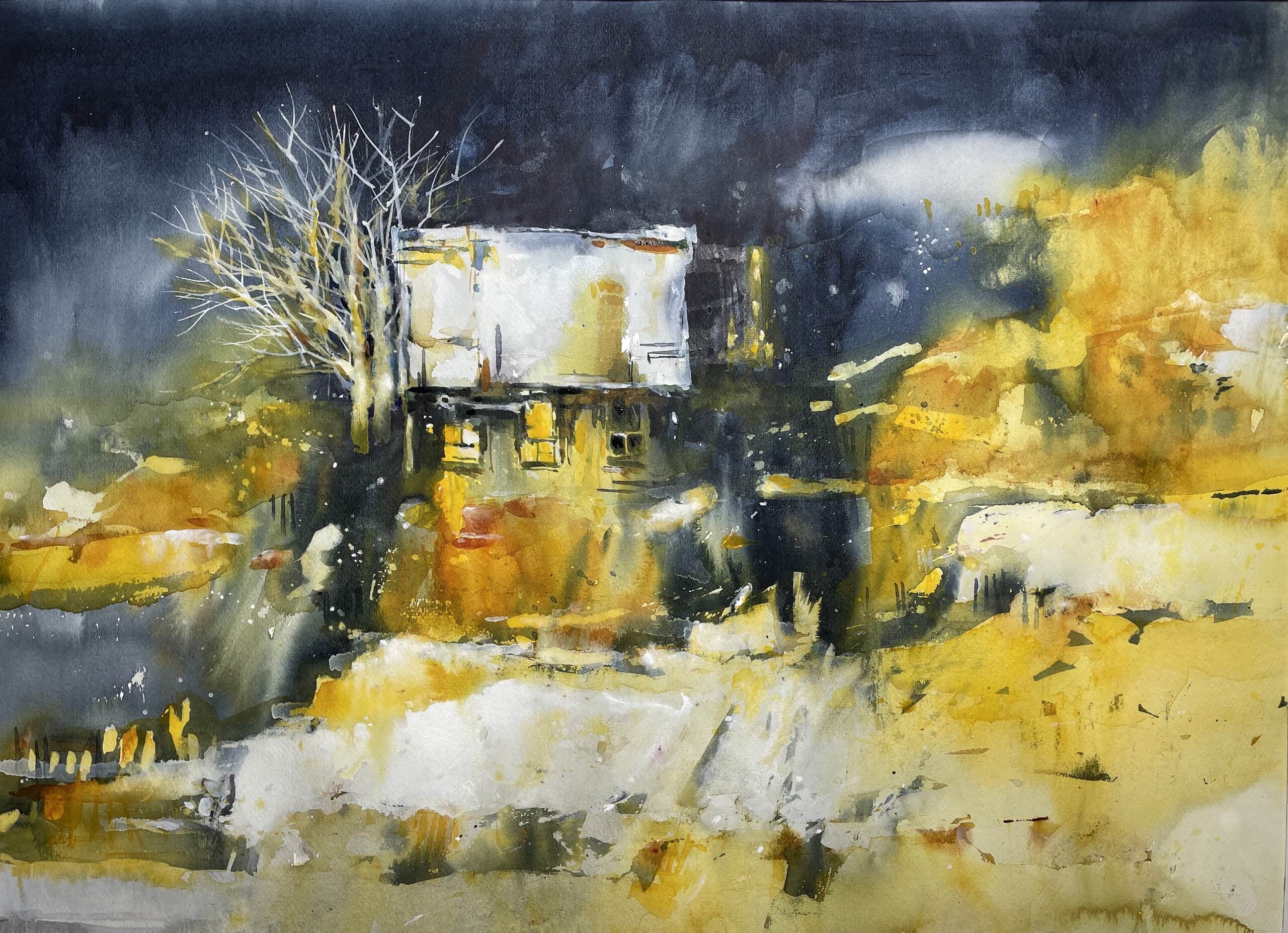
Luces nocturnas de Rick Anderson
Proceso y descubrimiento
Los cuadros de gran formato exigen tanto planificación como flexibilidad. ¿Cómo conciliar la visión inicial con los imprevistos que surgen durante el proceso, sobre todo cuando los pigmentos interactúan y crean efectos inesperados?
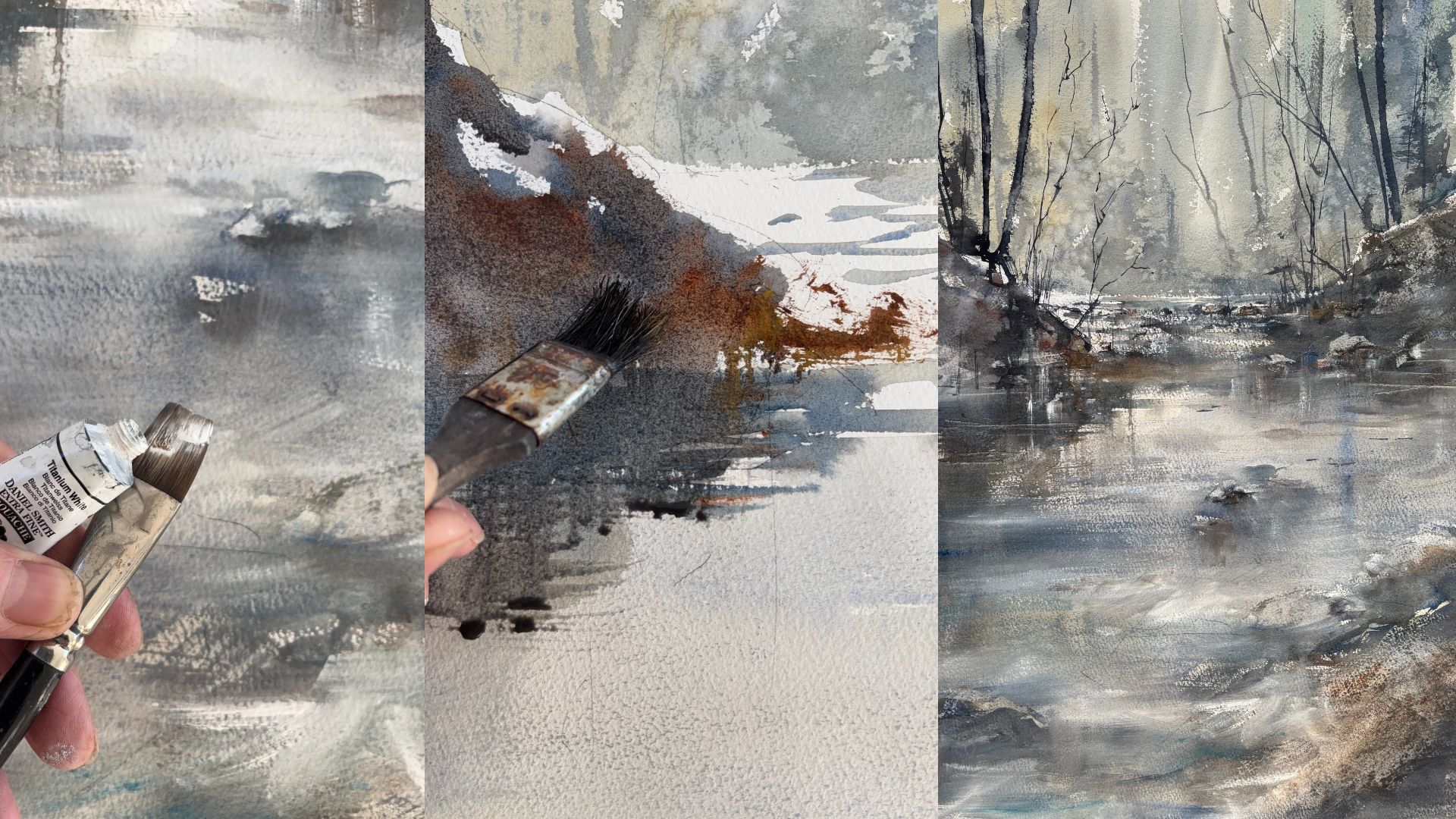
Mi acuarela de abajo, “En la niebla”, es un ejemplo perfecto de “Proceso y descubrimiento”. Una observación es que la paleta de colores es muy limitada, pero el agua fluía constantemente sobre el papel de acuarela texturizado con una inclinación de aproximadamente 9 grados, lo que permitía que la gravedad influyera en el movimiento del pigmento mientras los colores se mezclaban suavemente en diferentes puntos. Al principio, parece que opté por usar solo unos pocos colores fríos y cálidos. También es evidente que decidí esperar antes de pintar las ramas de los árboles para que no se corrieran demasiado y perdieran la sensación de ser árboles.
Si mal no recuerdo, usé blanco titanio entre algunas ramas para aclarar ciertas zonas. También recuerdo que, en ocasiones, utilicé un pulverizador para humedecer ligeramente algunas superficies y mantener el papel un poco húmedo, lo que me permitió continuar con el proceso.
Además, observe los suaves destellos de agua en varias zonas. Esta técnica es un complemento maravilloso para lograr estos delicados efectos visuales. Si bien la pintura parece haber sido realizada con rapidez, no fue así, ni tampoco se pretendía pintarla en tan poco tiempo. Considero que esta acuarela fue un éxito y logré los resultados que esperaba.
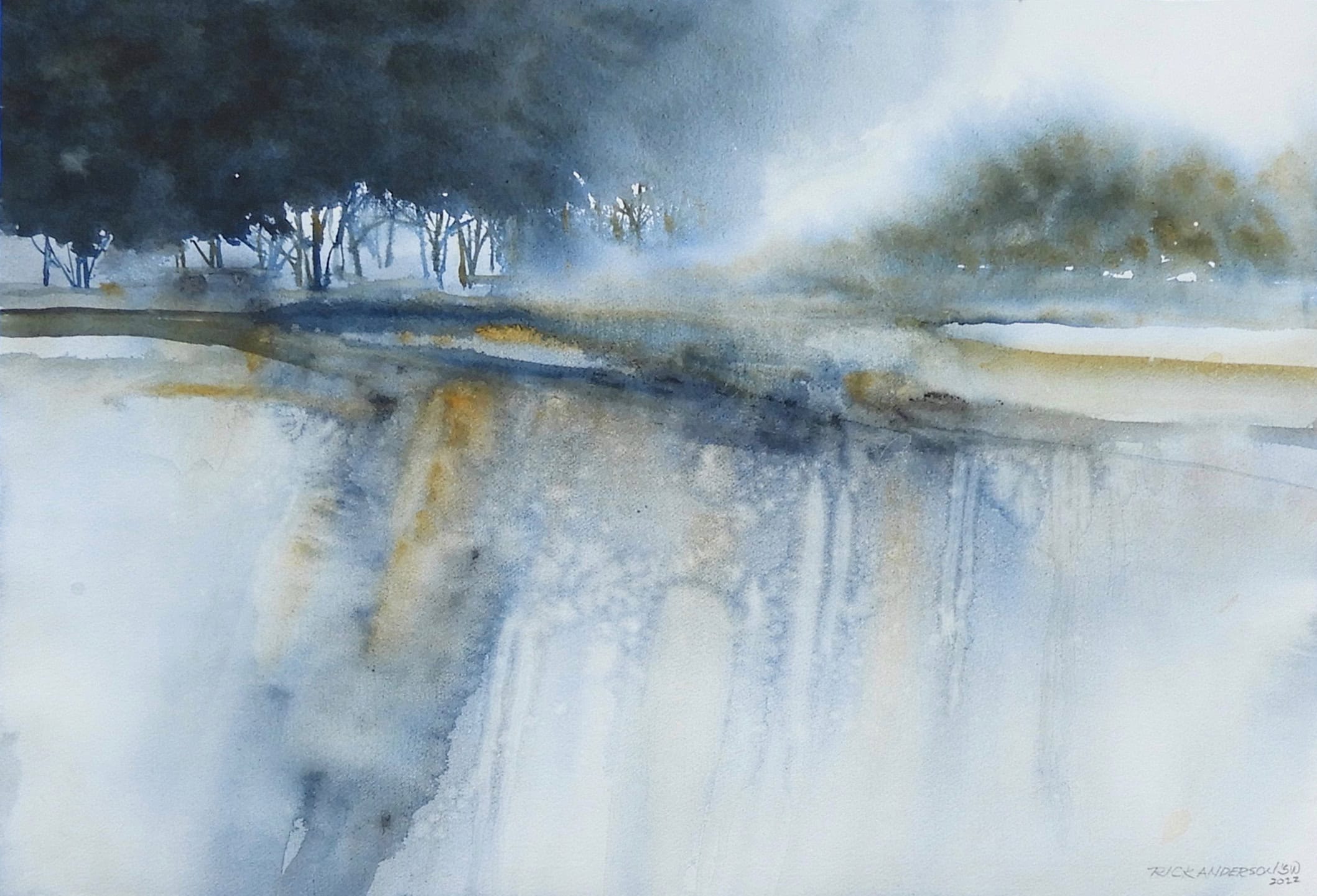
En la niebla, de Rick Anderson
¿Listo para ver adónde te lleva el color?
Inspírate en Rick Anderson y date espacio para explorar, ya sea que pintes en pequeño o en grande. Experimenta con mezclas inesperadas, deja que el agua y el pigmento se muevan y descubre qué sucede en el proceso. Con la profundidad, la consistencia y las infinitas posibilidades de mezcla de Acuarelas extrafinas de Daniel Smith, Cada cuadro se convierte en una oportunidad para explorar más a fondo el color, confiar en el proceso y realizar nuevos descubrimientos propios.
Acerca del artista

Rick Anderson
Rick Anderson Rick es residente de Mississippi de toda la vida. Como artista profesional con más de 50 años de trayectoria y más de 150 premios en exposiciones de arte regionales y nacionales, tuvo el honor de ser invitado a participar en Fabriano In Acquarello (2020-2023) en Italia.
“Crecer en Mississippi ha influido en mi arte, pero no lo define. Dondequiera que viaje, ya sea por Estados Unidos o al extranjero, cada lugar influye en mi arte. ¿Cómo no iba a hacerlo? Sea cual sea el tema, mi proceso creativo es el mismo. Pinto principalmente en mi estudio, basándome en las fotos, bocetos y notas que tomo en el lugar. Mi objetivo es crear arte que transmita un fuerte impacto visual.”
“Este es uno de los eventos de acuarela más completos y enriquecedores en los que he participado. Más de 1400 artistas internacionales expusieron sus obras originales, representando a sus países de origen. Es una comunidad de amistad, donde se comparte conocimiento y se trabaja para alcanzar objetivos comunes.”