











Painting watercolor on a large-format surface invites artists to think bigger, move more freely, and experience color in an entirely new way. For 里克·安德森, that freedom begins with intention. Thoughtful decisions about composition, light, values, negative space, and his DANIEL SMITH color palette create a strong foundation—giving him the confidence to embrace spontaneity, expressive brushwork, and the energy that unfolds when watercolor is given more room to move.
So, what does it really take to paint bigger while keeping watercolor fresh, balanced, and full of life? We asked Rick Anderson five questions about working at a larger scale—from planning and composition to color mixing, technique, and the role DANIEL SMITH Watercolors play in his creative process.
Going Big
What changes do you use in your approach when painting on a large-format surface, and how do you keep the painting cohesive, dynamic, and full of energy as the scale increases?
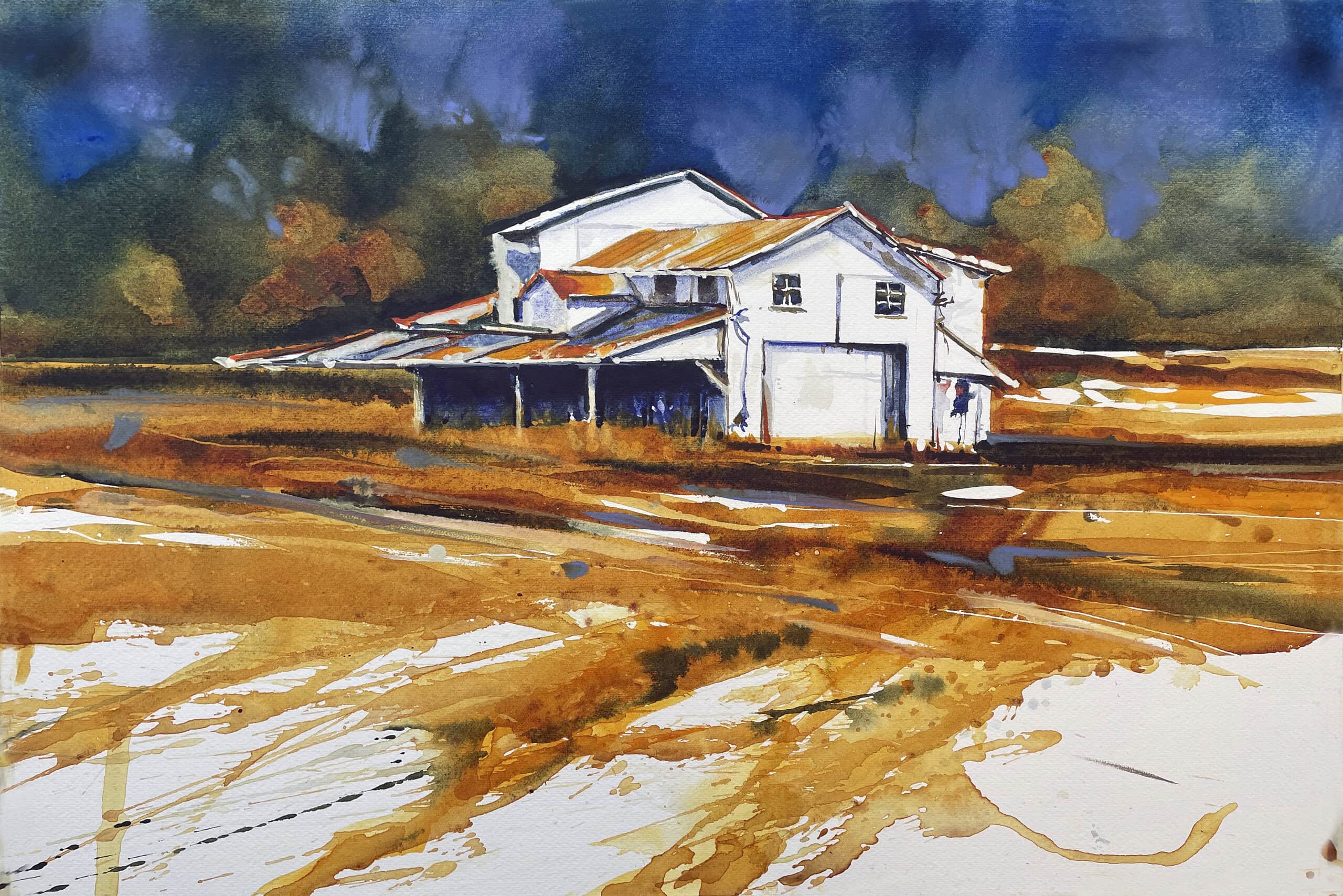
Regardless of whether I paint on a large-format or a small-format surface, planning is the critical element. I am a studio artist. Before I sit behind my table to paint, I have many choices to make. What size do I plan to paint? Which palette colors should I choose? Will I need to mask any areas before I begin? Will I need a sketch, and how detailed does it need to be?
If I decide to paint a structure that has a lot of history and visual character, how detailed should it be? What is the direction of the light, and where are the light, middle, and dark values? What environment should I place it in that will work with the main subject, create interest, yet not diminish the focus on the structure? What size do I want the building to be? What will be the right size for the best design on the page, and how will it work together with the space around it? Should I have more or less negative space in the painting to help the overall design?
These are questions I ask before I put brush and paint to paper, and they help keep the painting cohesive, dynamic, and full of energy. This is just the beginning. No matter how many questions I have before I begin, more questions arise after I start painting. Fortunately, because of my years of painting, many of these questions are answered intuitively as I paint.

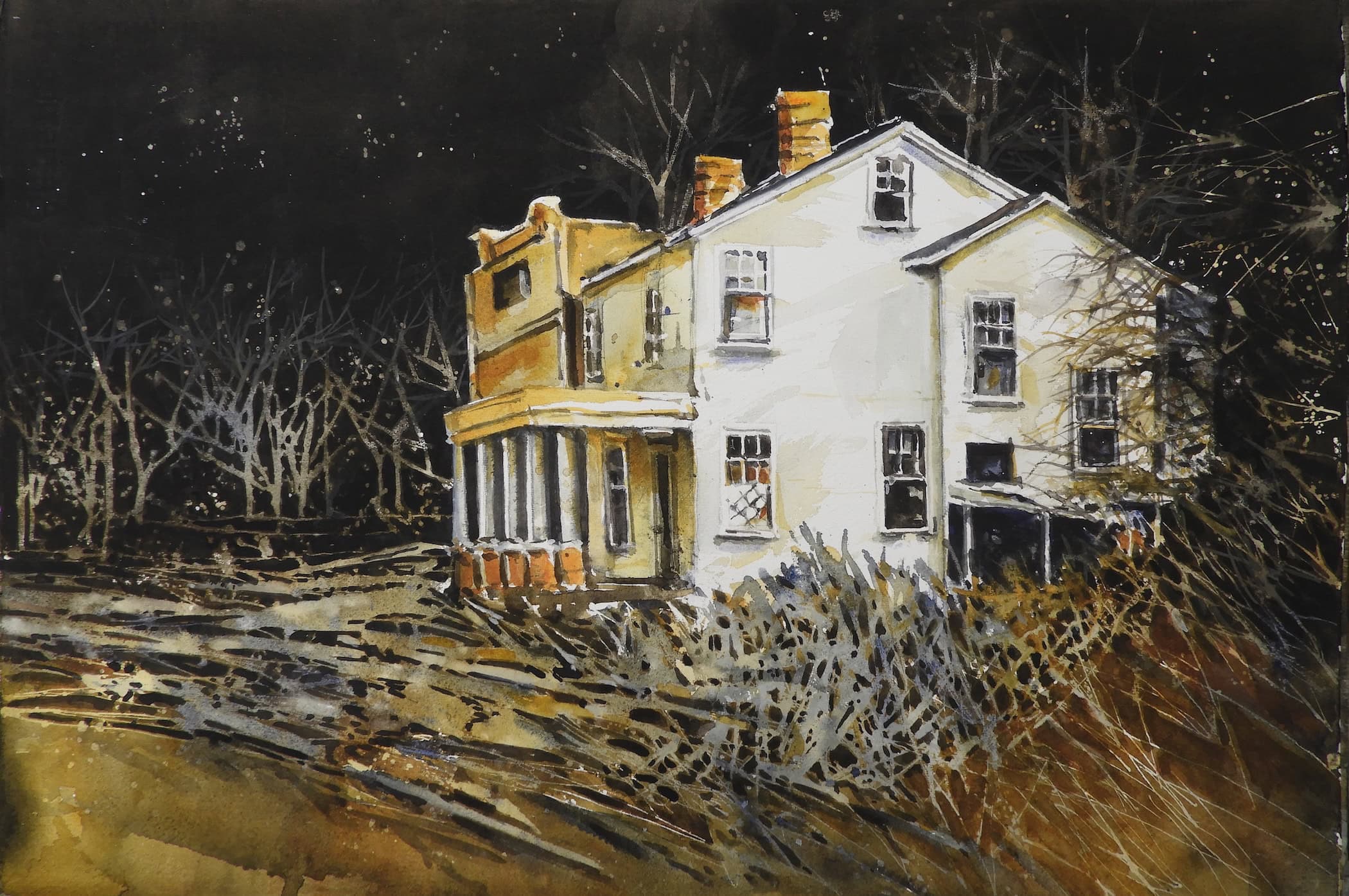
Starless Night by Rick Anderson
Color on a Larger Stage
How does working at a larger scale influence the way you choose, layer, and balance your colors—and what role do DANIEL SMITH watercolors play in achieving the intensity and depth you envision? What is your favorite DANIEL SMITH color triad for creating these effects?
Working on a larger scale can give me more opportunities to create more areas of interest within the overall painting. I can create more detailed areas without drawing interest away from the overall effects in the painting and continue to create loose, spontaneous techniques even inside the more structured elements. I paint with DANIEL SMITH Extra Fine Watercolors. As a DANIEL SMITH Brand Ambassador, I know that every tube will be the same whether it was manufactured a year ago or today. I can count on that. Consistency in my paint is important to me, just as the paper I paint on or the brushes I paint with are. I know that when I’m painting, I can trust how colors will mix with other colors to get the results I want every time.

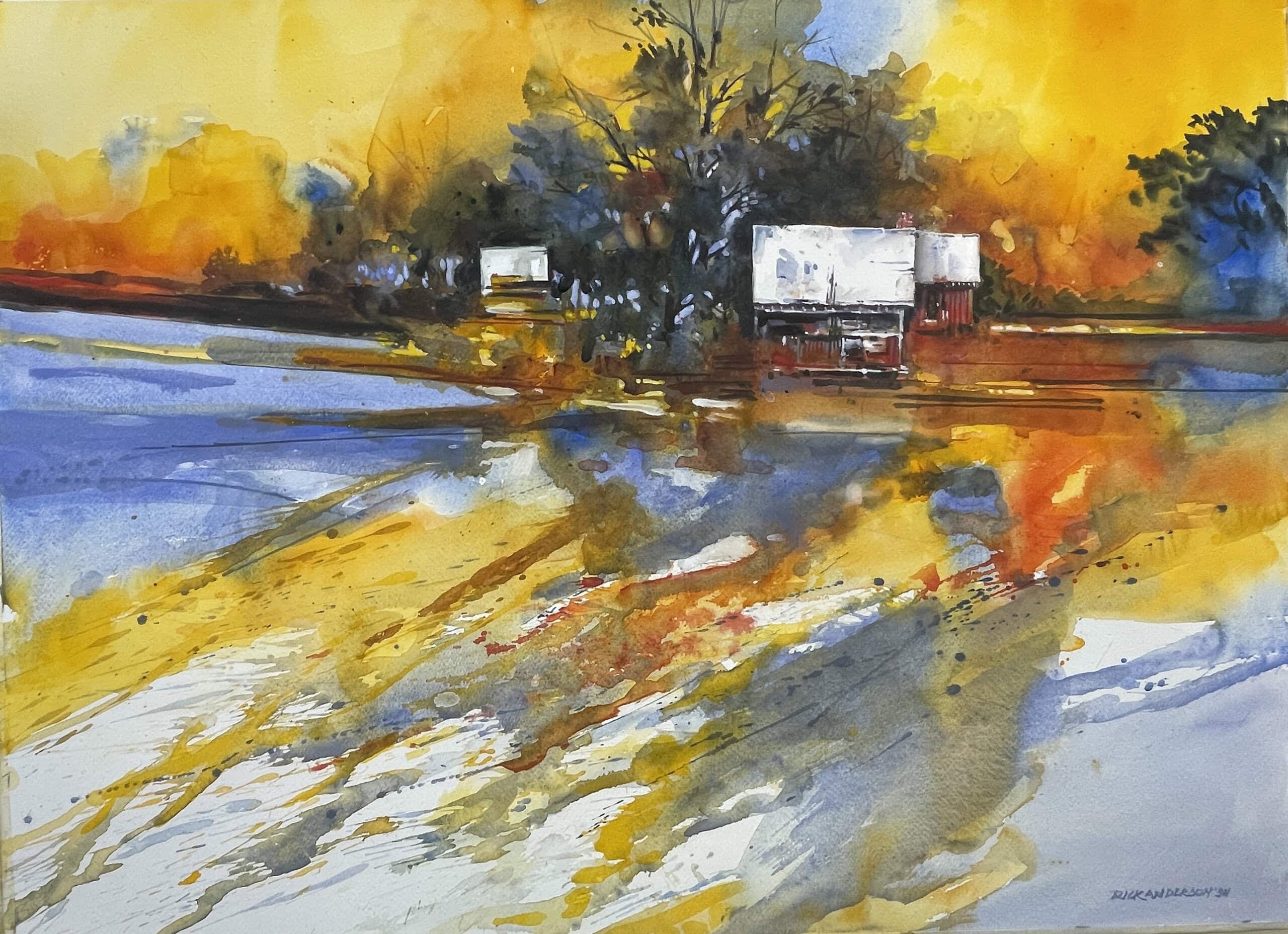
Bright Colorful Day by Rick Anderson
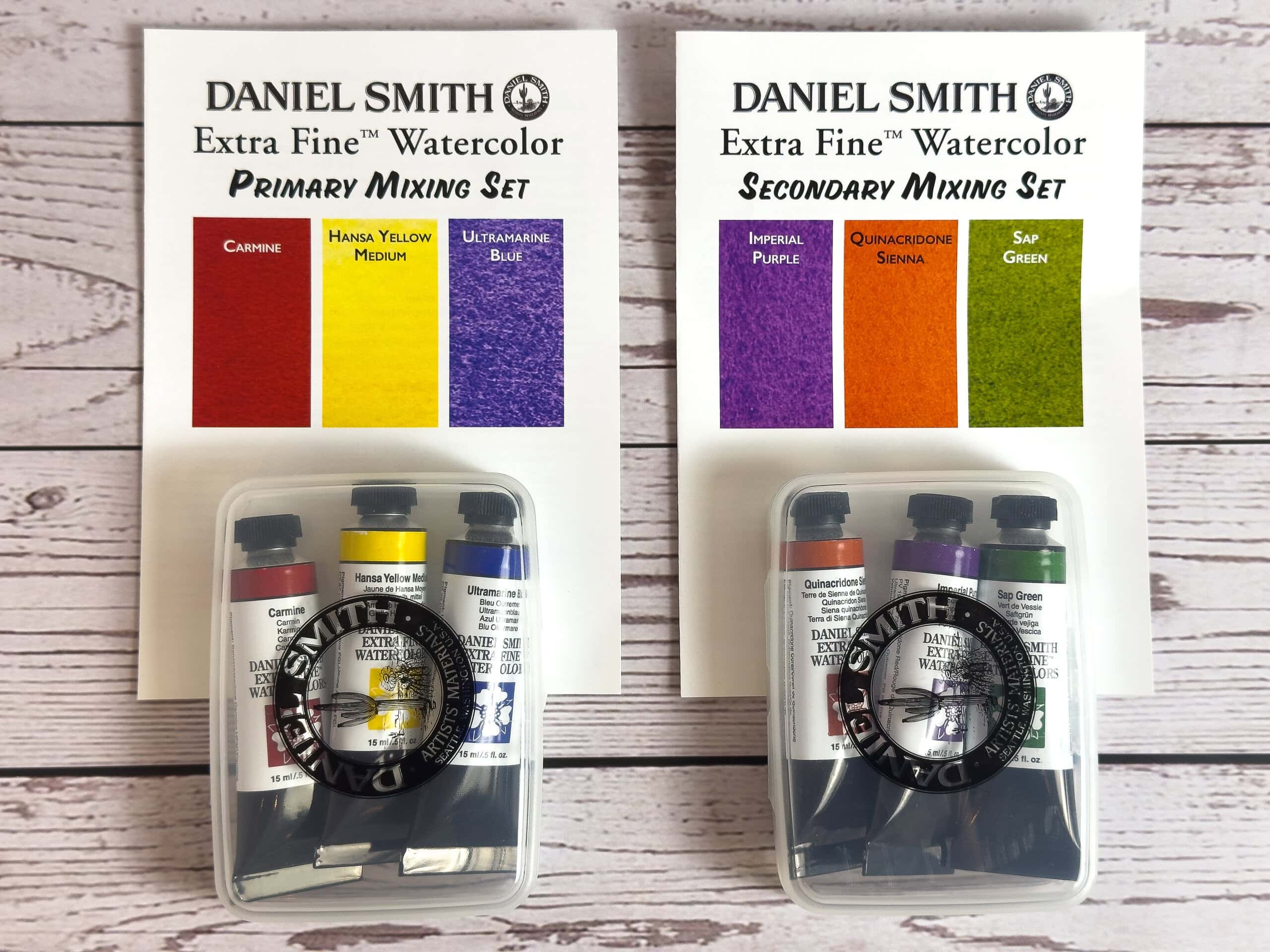
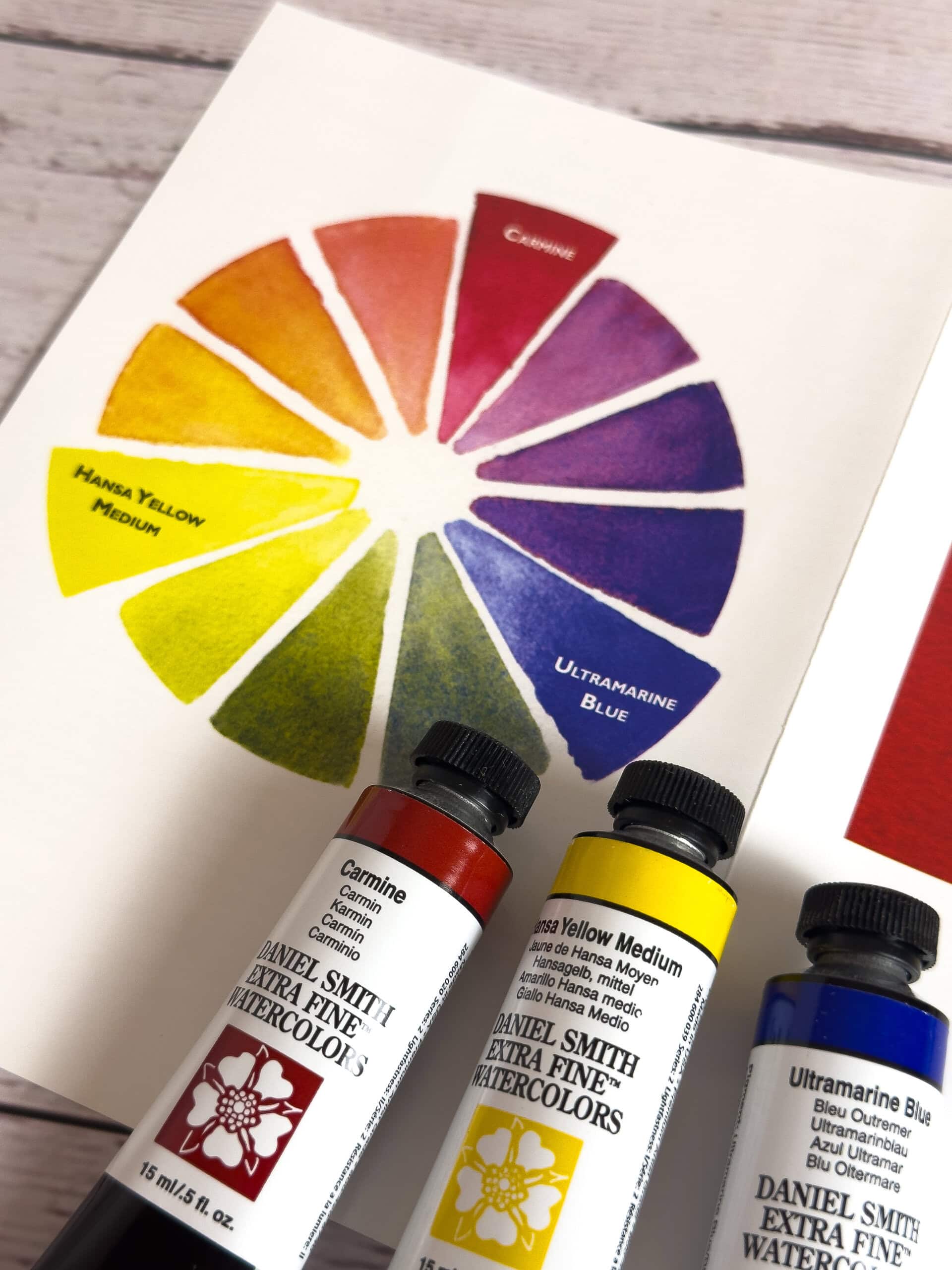
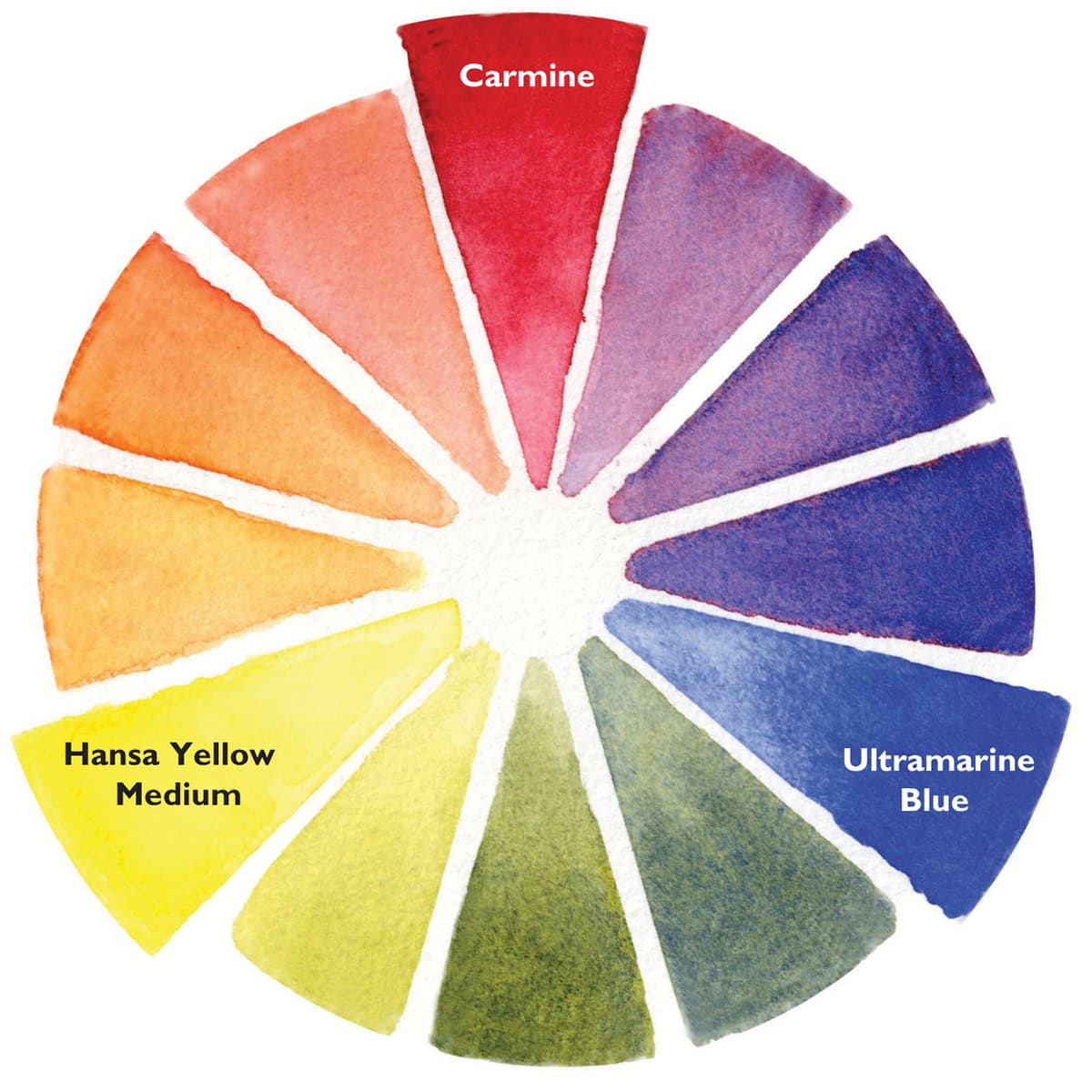
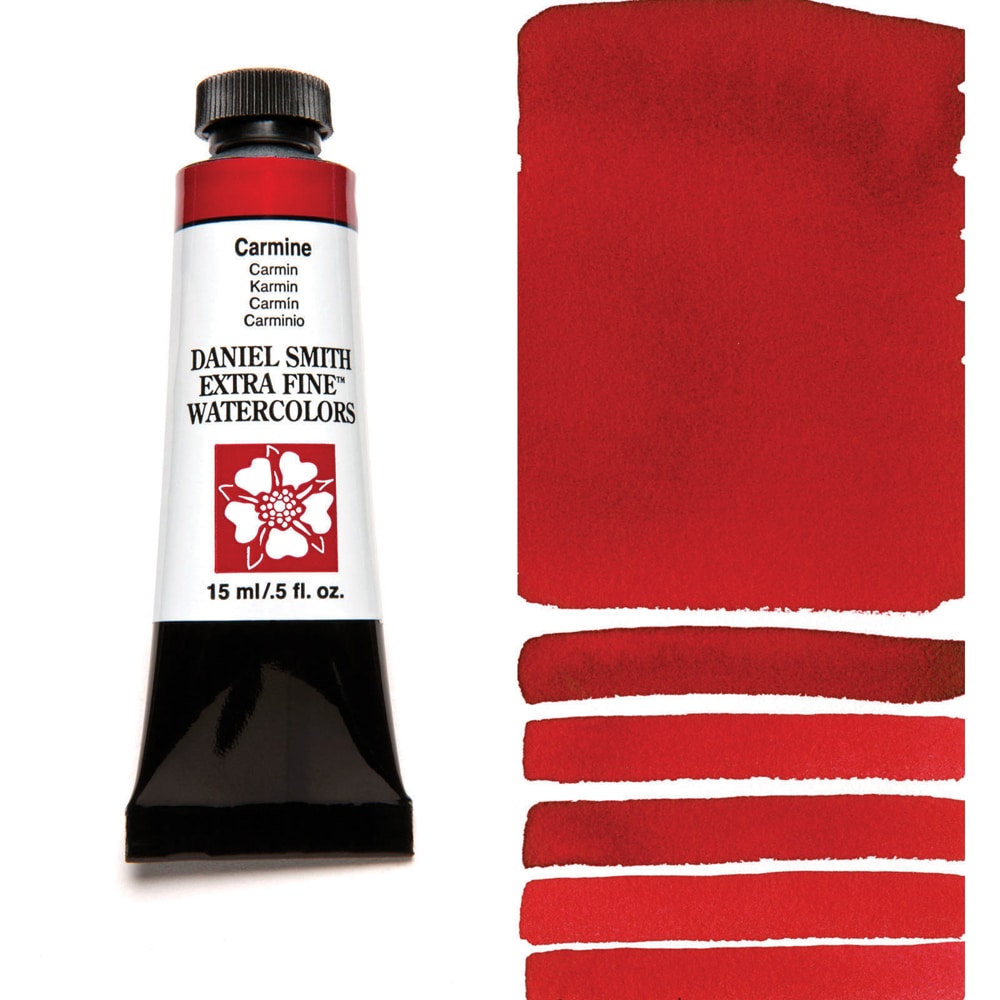
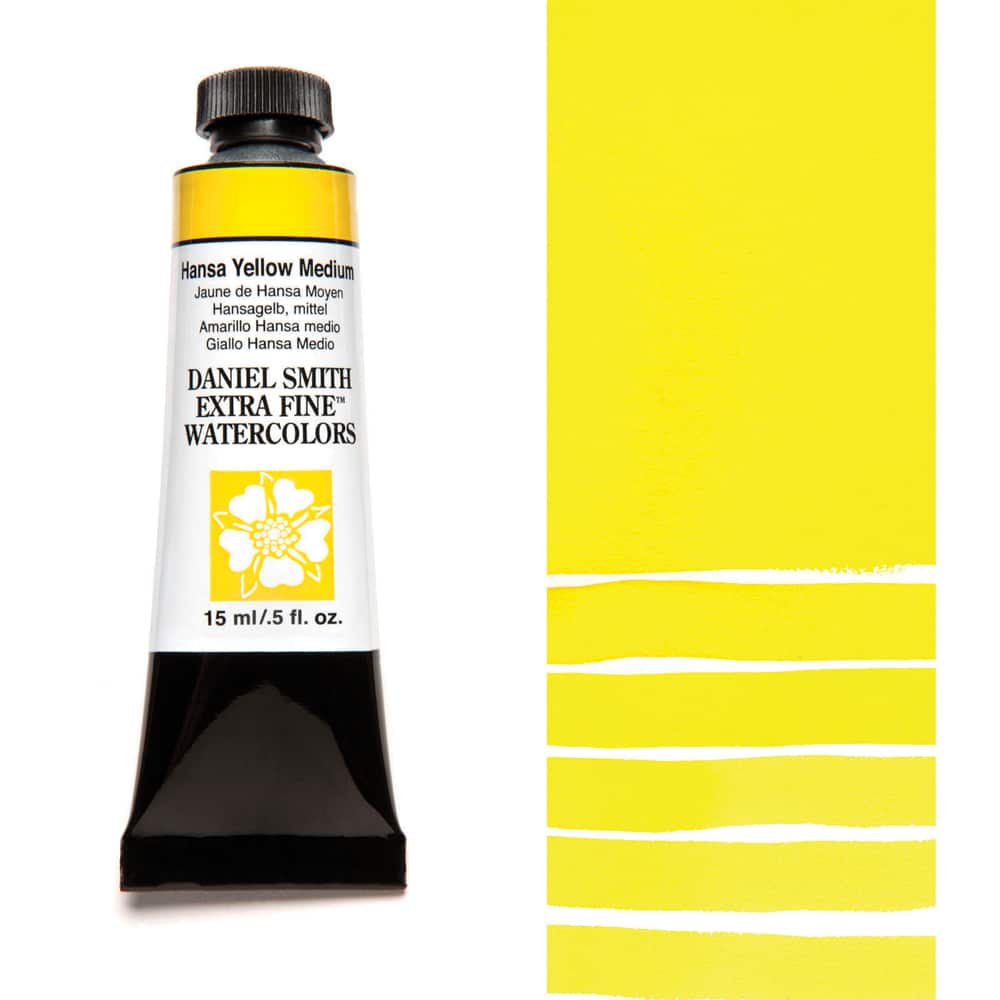
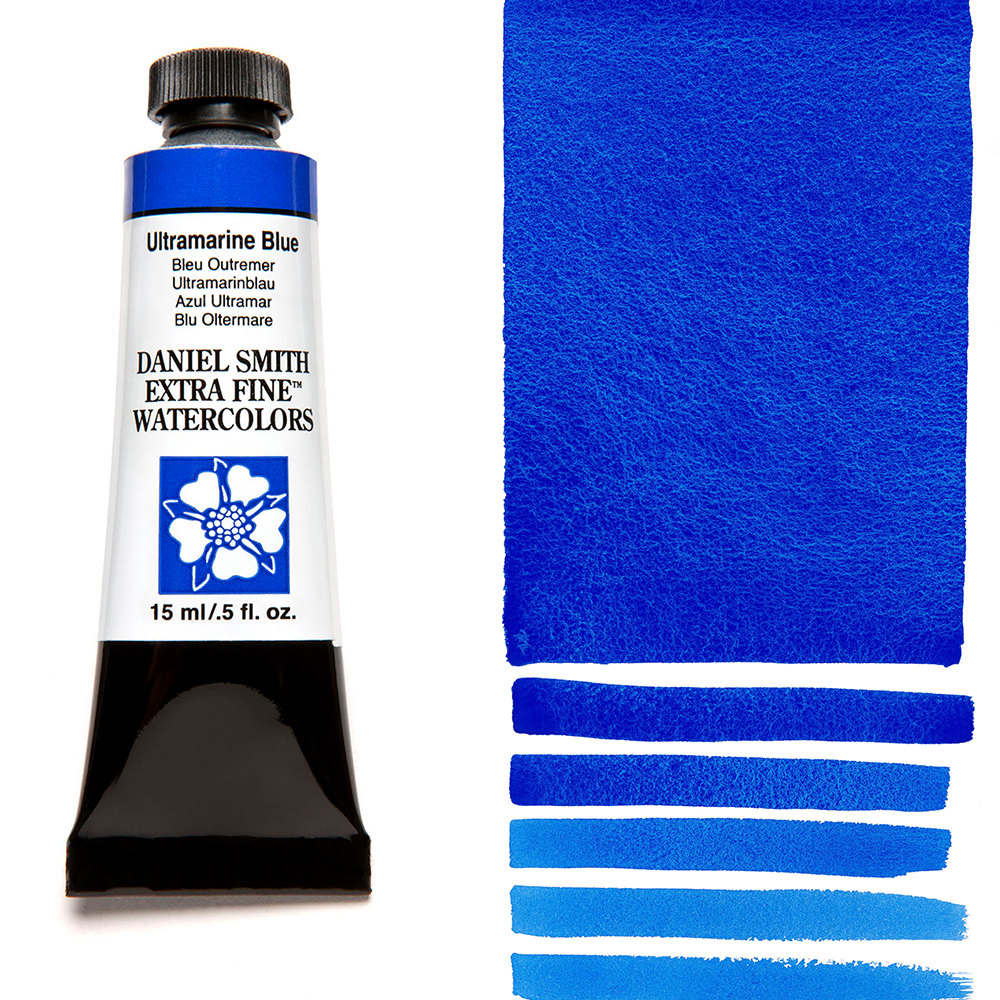
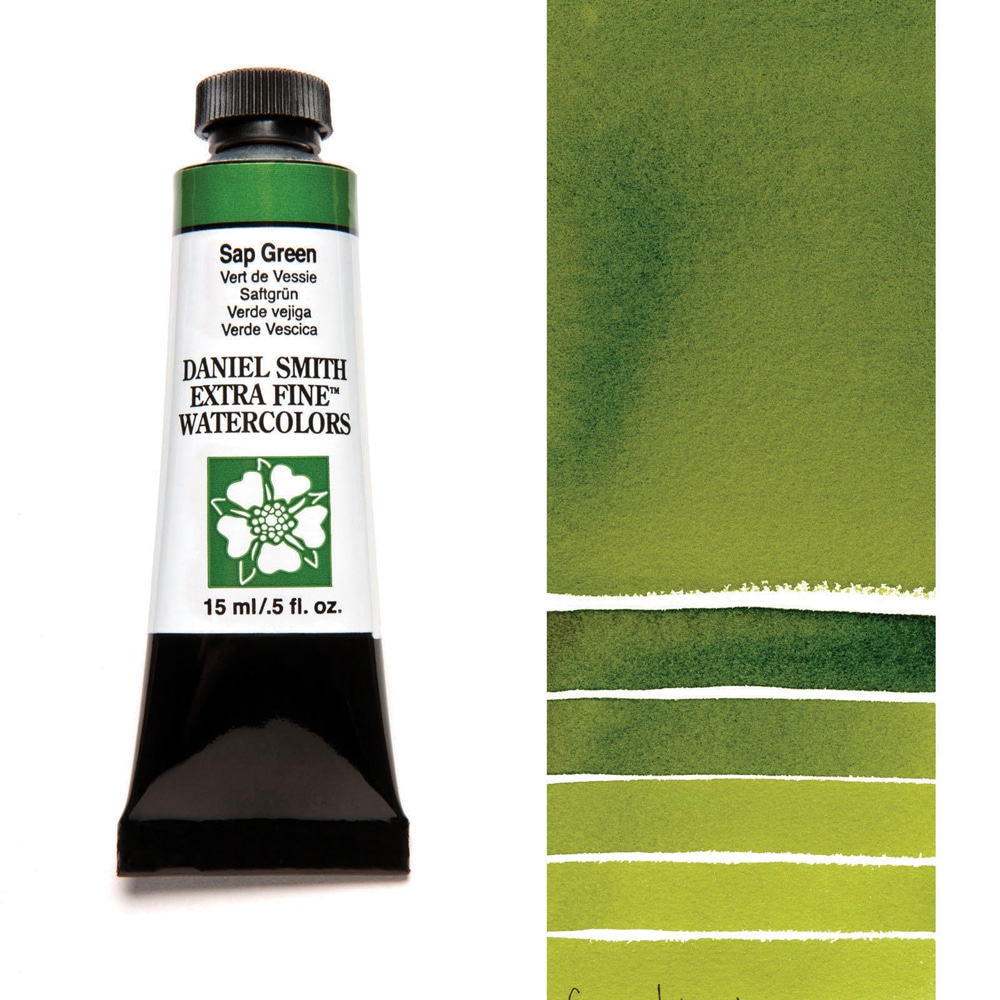
I don’t have a favorite pre-packaged DANIEL SMITH color triad for creating these effects, but if I want to be prepared for any occasion, I would want to have on hand the three DANIEL SMITH Primary Colors and three Secondary Colors.
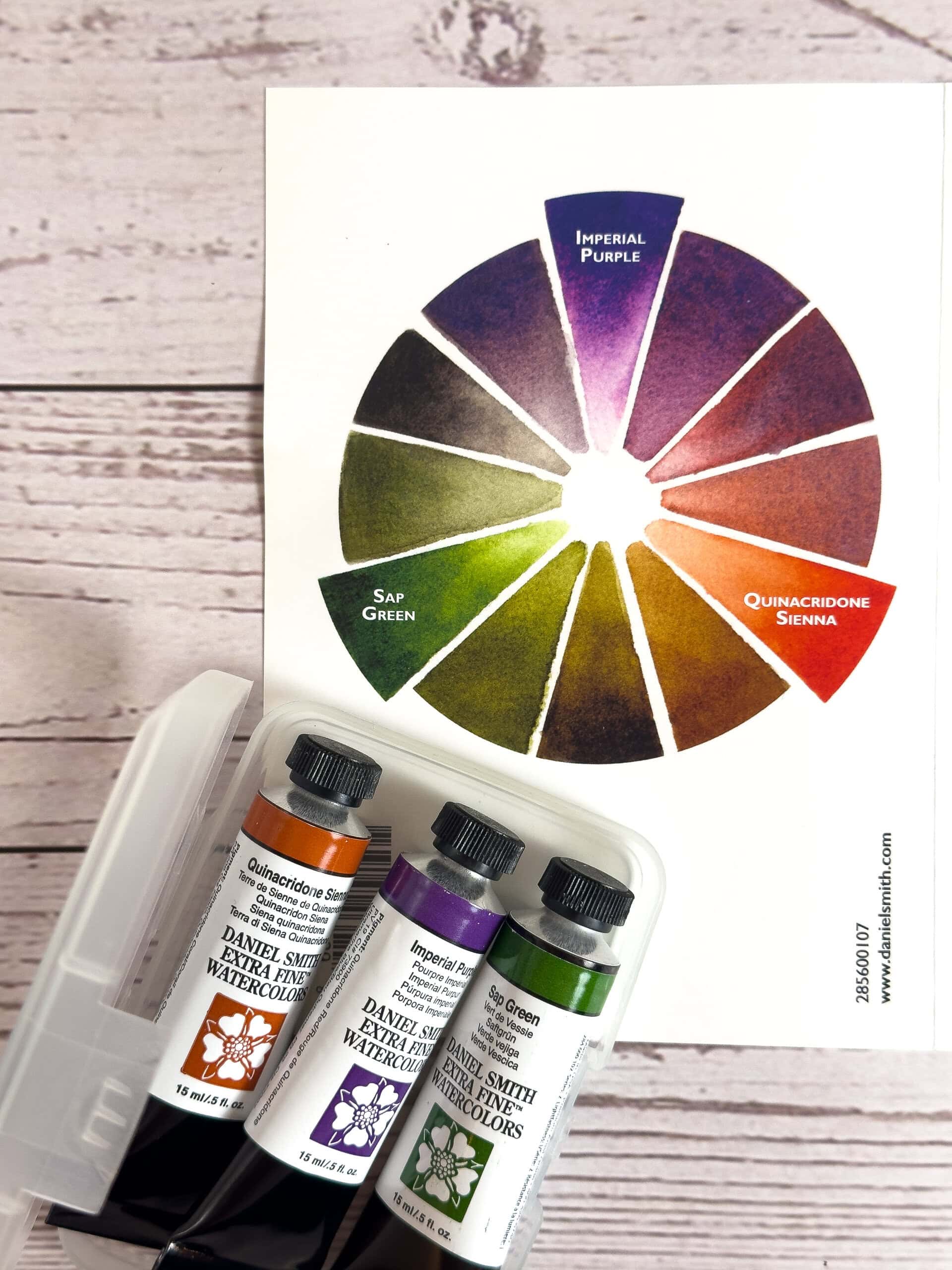
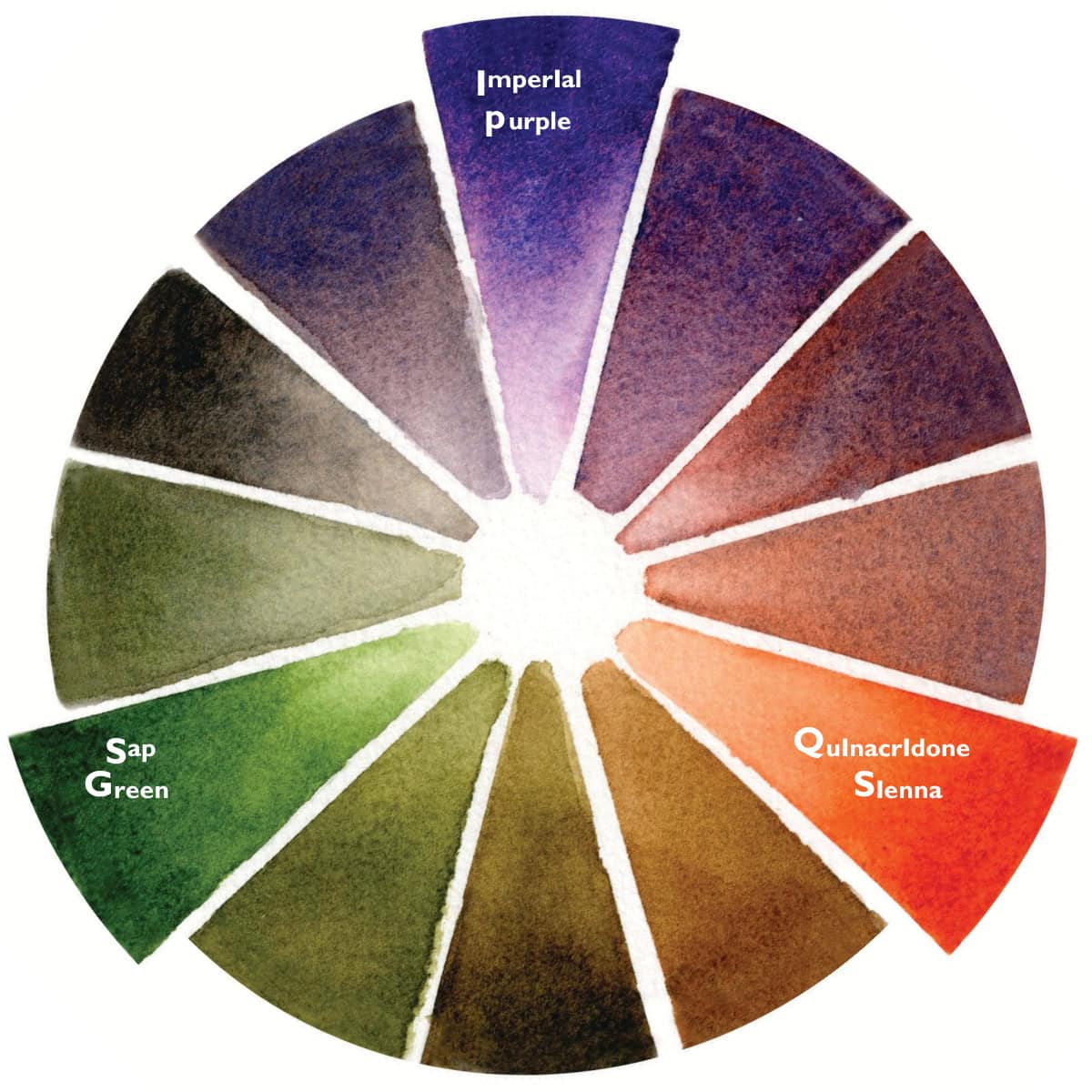
DANIEL SMITH Primary and Secondary Watercolor Mixing Sets

The Primary Mixing Set


The Primary Mixing Set
The Secondary Mixing Set


The Art of Color Mixing
You have a distinctive approach to mixing colors. Can you walk us through how you build a color mix, and how Daniel Smith’s unique pigments influence the results you get?
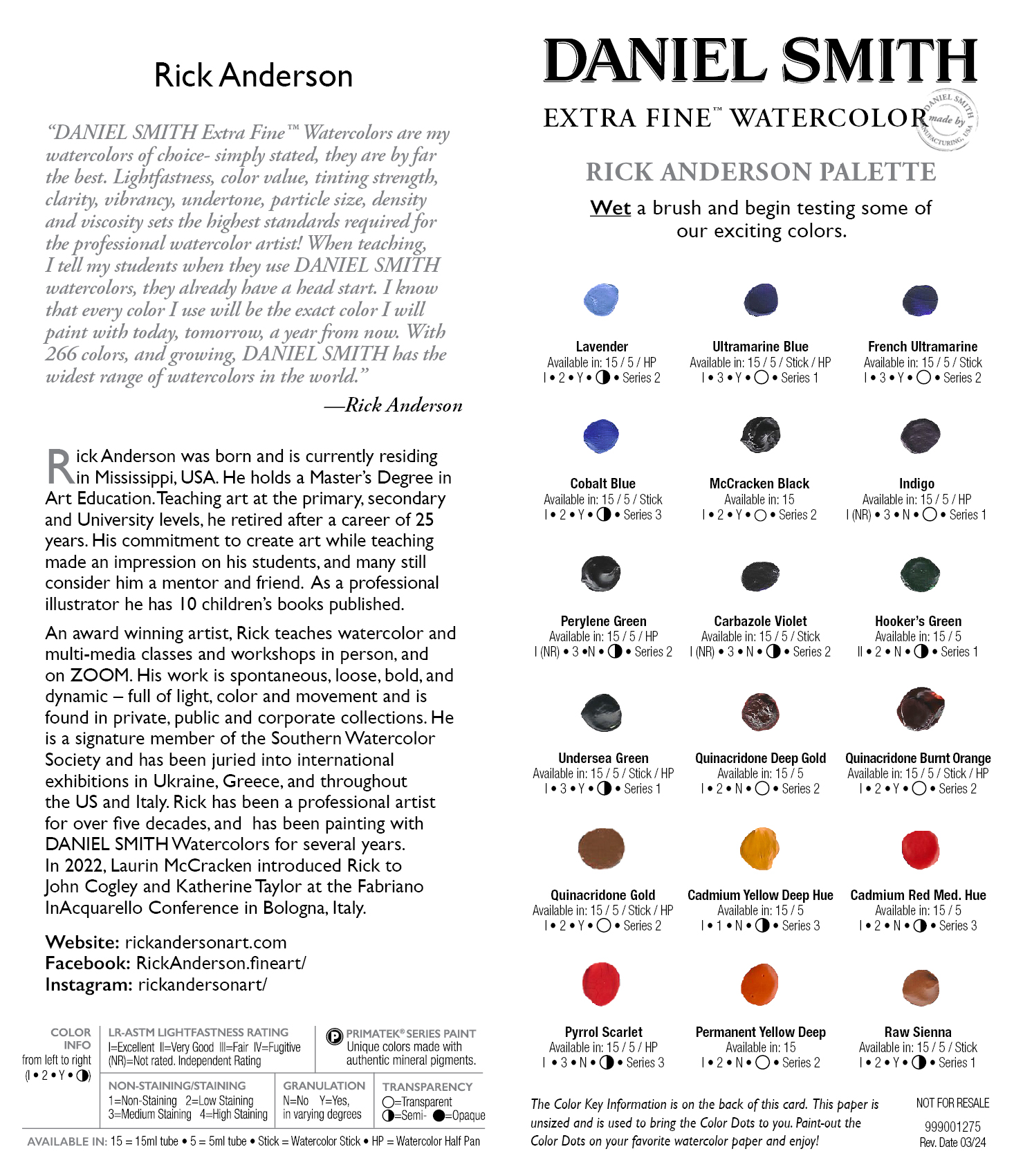
Beginning with my DANIEL SMITH Dot Card of 18 colors and knowing certain results I can achieve, I have been experimenting by selecting colors I haven’t used to see how they blend with my basic 18. By incorporating new colors, I am finding so many exciting mixes that I can use to expand my color palette.
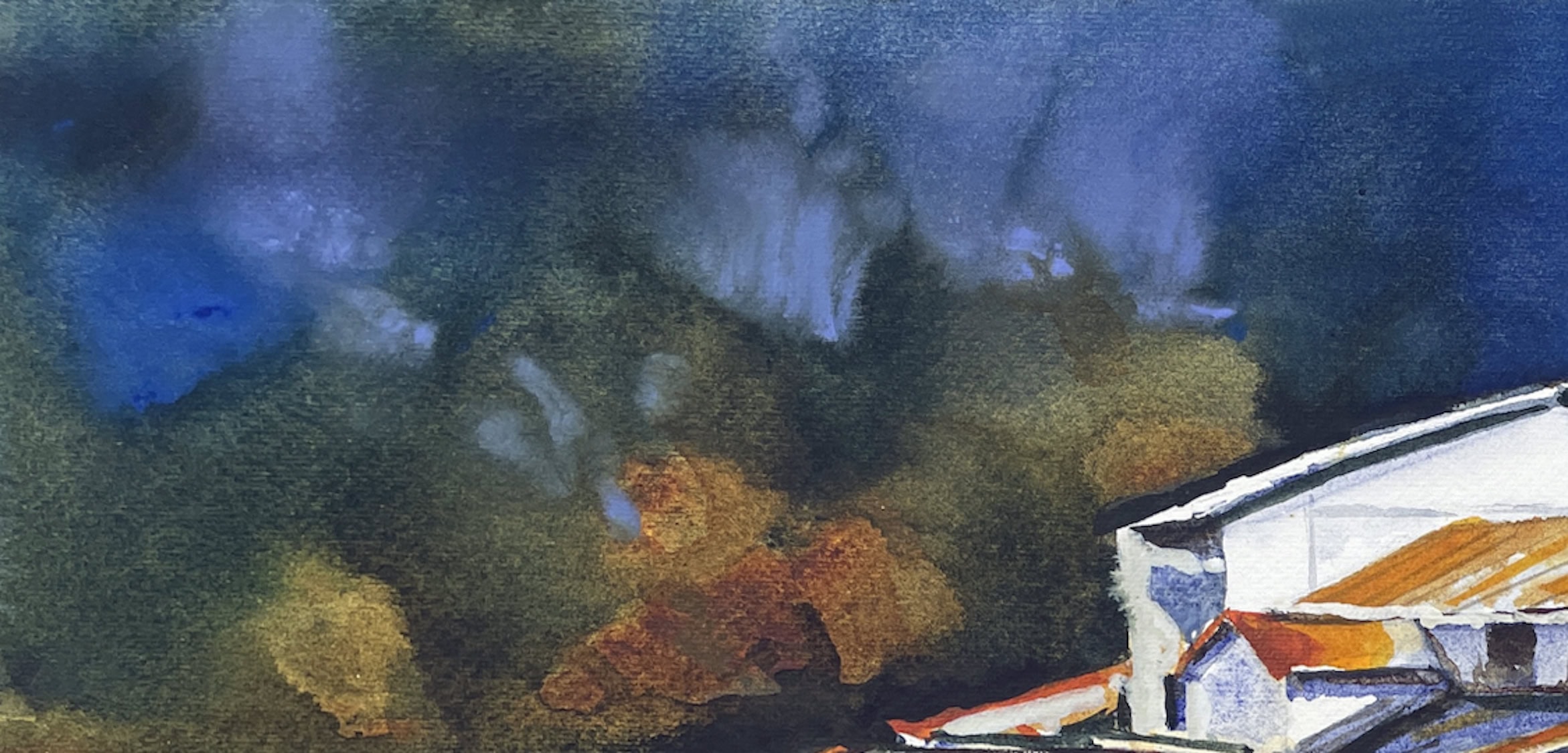
I do a lot of mixing directly on the paper when the paper is still wet. For example, when I lay in an area of trees using a mixture of Undersea Green, French Ultramarine, Ultramarine Blue, and Indigo on top of a previously painted area of Quinacridone Gold, this mix blends in beautifully, creating the look I wanted.
As this wet area begins to blend deep into the 300 lb. cold press paper, there is another mix I like to add on top of the trees in a few areas. The color I like to call magical is Lavender. Using a loaded brush, I gently touch the tip into the trees. This is when the magic begins to happen. The Lavender begins to push its way into the tree areas, creating amazing visual effects. Below is an example of this.


Approaching Storm by Rick Anderson
Beyond the Palette
Are there particular DANIEL SMITH colors or pigment combinations you return to when you want unexpected granulation, luminosity, or atmospheric effects? What makes these combinations work for you?
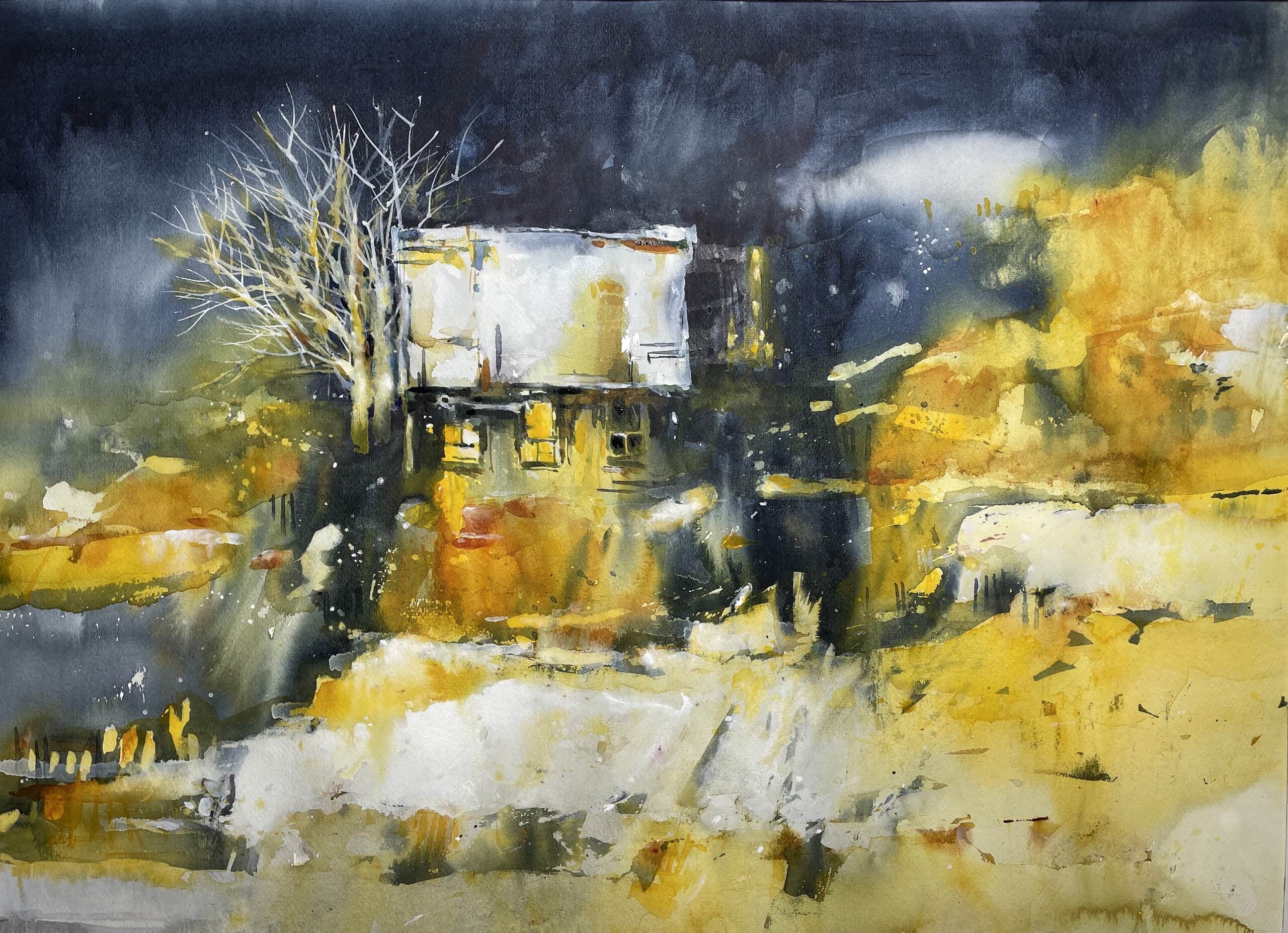
My watercolor painting, “Night Lights,” 22” x 30”, is a perfect example of planning and flexibility creating many effects I did not anticipate. I love it when unexpected watercolor “magic” happens. I call this letting my painting guide me. I let the painting develop by allowing the pigment and water to take the course of nature, so to speak. It becomes an exciting challenge, and when the painting develops into a successful painting, it’s extremely rewarding.

Night Lights by Rick Anderson
Process & Discovery
Large paintings demand both planning and flexibility. How do you balance your initial vision with the surprises that happen along the way—especially when pigments interact and create effects you didn’t anticipate?
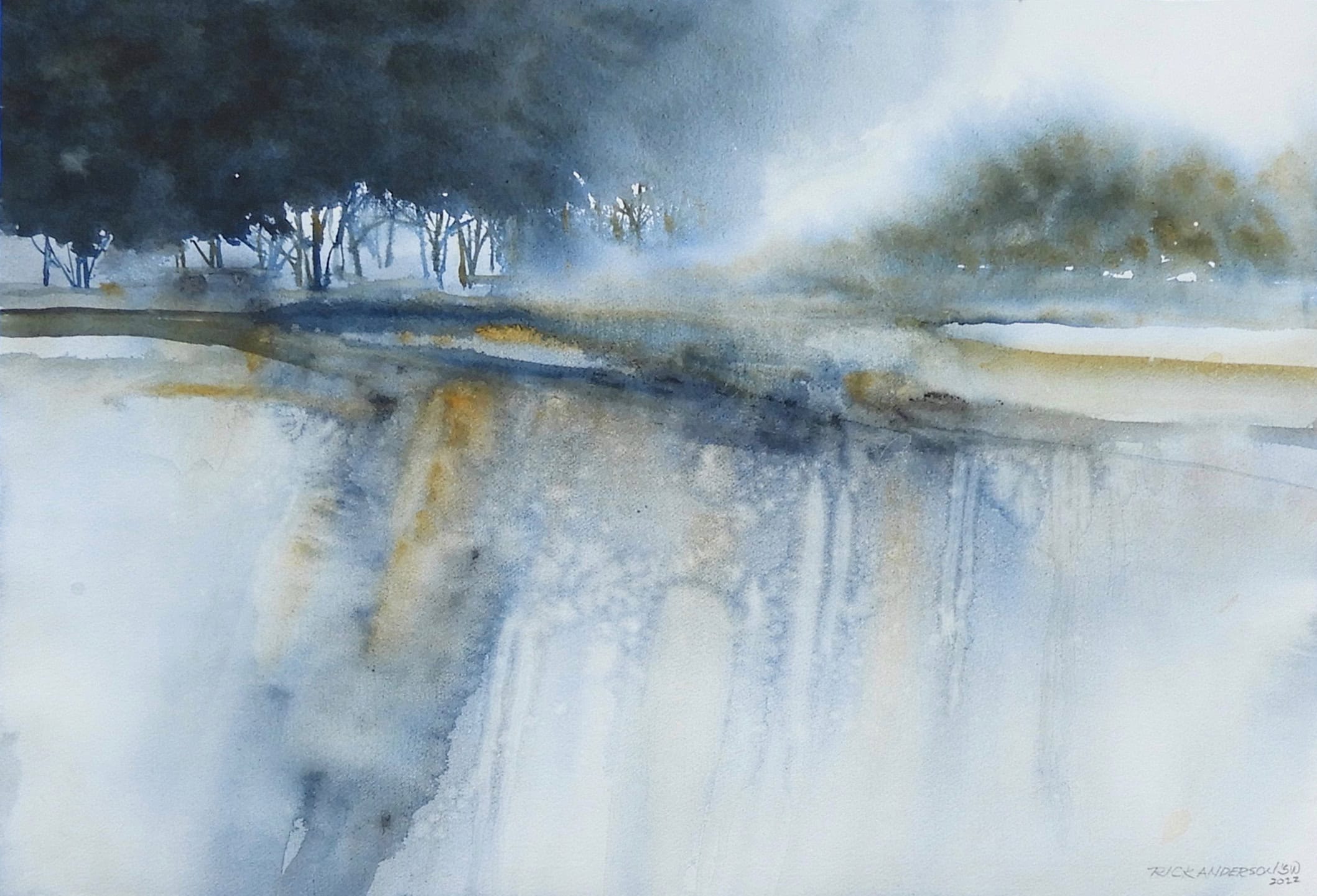
My watercolor below, “In The Mist,” is a perfect example of “Process & Discovery.” One observation is that the color palette is very limited, but the water was steadily flowing on the textured watercolor paper at about a 9-degree angle, allowing gravity to play a role in the movement of the pigment as the colors were gently mixing together in a variety of places. At the beginning, it appears that I chose to use only a very few cool and warm colors. It’s also obvious that I made decisions to wait before I painted the tree branches so the branches would not bleed too much and lose the “feel” of trees.
As I recall, I remember using Titanium White in between some of the branches to lighten up areas. I also remember, at times, using a “mister” to lightly add moisture to some of the surfaces to keep the paper slightly damp so I could continue my process.
Also, notice the soft flickers of water in several areas. This technique is a wonderful addition for anyone to get these soft visual effects. Although the painting looks like it was painted quickly, that was not the case, nor was it meant to be painted in a short time frame. I do feel this watercolor was a successful painting, and I was able to get the results I had hoped to get.

In The Mist by Rick Anderson
Ready to See Where Color Takes You?
Take inspiration from Rick Anderson and give yourself room to explore—whether you’re painting small or going big. Experiment with unexpected mixes, let water and pigment move, and discover what happens along the way. With the depth, consistency, and endless mixing possibilities of 丹尼尔·史密斯特级水彩颜料, every painting becomes an opportunity to push color further, trust the process, and make new discoveries of your own.
关于艺术家
里克·安德森 里克是密西西比州的终身居民。作为一名拥有50多年经验的专业参展艺术家,他在地区和国家艺术展览中获得了150多个奖项,里克很荣幸受邀参加在意大利举办的法布里亚诺水彩画展(2020-2023)。.
“在密西西比州长大对我的艺术创作产生了影响,但这并不能定义我的作品。无论我去美国各地还是国外旅行,每个地方都会对我的艺术产生影响。这难道不是理所当然的吗?无论我的主题是什么,我的创作过程都是一样的。我主要在工作室里作画,参考我在外景地拍摄的照片、速写和笔记。我的目标是创作出具有强烈视觉冲击力的艺术作品。”
“This is one of the most comprehensive and fulfilling watercolor events I’ve ever been a part of. Over 1400 international artists were included in an exhibition of original paintings representing their home countries. It is a community of friendship, sharing knowledge and working toward similar goals.”