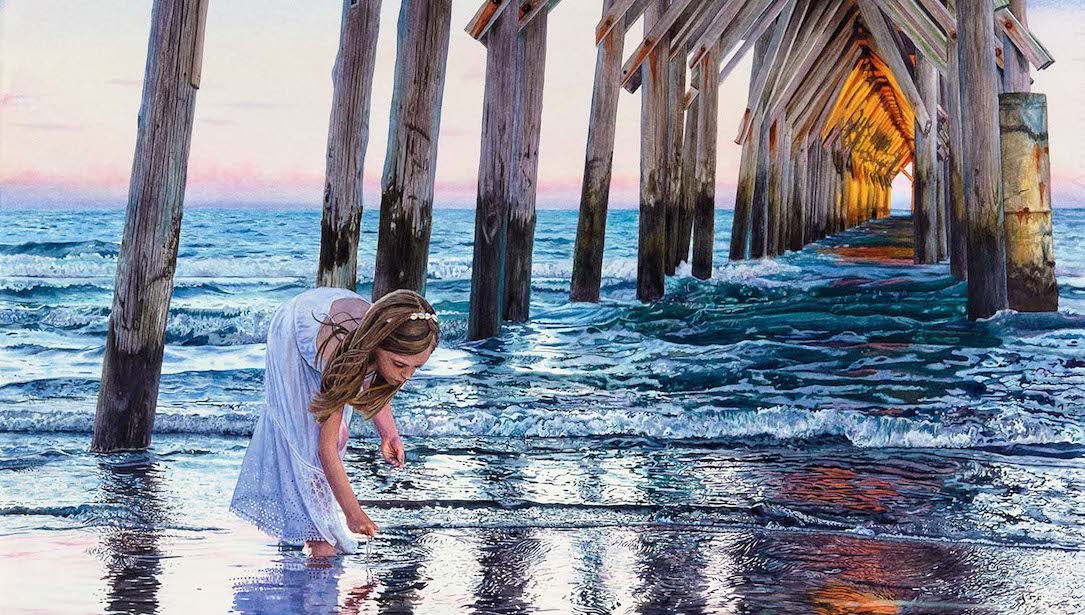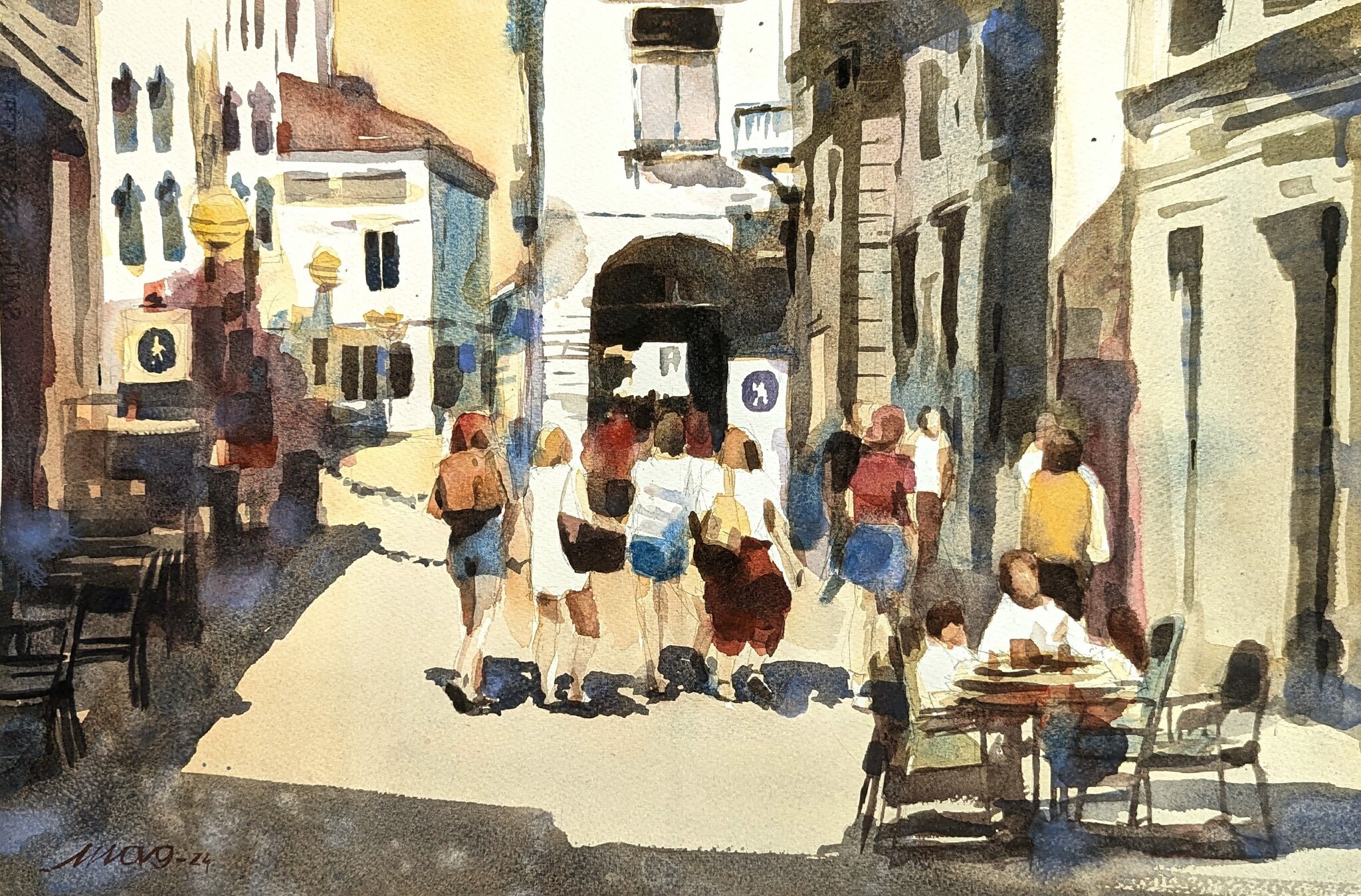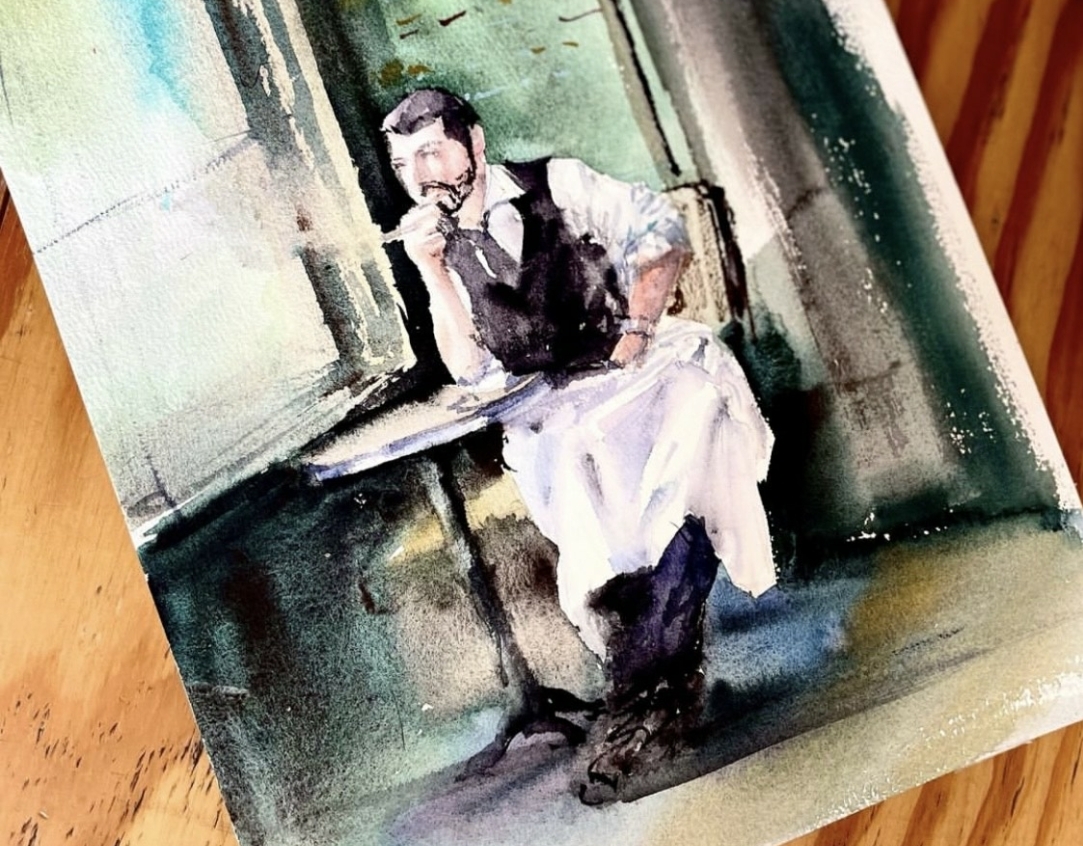






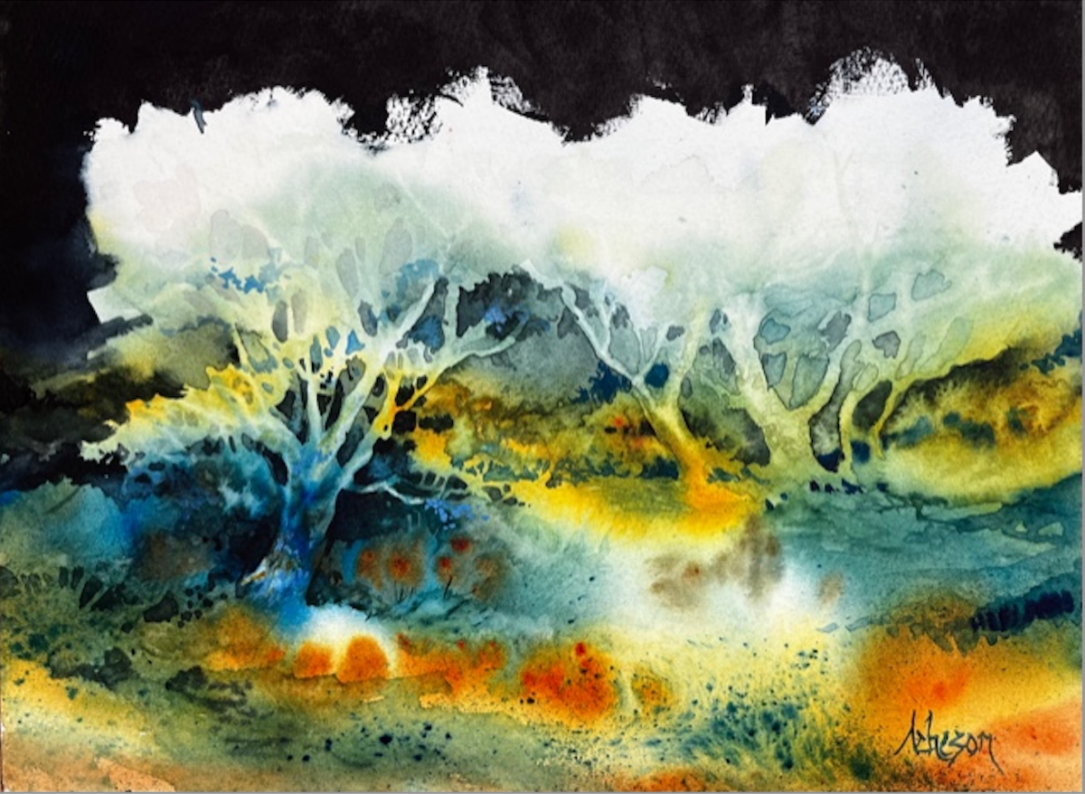

ドナ・エイチソン・ジュイエ フランス出身の彼女が、お気に入りの水彩画のコツやテクニックを教えてくれた。.
ドナへの質疑応答はこちらです。
なぜあなたは芸術作品を制作するのですか?
私は絵を描くのが大好きです。水と顔料を自由に混ぜ合わせ、混ざり合うようにしながら、日々創作活動に没頭します。そして、適切なタイミングが来たら、顔料が私の望む方向へと進むように促します。私は絵を描かずにはいられません。私は世界を色彩で捉えています。灰色でさえ、私にとっては色鮮やかなのです。私は自分の見たものを捉え、それを人々と共有したいと思っています。私は、ポジティブな形とネガティブな形、硬い輪郭と柔らかい輪郭を持つ世界を、絵を描くように捉えています。.
絵を描き始めてどれくらいになりますか?
私は40年間絵を描き続けており、1996年から教えています。.
あなたは正式な美術教育を受けましたか?
多くの人と同じように、私も昔から絵を描いたり創作活動をしたりしてきましたが、正式な美術教育は受けていません。人に絵の描き方を教え始めたとき、同時に自分自身も色彩、バランスの取れた構図、そして創造性についてより深く探求するようになりました。.
あなたはプロのアーティストですか、それとも趣味で活動しているアーティストですか?
私はプロのアーティストで、フランスの芸術家協会に登録しています。.
あなたを刺激するものは何ですか?
自然。それは、私が描く題材、絵の具の塗り方、そして色彩の選択に至るまで、あらゆる面で私を導いてくれます。自然の美しさと儚さは、私にインスピレーションを与えてくれます。私は常に、自然を前にした時に感じる畏敬の念を、様々な方法で表現しようと模索しています。.
絵を描くときはどんな音楽を聴きますか?
私はよく、人生のあらゆる時期の曲を集めたプレイリストを聴きます。アメリカン・パイ、スーパートランプ、ミートローフ、ピンク・フロイド、ザ・スクリプト、コダライン…といった曲はもちろん、フランスの古典音楽(SOS Terrien en Détresse)や映画の曲なども入っています。 道、, 娘がカミーノ巡礼に出かけた時、私は最近エリック・クラプトンのコンサートに行ったので、彼の音楽にすっかりハマってしまいました。私の音楽の聴き方は、絵を描く際のアプローチを反映しています。つまり、絵の具の塗り方、色の選び方、構図の作り方など、新しい方法を試そうと努力するのと同じように、私は特定のジャンルの音楽に固執しないようにしています。特定のカテゴリーに留まるのは好きではありませんし、成功を保証するレシピもありません。そのせいで絵を何枚か失敗したり、絵を完成させるのに長い時間がかかったりすることもありますが、それも冒険の一部なのです!
あなたにはメンターがいましたか?
私には影響を受けた先生が3人います。最初の先生はオタワ美術学校のモートン・バスロー先生です。私たちは何時間も絵を描き、その後、ほぼ絵全体を消して、100%の純粋な水彩絵具だけで絵を描きました。何年もの間、自分の創造性と構図を磨いていたとき、私は100%の水彩絵具以外は一切使わないようにしていました。インクや白、ガッシュなどを使うことがズルだと思っていたからではなく、水彩絵具だけで安心して描けるようになること、つまりリスクを冒し、構図を調整する方法を知り、紙の上で起こっていることに対応できるようになることを学びたかったからです。2人目の先生は、フランスのグルノーブルにあるボザール学校のファヴァール先生です。彼の指導の下、私は構図を発展させ始め、主題を解釈し、不要なものを取り除いていきました。ほぼ同時期に、私がこれまで出会った中で最も創造的な人物の1人であるキャロル・エクスブラヤット先生のクラスを受講し始めました。この頃から、私は実験的な絵画に深く入り込んでいったのです。この頃から、私は大きな進歩を遂げ始めたのです。.
あなたは毎日絵を描きますか?
私は毎日絵を描くか、展覧会の準備、作品の梱包、履歴書の書き直し、アーティストステートメントやウェブサイトの更新、スタジオの掃除、ワークショップの準備など、絵画の仕事に関わる他のことをしています。.
あなたは一度に1枚ずつ絵を描きますか、それとも同時に複数枚制作しますか?
私が複数の絵を同時に制作するのを好む理由はいくつかあります。まず、絵の具の層が乾く時間を確保できるので、ドライヤーを使う時間を節約できます。次に、最初の絵に新鮮な目で戻って、修正すべき点をより早く見つけることができます。そして3つ目に、絵の制作が進むにつれて、かなり集中力が高まります。そんな時に別の絵に取り掛かることで、少しリラックスできるのです。.
コンセプト作品を制作しますか?
必ずしもそうとは限りません。プロジェクトによります。特定のプロジェクトやデモを行う場合は、必ず事前に小さなスケッチを作成します。この過程で、白、硬いエッジや柔らかいエッジ、形、方向などを計画します。これにより、絵をより早く完成させることができるだけでなく、描画方法(ウェット・オン・ウェット、ドライ・オン・ドライなど)や、どの技法がバランスの取れた構図につながるかを計画することもできます。また、直感的に描くのにも役立ちます。しかし、時には紙に絵の具をどうしてもつけたいという強い衝動に駆られることもあります。そんな時は、絵の具を勢いよく塗り、水と顔料に任せます。これは、どこに向かっているのか分からないので、ある意味ワクワクして魔法のようですが、絵を完成させるのに時間がかかります。.
あなたはスタジオで絵を描くのと、屋外で絵を描くのと、どちらが好きですか?
私はスタジオで絵を描くのが好きです。しかし、屋外にいるときは、常にスタジオ作品の題材になりそうなものを探したり、写真を撮ったりしています。抽象画の題材として、あるいは絵の土台として、自然を拡大して撮影したり、参考写真を撮ったりします。私は自分で撮った写真をもとに絵を描くのが好きです。.
基本色は何色使用しますか?
それぞれの絵画において、私は2色から5色という非常に限られた色数で制作しています。これは、すべての絵画で同じ色の組み合わせにこだわるという意味ではありません。私は好奇心旺盛で、新しい色や様々な組み合わせを試すのが好きです。一つの絵画で限られた色数を使うのは、作品の中にテクスチャーや色、線などが多すぎて不調和になるのを避けるためです。例えば、ある絵画では補色同士を2色だけ使うこともあれば、原色をアレンジした三原色を使うこともあります。.
チューブ型、フライパン型、それともスティック型?
私は通常チューブ入りの絵具を使います。なぜなら、暗い色調を素早く表現できるし、創造的な絵画を描く際に便利だからです。.
マスキング液は使いますか?
1年前なら「いいえ」と答えていたでしょう。私は事前に白い部分を計画するか(サムネイルスケッチ)、ウォッシュやネガティブワークを使ってくっきりとした白を作り出すかのどちらかでした。しかし最近、マスキング液を使う必要のあるプロジェクトに取り組んでいます。.
自分の作品が完成したと判断するのは、どのような時ですか?
絵が完成したと感じたのは、バランスが取れていると感じた時です。つまり、四方から見ても何かが欠けているとか、空白があるといった感覚がなかった時です。分析の際には、よくサムネイルスケッチを見返します。.
••••••••••
毎週ZoomまたはFacebookでオンラインにご参加ください ジョン・コグリーとの親密な対話 (オーナー兼CEOのダニエル・スミス)と世界中からゲストアーティストが参加します。毎週木曜日(太平洋時間午後2時)には、ジョンと私たちの ブランドアンバサダー 特定の色群を強調表示し、皆様からのご質問にお答えします。毎週金曜日(太平洋時間午前10時30分)には、ゲストアーティストがお気に入りのヒントやテクニックを紹介するデモを行います。. 来週のZoomリンクはこちらをクリックしてください.
ご希望であれば、当社のウェブサイトをご覧ください。 Facebook ショータイムにページでライブ視聴できます。リプレイはFacebookまたは YouTube. 。スペイン語の翻訳 – Zoom でスペイン語の運河を選択します。.